Michelin Guide Québec 2026: Our Predictions

The Michelin Guide Québec 2026 will reveal its second-edition selection on May 6. Here’s what we think is coming.
Last year, the Michelin Guide’s arrival in Québec didn’t exactly win everyone over. Plenty of voices, both within the industry and beyond it, raised real questions about the integrity and relevance of the exercise. Can a French guide, judged by inspectors flown in from elsewhere, truly grasp a food culture as singular as ours? The question kept coming back, and with good reason — especially as initiatives like Canada’s 100 Best (which makes a point of recruiting its judges from within the country) and our own work at Tastet, built hand in hand with passionate people deeply rooted in the scene, have long championed a closer reading of the terrain.
Take Toqué!, for example. Its absence from the starred list was a genuine surprise. Seeing an institution led by Normand Laprise — the undisputed pioneer of contemporary Québécois cuisine — ranked just below Schwartz’s in the recommendations felt, to put it mildly, off. And then there was the star awarded to Europea, which, more than any other, stirred up real controversy (for several reasons). What followed only deepened the questions: just a few months later, Jérôme Ferrer put the business up for sale.
None of this should make us forget the obvious: Michelin carries weight. The guide’s debut in Québec generated more than a billion impressions worldwide all on its own. It draws well-heeled travellers who come specifically to taste the best our territory has to offer. The fact that Tanière³ has been fully booked every night since earning its two stars is the clearest illustration. One question lingers, though: doesn’t this kind of spotlight risk overshadowing equally essential tables, like Le Mousso in Montréal, which deserve full houses of their own? A few days out from the 2026 announcement, here’s where we stand.
The positions that look solid
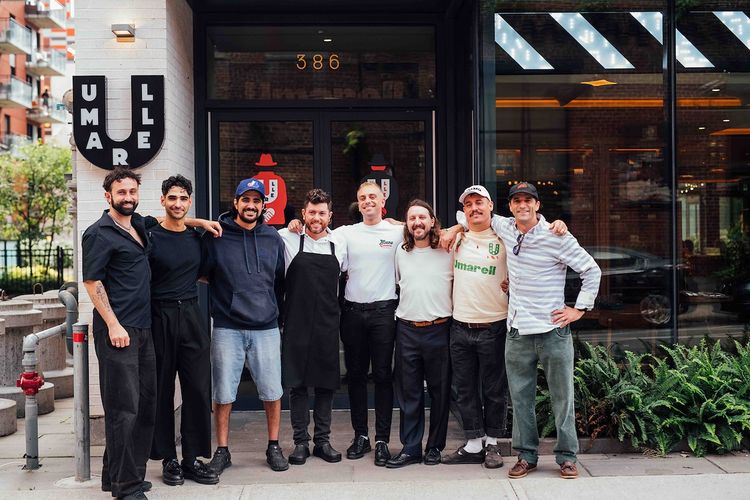
Everything points to most of last year’s starred restaurants holding on to their distinctions: Tanière³ with its two stars; ARVI, Kebec Club Privé, Laurie Raphaël, Légende, Mastard, Sabayon and Narval with one star each. Consistency, after all, is the guide’s most demanding criterion, and the 2025 honourees haven’t, by and large, shown any signs of slowing down. One exception, in our view: Europea, whose sale of the business makes holding on to the star highly uncertain.
The possible ascents
Several signs suggest that Le Mousso, long whispered about, may finally be recognized in the 2026 Guide. Antonin Mousseau-Rivard works with a rigour and consistency that align point by point with what the guide looks for; it would be surprising if he didn’t cross the threshold this year.
Toqué!, whose absence was hard to explain, also looks well placed to set the record straight. It’s difficult to imagine a second edition once again overlooking one of the most foundational tables of the Québec landscape.
Asteur, Lawrence, Alma and Sushi Nishinokaze are also among the names we’re watching closely. Each offers an experience cut from the cloth Michelin tends to recognize: technical precision, a clear identity, service in step with the kitchen. In a slightly less predictable category, Club Chasse et Pêche, Bouillon Bilk and Le Chien Fumant also speak the guide’s language; a star for any one of them wouldn’t surprise us.
The ones we’d have singled out
And then there are the tables that, for us, embody the singularity of cuisine here. Mon Lapin, Montréal Plaza, Le Violon, Damas, Okeya Kyujiro, Hoogan et Beaufort, and Cabaret L’enfer make up a landscape of rare vitality. Some, more free-spirited in their approach, may sit a little outside the classic mould Michelin tends to favour: white tablecloths, polished service, a very traditional take on fine dining — quite different from the fun dining that usually defines Montréal’s tables and their more relaxed style. That’s likely why Québec City, whose scene leans more comfortably into those standards, has earned more stars than Montréal, where fine cuisine is reinventing itself elsewhere.
Green star, Bib Gourmand, recommendations and the great oversights of the first edition
Parcelles strikes us as tailor-made for the green star — its kitchen philosophy and relationship to the land are genuinely exemplary. La Cabane d’à Côté, from Martin Picard and Vincent Dion Lavallée, deserves at the very least a mention for the remarkable coherence of its agricultural project.
On the Bib Gourmand front, Pasta Pooks and Épicerie Pumpui should be no-brainers. Two addresses that pull off that delicate balancing act of excellence at a gentle price. And we’d be glad to see Limbo, Kitano Shokudo, Bar St-Denis, Pichai, Milos and Île de France turn up in the recommendations — all tables that, in their own way, say something essential about Québécois cuisine today.
And then what?
The thing is, earning a star is one matter; keeping it is another. The consistency Michelin demands forgives no slack, and a few of last year’s honourees are, already, more closely watched than others. The 2026 Michelin Guide Québec ranking won’t just tell us who’s rising; it’ll tell us how far the guide is willing to go in deepening its reading of our food culture. And that, we can’t wait to see. We’ll talk again on May 6 for the official announcement of the Michelin Guide Québec 2026.
Written by Jean-Philippe Tastet
Photography by Alison Slattery