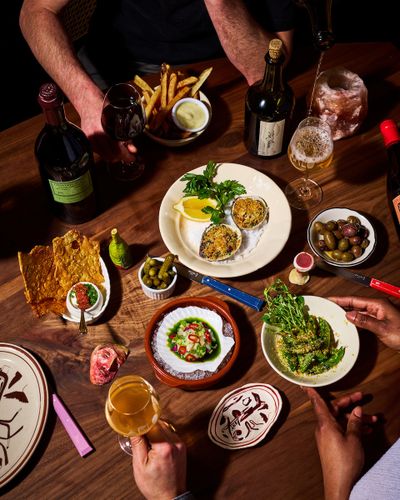
Leandro Baldassarre : le pastaio iconique de Toronto
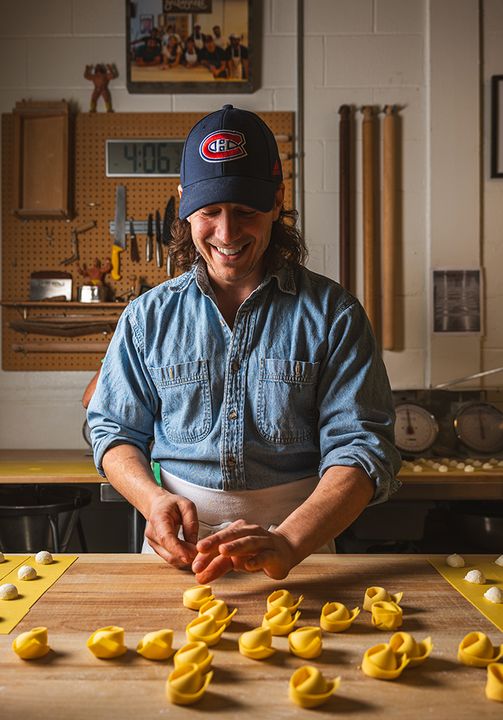
Leandro Baldassarre is one of Toronto ‘s most quietly stubborn pasta makers . For 16 years, in a small kitchen called Famiglia Baldassarre, he has been rolling, folding, and drying his pasta by hand—no set menu, no dining room, just a takeout container and the ingredients that arrive each morning. He drives to Prince Edward County for a specific fish, sells his dinner for $18, and dismisses any notion of pride.
One July morning in Toronto , he still hadn’t decided on the lunch menu. The zucchini and mint from the garden behind the shop were finally ready: it would be zucchini and mint spaghetti, a Neapolitan dish he’d been making almost since the beginning. “People ask me: what’s on the menu next week? I answer: I don’t know.”
From dropping out of school to working side-by-side with David Lee
Baldassarre describes cooking as “a matter of destiny,” even if it wasn’t immediately obvious. A high school dropout, he joined the kitchens of the Splendido at eighteen, under David Lee, as “a last-ditch effort.” “I was immediately captivated. It was very exciting for me.” Lee became his mentor and passed on a rule he still follows: “always do things properly, never take shortcuts.”
Three years in Italy, and the word Famiglia
In mid-2007, with only the financial support of an uncle, he left for Italy. Pasta had already been a part of his Italian childhood—rolled casually with his two grandmothers—but his stay transformed it into a vocation. He cooked in a restaurant, learned from the Santini family, and spent his weekend mornings in the kitchen of a landlady in Puglia. Italy taught him about “family, culture, and being together”: twenty people sharing meals and farm work.
When friends fall ill and his grandparents grow old, the distance feels selfish. He returns in 2010 and launches the business in February, initially simply “to keep busy.” The name—Famiglia—says it all.
Pasta for the mouth, not for screens
For seven years, he made nothing but pasta, honing his skills through sheer repetition. He describes it as a craft: “It’s a type of work where you only progress in one way: hours and hours and hours of repetition.” Cooking and making pasta are two distinct skills; one can excel in one without mastering the other.
He refuses to make pasta for photography. He opposes “pasta for screens rather than for the mouth” and pursues what he calls “eatability”: the way a dish holds its shape, meets the fork, and satisfies the palate. His analog test: “If you close your eyes and eat this thing, that’s how I judge what’s good and what isn’t.”
No menu until morning
This philosophy deliberately complicates the cooking. The daily menu is formed around the morning’s deliveries—wild walleye from Prince Edward County, mushrooms picked in the forest, herbs from the garden—transformed into pasta and sold in takeout containers for $18. Each dish must answer a question: “Is this something you would encounter if this village grew this vegetable or fished this fish?”
New ideas emerge at night or at dawn, are served at dinner, and then silently pass the test of established classics. Successes—like his trofie with pesto, potatoes, and green beans, which he calls a “bomb”—recur with the seasons, when the ingredients are at their peak. Some days, twenty people fold tortellini for two days to prepare a single lunch service.
When the world becomes a village
He flatly rejects the word “pride.” After sixteen years, he’s never felt settled: “Every day, you step into the unknown. You open doors and react to what happens.” Pride fades after a good dinner and evaporates by morning. What he truly values are relationships. From shy—hesitating to call producers—he’s become someone whose phone has a number for everything: appliance repairs, helping out on weekends, pizza trips to New York.
Fresh pasta on the shelves, a country restaurant at the top
The last few years have brought concrete projects, beyond the late-night dreams of the tavern. He’s working on getting his fresh pasta into grocery stores—the most difficult option, chosen deliberately—by selling to independent shops run by people who toil for the same reasons he does. Further down the line: a small country restaurant, one day, “a beautiful way to accompany me to my grave.”
What truly frightens him isn’t failure, but its opposite: “The worst heartbreaker in this business is when you switch into maintenance mode.” He wouldn’t change a thing about the hardships of his youth. To the shy kid who was afraid to pick up the phone, he would advise embracing difficulty intentionally—the failures, the intimidating calls, the seven years of solo pasta-making. “You only become good by failing a lot.”
During his rare days off, he roams the country roads, mows the lawn from the top of a tractor, drinks a beer, turns off his phone. He simply tries to “be human.” Sixteen years later, the name above the door still holds its full meaning.
Écrit par Daniel Neuhaus
Photographié par Scott Usheroff