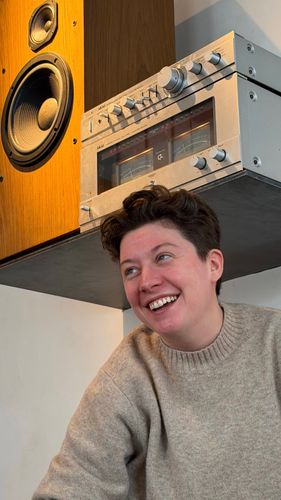
Michael Picard Labelle: carrying history forward, writing the next chapter
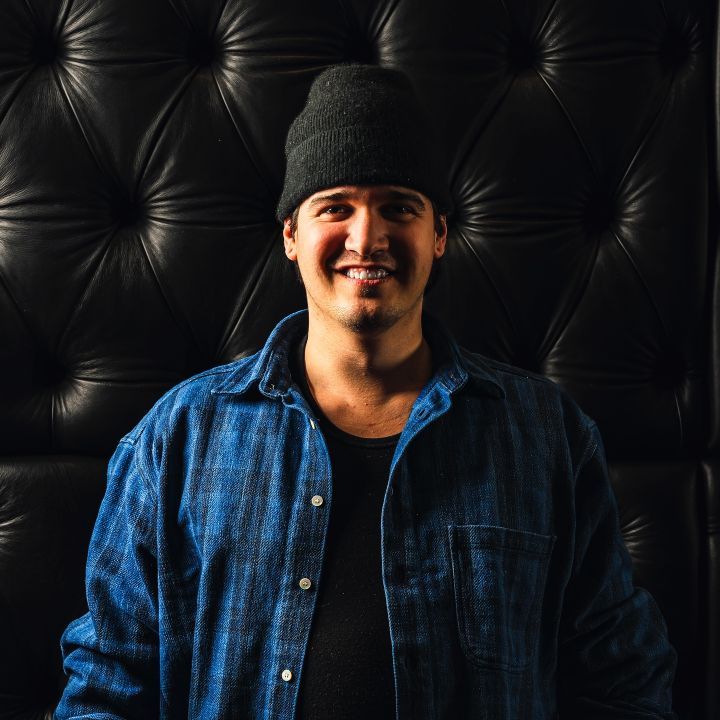
There are paths that begin not with a decision, but with a place.
For Michael Picard Labelle, that place is the family sugar shack. Not just any shack: a living, breathing one, buzzing with tradition, where every family member had their role. “Mononc” Marc in the steam of boiling syrup, his grandfather on the road delivering products to the restaurant on Duluth, his brother Phil with his hands in the dough (literally, tourtière dough), and of course Martin, quietly shaping Quebec gastronomy in his own way. His uncles Luc and Robert were there too, helping run the shack with their energy, their hard work, and their own way of keeping tradition alive. Michael took his first steps there at fourteen. Like everyone else, he started at the very bottom: washing dishes.
Despite his age, this was never just a student job. It was the beginning of a career—the first immersion into a world where family and cooking were inseparable, where work was never measured in hours or money, but in shared moments.
From business studies to Osteria Francescana
While studying business administration at cégep, Michael kept working at the restaurant, helping with management. At the same time, he took part in the very first production of the Cabane’s tourtières. He and Phil kept the machines running, without realizing this project would become such an important annual tradition. “That’s when I got the bug,” he says. That creative energy pushed him to change course and enroll at the ITHQ in applied management.
But Michael has never followed a straight line. After a year and a half, he paused his program to work at a vineyard. He wanted to understand the entire cycle, from field to plate. He’s driven by a deep, natural curiosity—an urge to fully grasp whatever he’s passionate about. When he returned, it was back to the sugar shack alongside “Mononc” Marc. That season marked him profoundly. “I wasn’t watching my bank account. I was just happy to be there, soaking in memories. I feel incredibly lucky to have lived that.”
Sometimes the most ordinary moments change the course of a life. For Michael, it happened one night by the fire when Martin suddenly asked him, out of the blue: “Do you want to go to Italy?” An unbelievable opportunity—an internship with Massimo Bottura. Martin gave him twenty-four hours to decide. Michael hesitated; the idea of not finishing his ITHQ program troubled him. But the pull of learning was stronger. And if he had to do it again, the answer would still be yes.
In the blink of an eye, he was in Modena, immersed in a world where rigor meets poetry. He trained under fellow Quebecker Jessica Rosval, who took him under her wing. He worked in prep, learned to make pasta, and spent time in service. “They wanted me to come out of that experience happy,” he recalls. And that’s exactly what happened. Those few months confirmed he was on the right path.
Spain came next, at none other than Mugaritz—a cuisine of emotion and experience, where he could connect with his artistic and meticulous side. There, he climbed the ranks over eight months. “I’m pretty competitive, so I loved that,” he says. All these lessons shaped him—without ever pulling him away from what truly awaited him: coming home.
Back to his roots
Back in Quebec, he worked in the service kitchen at the Cabane with Vincent Dion Lavallée and David Gauthier—who would later become the faces of Cabane d’à Côté and Bar St-Denis, respectively. Far more than colleagues, they became role models and sources of inspiration.
Naturally, his brother Phil took over the reins of the Cabane, while Michael found his place on Duluth. At the time, Emily Homsy (also from Bar St-Denis) was leading the kitchen brigade. When she left Pied de Cochon, Michael’s moment arrived. At just twenty-three, he became head chef of Pied de Cochon. “Survival mode kicked in. It was intense, but I understood I was exactly where I belonged.” He wanted to prove himself—to guests, to his team, and to himself. Years later, it’s safe to say he succeeded.
Following in the footsteps of a pioneer
Walking in Martin’s footsteps was both stimulating and demanding, he says. He describes it as a reassuring, formative presence. He always felt someone was there behind him to guide and support him—without ever feeling stifled. “Yes, I’ve wondered if I’d always be in his shadow. Today, I know the torch has truly been passed.” Pied de Cochon is not just one face—it’s a family portrait.
He owes a great deal to those around him and those who trained him: Martin, of course, but also David, Emily, and Vincent. “My mentors shaped me far more than excess or failure ever did. I owe them so much.”
From excess to softness
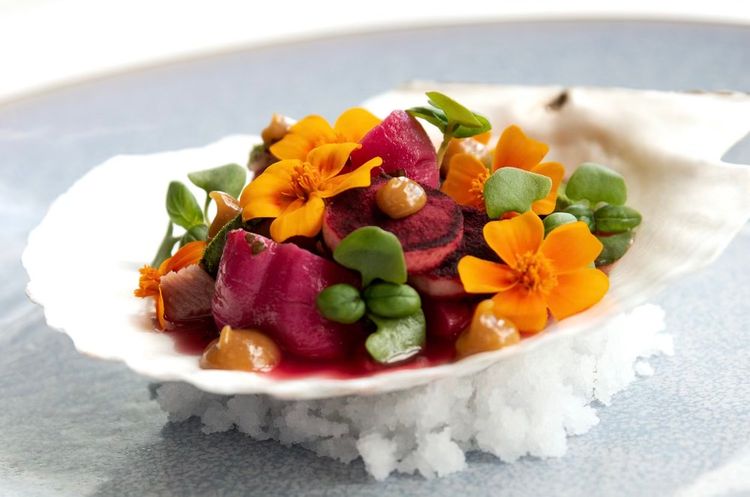
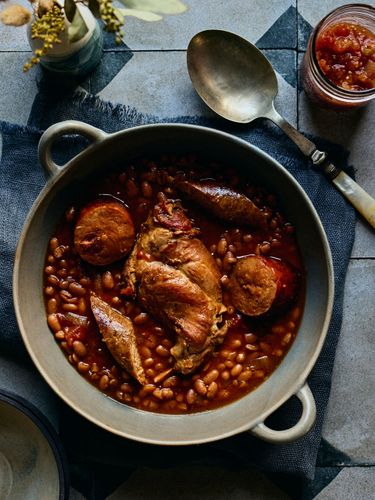
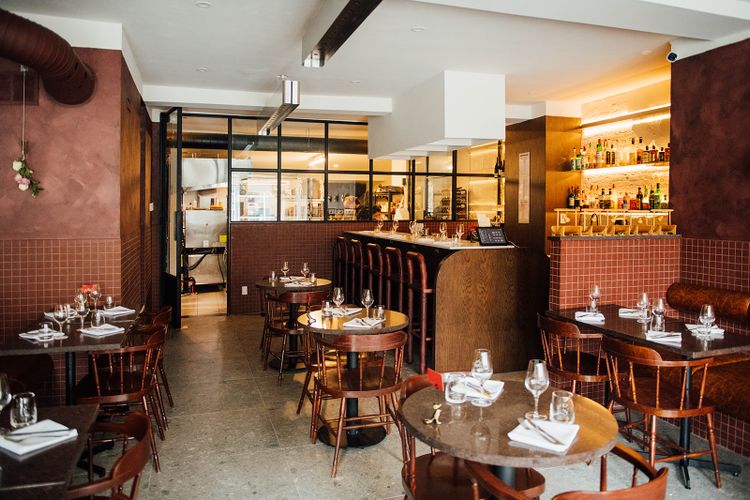
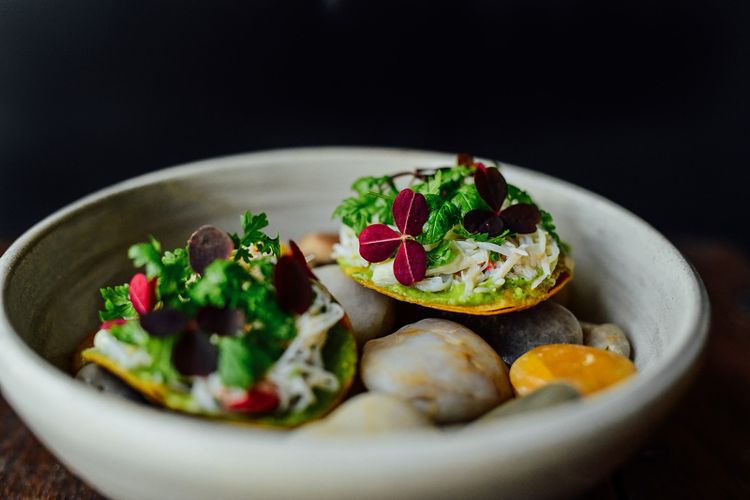
For him, the restaurant’s philosophy is simple: thoughtful, creative, high-quality dishes that tell a story about Quebec. Plates that honor their roots but aren’t afraid to reinterpret them. Over time, he’s developed his own vision of Pied de Cochon. He wants to break the image of a place where you “roll out the door.” “That might still be true at the Cabane, though,” he jokes. He’s brought more finesse, freshness, and nuance to the restaurant. “I wanted to dismantle the PDC stereotype. Yes, excess is part of our history—but we’re not only that.” The small, character-filled Plateau address isn’t defined solely by foie gras (even if it remains iconic). “When Anthony Bourdain came here, it was completely over the top—the menu covered the entire bar, with a whole pig’s head just for him! At the time, that was avant-garde.”
Today, Pied de Cochon continues to be carried by that same generosity and comforting spirit that are part of its DNA. Michael moves forward with deep respect for Martin’s pioneering work. He isn’t trying to reinvent Pied de Cochon or turn it into an echo of somewhere else—he’s evolving its cuisine with his own creative touch. A little more delicacy, while fully honoring what came before. His goal: to keep growing the restaurant and naturally guide it into its next quarter-century.
What does he hope people will remember about Pied de Cochon in fifty years? “That we stayed true to who we are.” What stands out today is his consistency: Michael is exactly where he wants to be—and you can feel it. His approach is clear, confident, forged through rigor and curiosity. He’s found his culinary language, somewhere between the PDC legacy and his own vision—finer, more thoughtful, more personal. He never tried to fill anyone else’s shoes. He understood early on that his strength lies in who he is and how he owns it. The next page of Pied de Cochon? He’s already writing it—and we can’t wait to read the next chapter.
Written by Jean-Philippe Tastet
Photography by Scott Usheroff