Les Ouches: The Bold Vineyard Taking Root on Île d’Orléans
Les Ouches | Vignoble
- $$
-
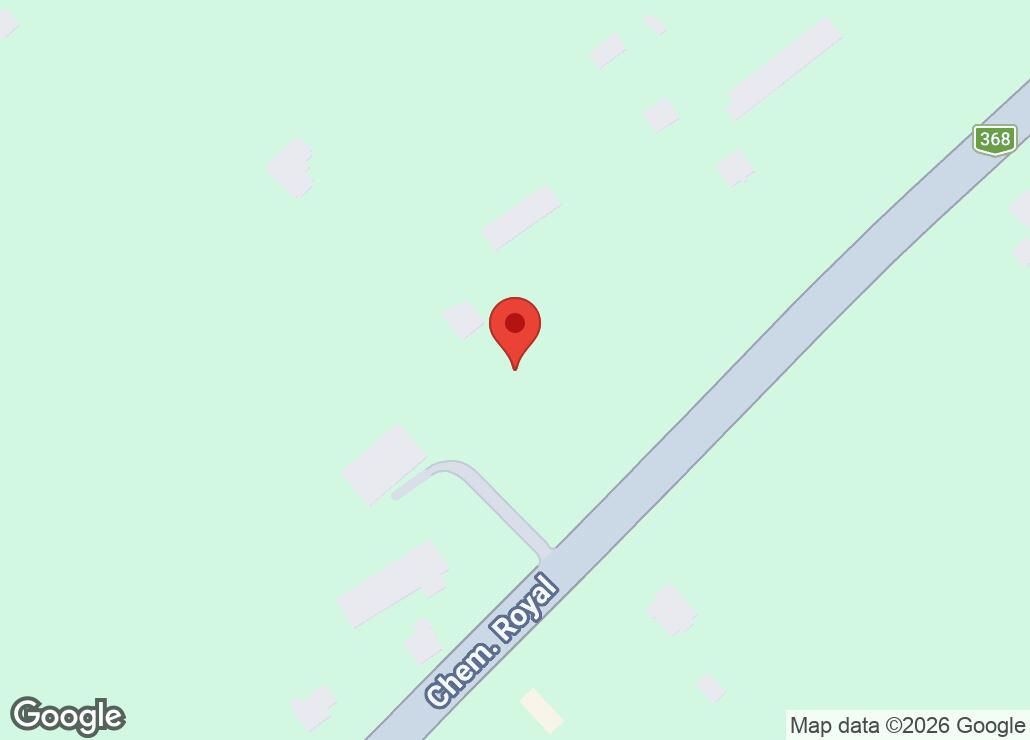
1811 Chemin Royal Saint-Pierre G0A 4E0
-
Monday: 11:00 AM – 5:30 PM
Tuesday: Closed
Wednesday: Closed
Thursday: Closed
Friday: 11:00 AM – 6:00 PM
Saturday: 11:00 AM – 5:30 PM
Sunday: 11:00 AM – 5:30 PM
-


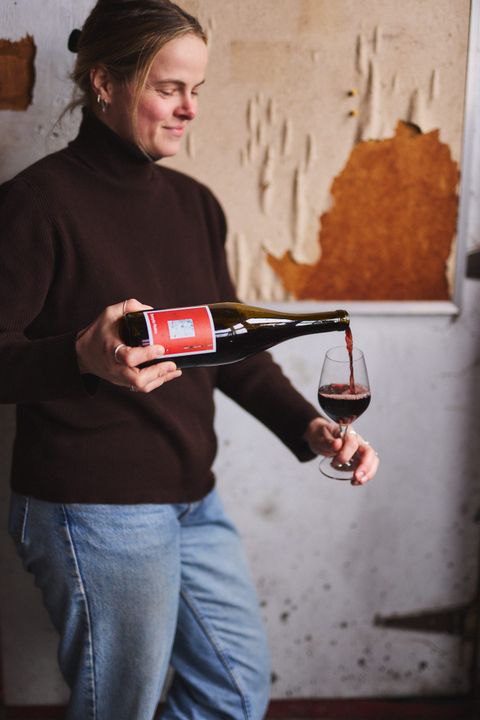
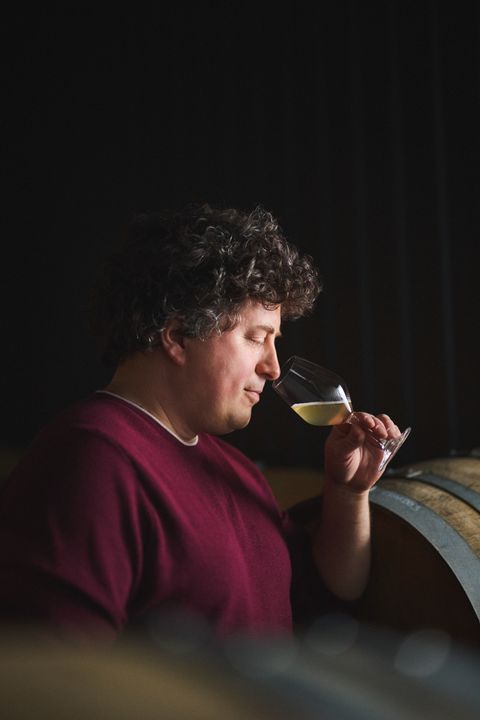
In Saint-Pierre-de-l’Île-d’Orléans, the Les Ouches vineyard is taking a rather singular path. The estate practises regenerative agriculture and produces expressive Quebec wines that reflect their terroir and northern climate. Here, welcoming the public came last, as an extension of the wine. Before building a terrace overlooking one of the most beautiful views on the island, Nicos Keable-Vézina first wanted to make wines that could earn a place on the lists of Quebec’s best restaurants. “We make the wine we like. After that, the people it appeals to will come,” he sums up. The bet is paying off: his cuvées are now poured in more than a hundred restaurants, including, in Montreal, Mastard, Simon Mathys’s Michelin-starred restaurant, and Parapluie, and in Quebec City, Buvette Scott and Chouchou in Limoilou. A sign of the enthusiasm: within the first few months, the bottles found buyers as far as the Eastern Townships, a region already rich in wineries.
Agronomy First, Winemaking Second
Nicos has carried this project since his teenage years. Coming from Le Bic, a part of the province oriented more toward dairy farming, he chose agronomy, a field that reconciled his technical side with his need to have both hands in the soil. He then spent many years moving between entrepreneurship and management before a sabbatical year in Switzerland brought him back to his original ambition. He studied oenology at Changins and confirmed his calling in the vineyards of Lavaux. Back in Quebec in 2016, he and his partner began searching for land. It took more than three years to find the site that would become Les Ouches, chosen for its terroir and microclimate.
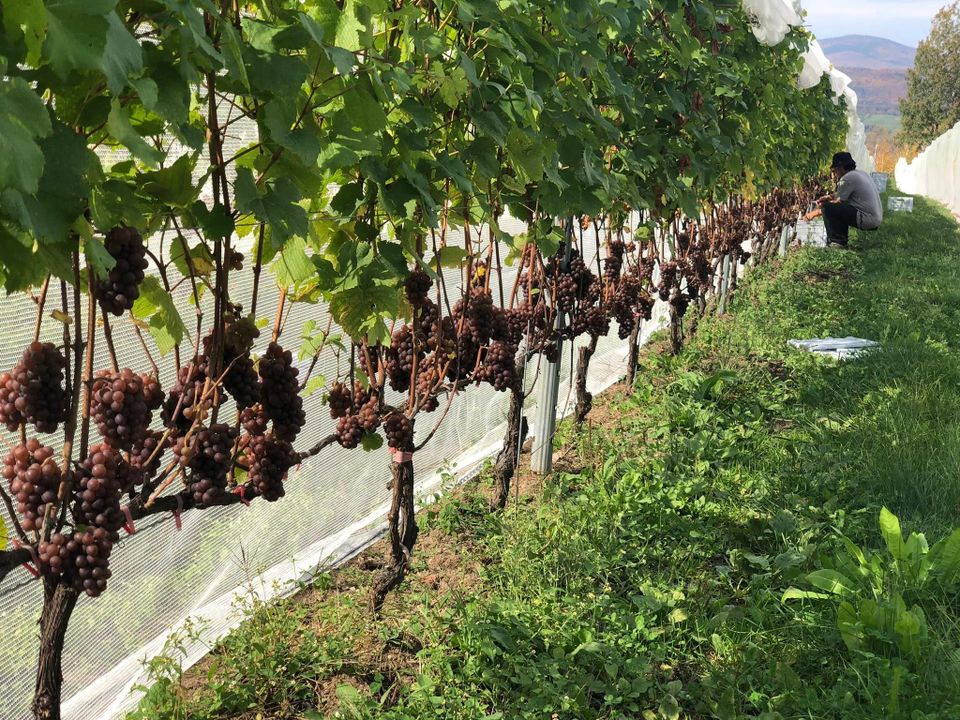
The vineyard now counts some 15,000 vines. The focus is mainly on Vitis vinifera, including chardonnay, pinot gris, gamaret, pinot noir and dornfelder. Around this core, several dozen grape varieties grow in experimental plots, among them Swiss, Hungarian and North American varieties grafted on site. This approach lets Nicos observe their hardiness, their early ripening and their winemaking potential in this island climate.
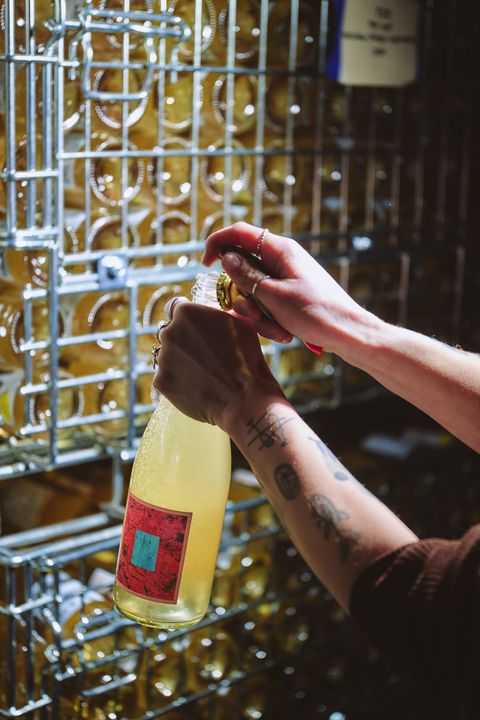
The first harvest dates back to 2023, but the wines weren’t released until 2026, once their ageing had fully matured, the very year the estate opened its doors to the public. That patience is at the heart of the approach. In the cellar, wines are made in micro-lots, in oak barrels as well as in stainless steel tanks and egg-shaped vessels made from various experimental materials. Intervention stays minimal without becoming a rigid rule: the wines are generally unfiltered, and the use of additives ( small doses of sulphur) is assessed according to the vintage and the stability of each cuvée. “We do everything upstream so we don’t have to intervene,” explains Nicos. The goal is straight, precise and lively wines, where a slight oxidation, when present, is an ageing choice rather than a flaw.
Exploration Before a Signature Style
This freedom translates into a range that is meant to evolve. The estate produces skin-contact wines, natural sparkling wines and a few exceptional cuvées dictated by the conditions of the vintage, like Marron, a botrytized wine made from grapes shrivelled on the vine and drawn from a red variety, whereas noble rot is usually the domain of sweet whites in the style of a Sauternes. There’s no guarantee he’ll ever be able to make it again. For Nicos, it will take a few more years to fully understand how grape varieties, vessels and terroir come together: “It’s not true that you can always make the same wines from one year to the next.” — Nicos Keable-Vézina
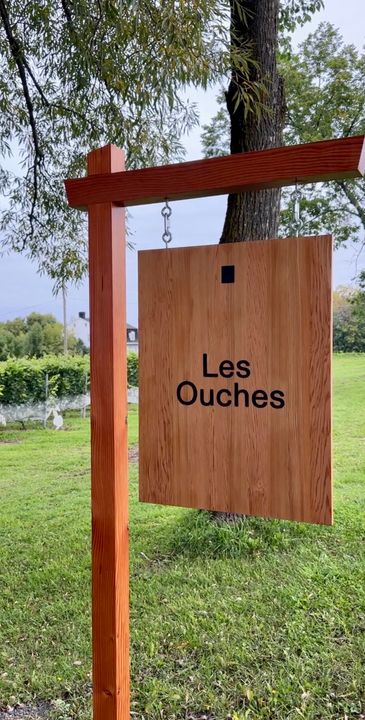
The name Les Ouches refers to an old enclosed fruit garden around the house, a place where harvests were protected and friends were welcomed. The image fits this contemporary address well, quietly going against what one expects from an estate on the island.
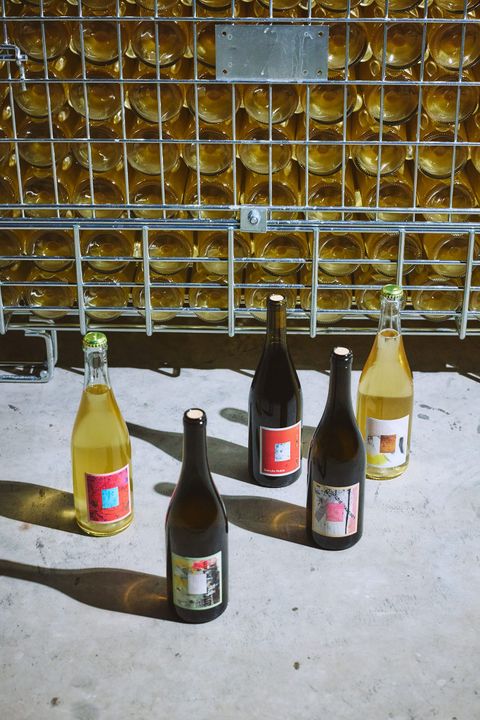
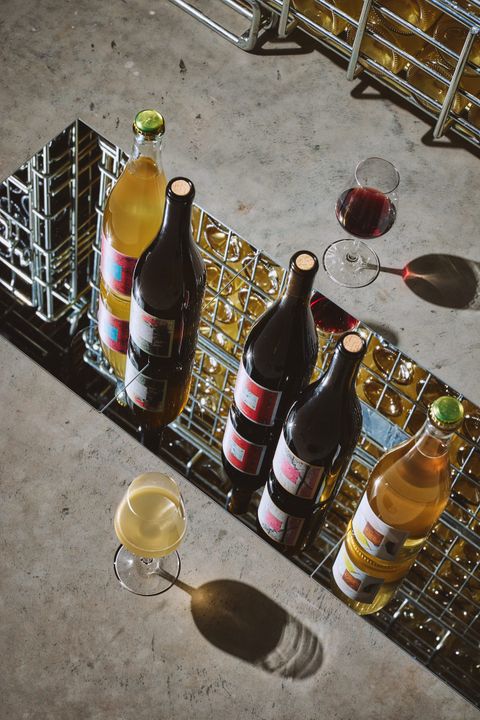
The labels are the work of two Quebec City designers, who imagined and then visually developed the concept of the house at the centre of its garden as the common thread of the visual identity. The works of artist Tone then brought the idea to life through their materials and textures, creating the graphic world found on the bottles today.
Close to Home, on the Plate
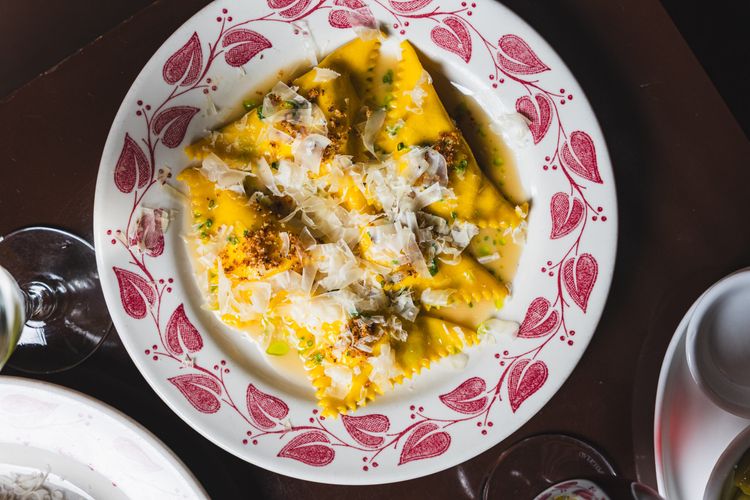
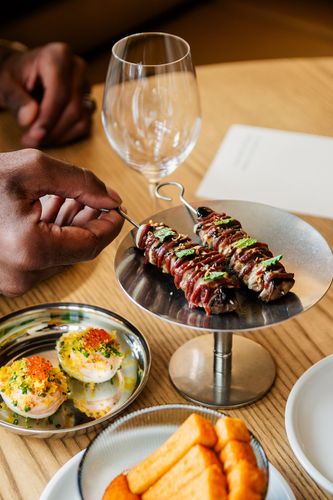
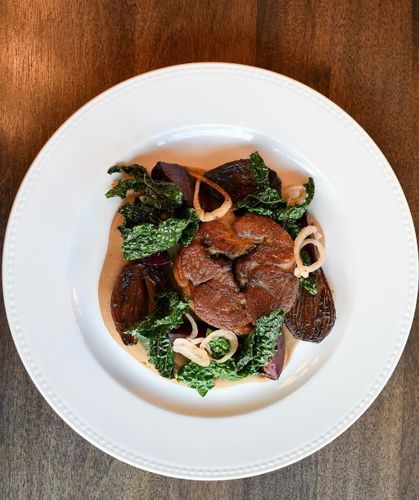
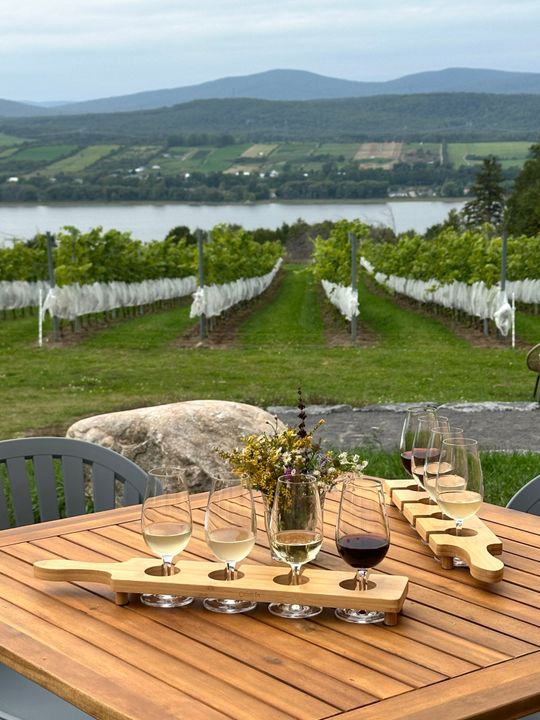
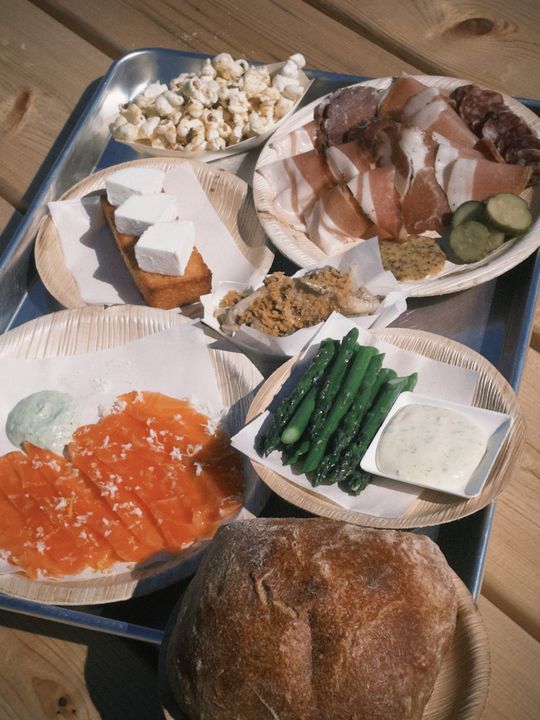
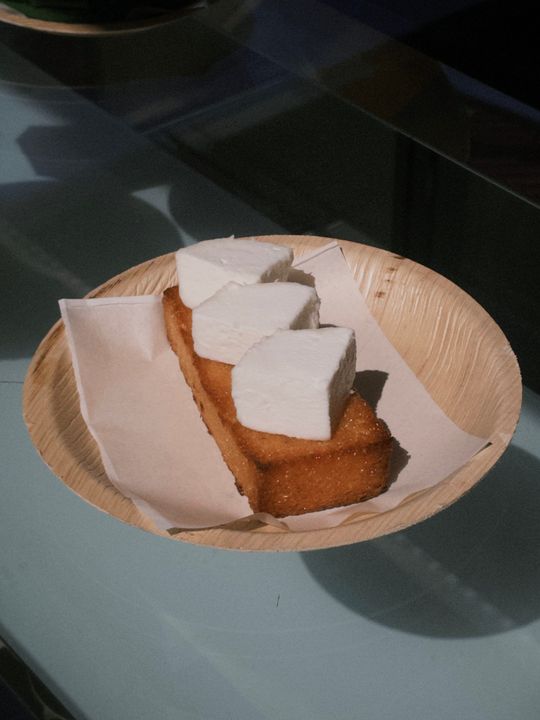
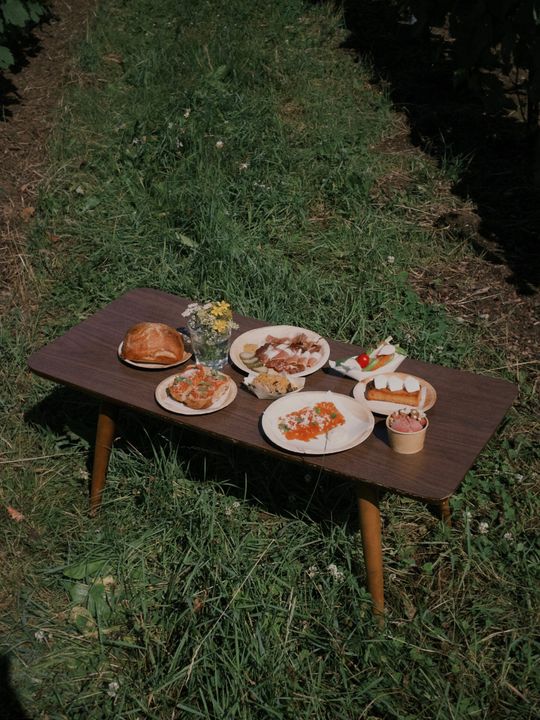
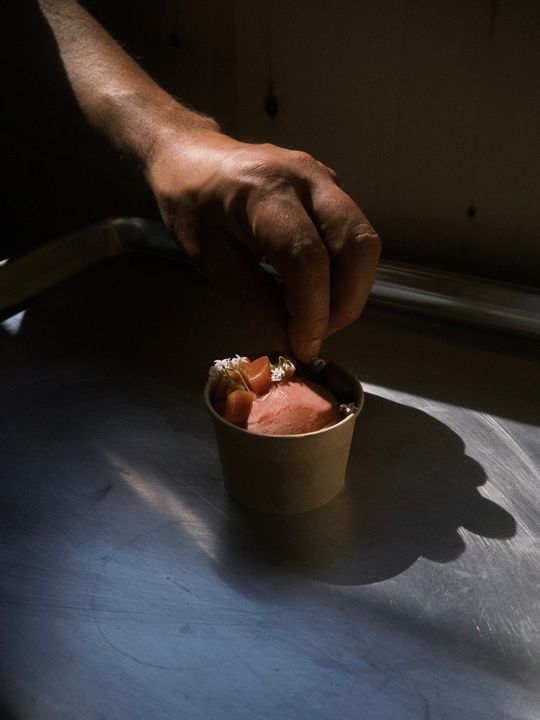
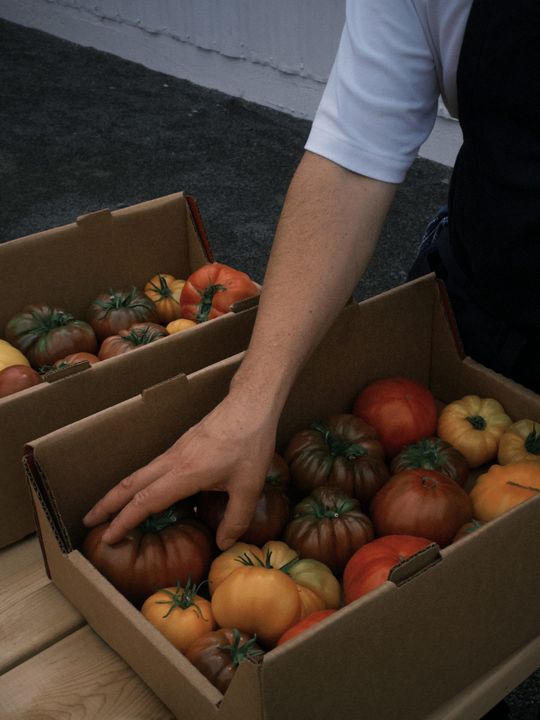
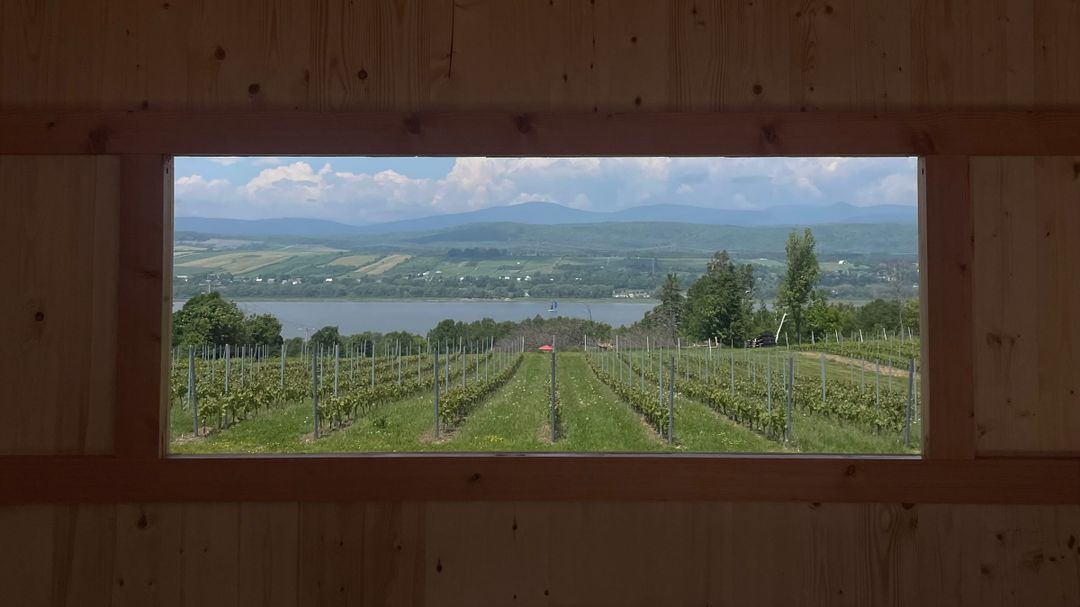
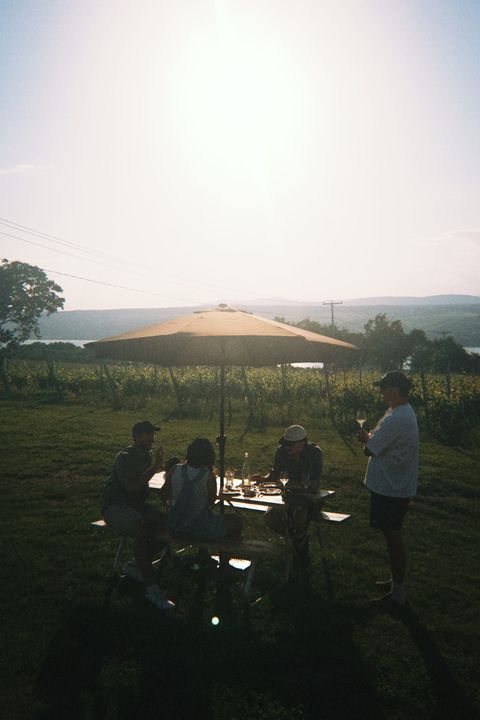
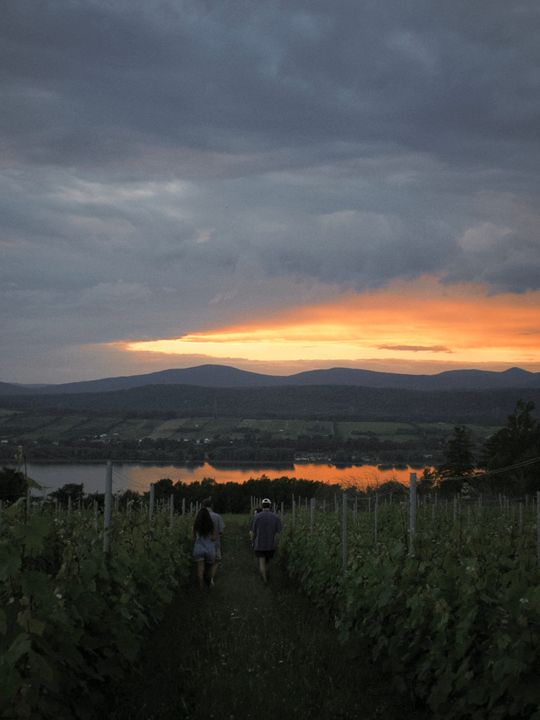
The terrace overlooks rows of vines sloping down to the St. Lawrence, with the mountains of the north shore as a backdrop. It is from here that the garde-manger kitchen led by Guillaume Bombardier, whose résumé includes ARVI, Parcelles and Melba, carries this philosophy onto the plate. The small plates are designed to go with the wines and, put together, can make a full meal. The menu changes with the harvests: Quebec trout gravlax brightened with herbs and flowers picked each week on the property, oyster mushrooms en escabeche, seasonal vegetables, brioche bread candied in the estate’s honey and topped with goat cheese from a neighbouring farm. The fresh herbs that scent the plates today will gradually flavour the mocktail offering too. Sorbets served for dessert draw on rhubarb, elderberry or small fruits picked close by.
Precise, generous cooking rooted in the resources of the island and its surroundings, with the goal of giving a growing place to what grows here, from the apiary to the vegetable garden, without passing up the producers nearby.
This first season wraps up in mid-October. Next comes bottling the vintage, then a break the estate plans to use to rethink its distribution and prepare what’s next: a red and a more food-friendly rosé are expected this winter, and the next menu will draw even more on the estate’s own harvests. The terrace will be a welcome sight again come spring.
A bold, modern vineyard that fits naturally into the Île d’Orléans landscape and is finding its place at several of the province’s best tables.
Written by Jean-Philippe Tastet
Photography by Audrey-Ève Beauchamp / Les Ouches