Harrison Shewchuk: Instinct, Creation and Freedom

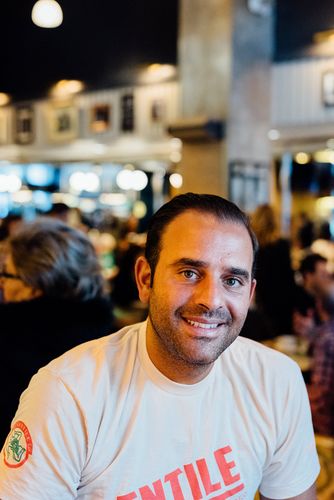
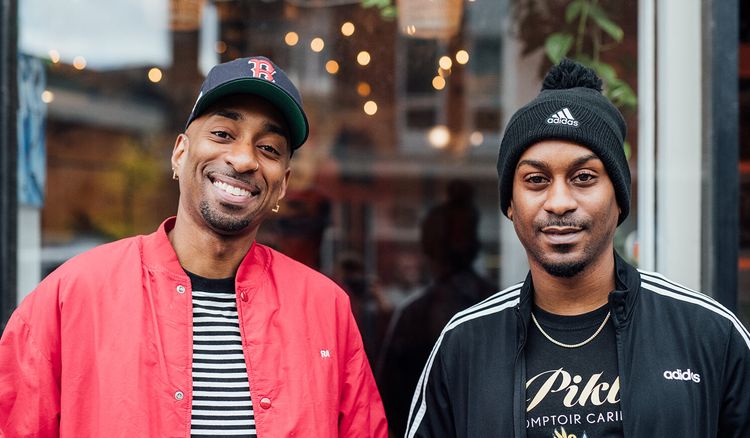
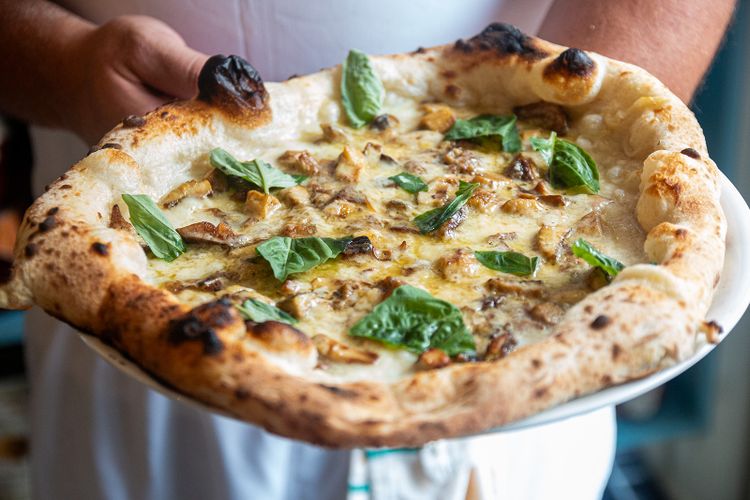
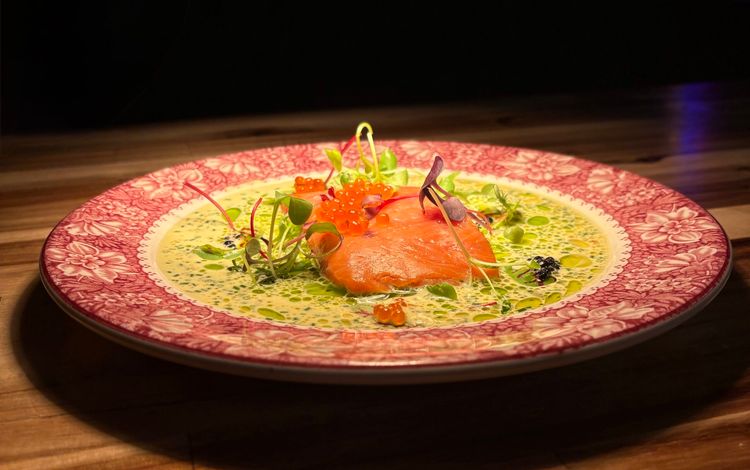
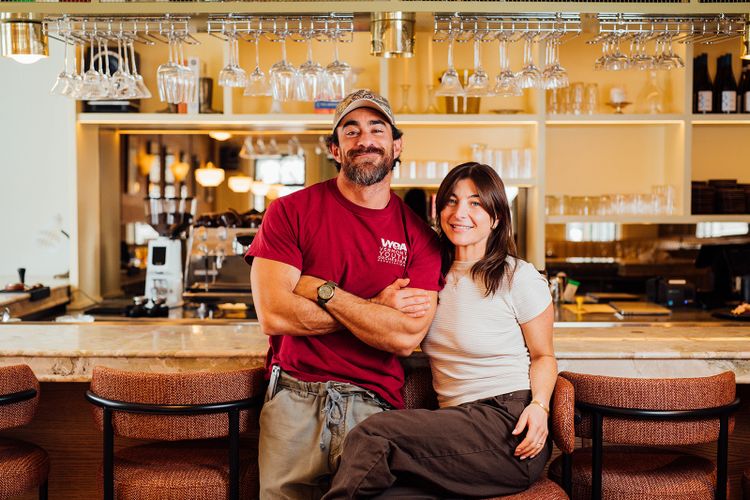
In a fast-moving culinary Montréal, Harrison Shewchuk has carved out a place for himself thanks to a sharp instinct and an intuitive reading of what resonates today: knowing what works, sensing trends before others do, and building an identity that truly reflects who he is. Without artifice and with an easy confidence, he has created a distinctive culinary universe. At 34, the chef-owner of Limbo—already recognized in Air Canada’s Top 30—offers a personal, precise cuisine that is fully owned.
A normal childhood, but a singular appetite
In the Shewchuk household, people ate very well. His mother, an English-speaking Montrealer raised between Montréal-Nord and Ahuntsic, had a deep passion for Italian cooking. Around her, Lebanese food lovers she spent time with cooked generously. “We were very good at eating!” he sums up with a laugh. A love of food wasn’t a concept—it was a reflex, a language, a playground.
As a teenager, he turned to photography and studied at Dawson. He wanted to create: images, atmospheres, music. But like many, he needed a job. In 2012, he landed as a dishwasher at Café du Nouveau Monde. A decisive encounter followed: Arline Gélinas, a demanding and impressive chef. One night, he watched a bavette sear, scallops crisp to perfection. “I want to get out of the dish pit! That is where I want to be!”
The revelation of cooking
What drew him in? Raw creativity, rhythm, energy. The immediate satisfaction of working with his hands. “I could have been a carpenter. I like building.” The kitchen became his workshop.
He enrolled at the ITHQ—not out of obligation, but conviction. “I believe in training. Otherwise, I feel like an imposter.” At the same time, he cooked brunch and did prep on the line at Maison Publique, where Derek Dammann and Phil Viens took him under their wing.
The contrast was striking: 900 covers before Jazz Fest at Café du Nouveau Monde, then 70 guests at Maison Publique, with house-made bacon, house-made scones, and products of almost insolent beauty. He then did a stage at Joe Beef. The learning was total: producing, transforming, tasting, understanding.
London, the school of rigor
After ITHQ, he dreamed bigger and secured a visa for London. He left in 2015, building a life in a city where every alley hides a cult restaurant. He worked, learned, integrated. He staged at Lyle’s—“it was wild”—then became sous-chef for Michael Hazlewood at a natural wine bar in Soho. Europe offered strikingly high-quality products and a culinary scene that never sleeps. He did pop-ups, met chefs, absorbed everything.
But Montréal called him back. “Something always pulled me home.”
Back to basics and first leadership roles
Returning to Maison Publique, he became sous-chef and then took over the evening kitchen from Phil Viens. Watching Phil transform classics while constantly innovating left a deep mark. “I wanted to be that guy.”
Then came Tiers Paysage. A fascinating project—small budget, huge potential. There he learned resourcefulness and team management. But the pandemic hit. And with it, a first hard realization: it wasn’t his place, not his path.
Salle Climatisée, Parcelles, travel: building, falling, starting again
With friends Darcy and Brendon, he launched Salle Climatisée. As a chef in the middle of a pandemic, he made sandwiches, posted on Instagram, created merchandise. When the restaurant finally opened, it was a phenomenal success. Then tougher moments arrived, and he decided to sell his shares in Salle Climatisée. It was a choice made to preserve long-standing friendships and to stay in a positive headspace in order to keep moving forward. “It was hard. But necessary.”
He then went to work with Dom at Parcelles, traveled, multiplied pop-ups, and got involved in the hot sauce company Satan’s Drain Cleaner. But despite the action and buzz, something didn’t align. He took a sabbatical year. He loved everything he was doing—but didn’t feel centered. He wanted to open his own restaurant.
Limbo: a home, a team, an anchor
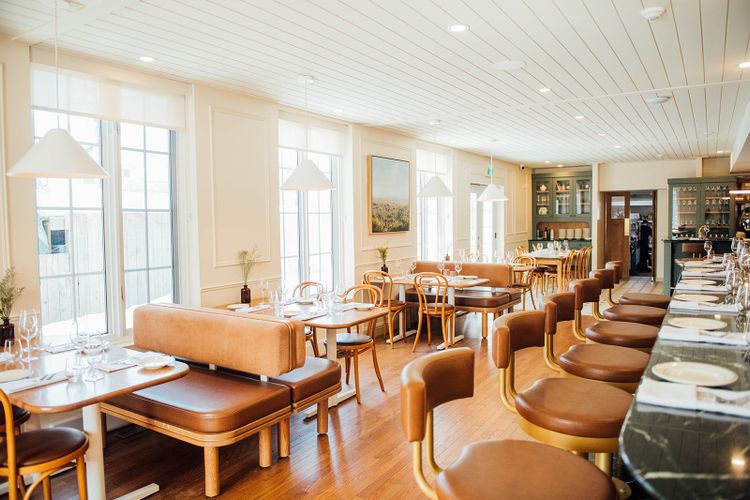
One day, while walking by the former Marconi, Mehdi, the owner, invited him in for a visit. The space spoke to him. He saw the kitchen, the light, the potential. He believes in community, in places with soul. And he believes in being well surrounded.
His friend Jack—“a good friend from Dawson, we played music together, even went to raves together!”—now a manager at Pichai. Along with Jesse Massoumi, Xavier, and Conor, the group’s official hype man, the electrifying quartet took the leap.
No designer, no plans. They built everything themselves. The same stairs and floors as the old Chevalier depanneur downstairs. History woven into the wood. Harrison loves creation and ideation.
The day after construction wrapped, his brain switched to menu mode. Execution mode. Delivery mode. It was time to open the doors.
Limbo was born.
A cuisine without constraints
A Tastet favorite from the start, Limbo climbed in just eight months into Air Canada’s list of the 30 best new restaurants in the country. But for Harrison, true success lies elsewhere: in freedom. Limbo is the space where, with sous-chef Cédric Larocque and the team, he can shape ingredients, compose the atmosphere like a soundtrack, and let instinct guide creation. No rigid framework, no fixed signature. “I want to be known for a way of cooking, not a single dish.”
He loves his team, his neighborhood, the proximity to Jean-Talon Market. Above all, he loves being able to focus all his energy on one thing: making Limbo a restaurant Montréal can be proud of. Other projects are already germinating—of course—but they can wait. “One day at a time.”
Because Harrison wears a thousand hats at once: chef, creator, designer, musician, manager, builder. This versatility, this total freedom, has become Limbo’s DNA—and the truest expression of the person who gives it its identity.
Written by Jean-Philippe Tastet
Photography by Alison Slattery