The Acorn: on Main Street, vegetables lead

The Acorn Restaurant
- $$$$
- Booking
-
3995 Main Street Vancouver V5V 3P3
+1 604-566-9001 -
Monday: Closed
Tuesday: 5:30 PM – 10:00 PM
Wednesday: 5:30 PM – 10:00 PM
Thursday: 5:30 PM – 10:00 PM
Friday: 5:30 PM – 10:00 PM
Saturday: 10:00 AM – 2:00 PM, 5:30 PM – 10:00 PM
Sunday: 5:30 PM – 10:00 PM, 10:00 AM – 2:00 PM
-


- Restaurant
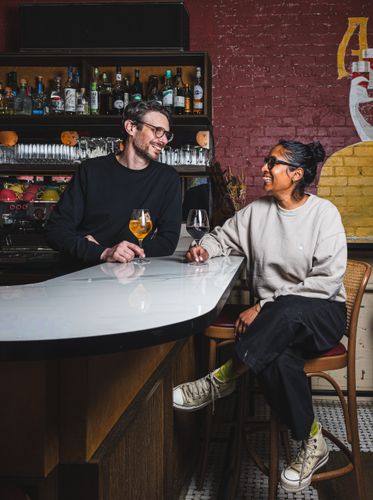
Shira Blustein went vegetarian in 1995. Years later, touring the world as a musician in punk and indie rock bands, she kept tasting vegetables cooked in ways she couldn’t find back home in Vancouver. “Why doesn’t that exist here?” she kept asking herself. That question eventually led to The Acorn, a vegetable-forward restaurant and bar on Main Street that she describes, quite simply, as the restaurant she wanted to eat at.
From film school to the dining room
There was never a single moment of revelation. After film school, the founder worked in human resources for a non-profit housing society in the Downtown Eastside, all the while dreaming of a dining room of her own. In film school, she even shot a cooking show pilot with her mother, reasoning that if the show got picked up, a restaurant would follow. She later learned that distant relatives around the world run restaurants and kitchens, which she half-jokingly credits to genetics. To prepare, she worked in restaurants and took business classes at night. “You can be a great server,” she says. “That doesn’t make you a great operator.”
A century-old building, seven decades of restaurants
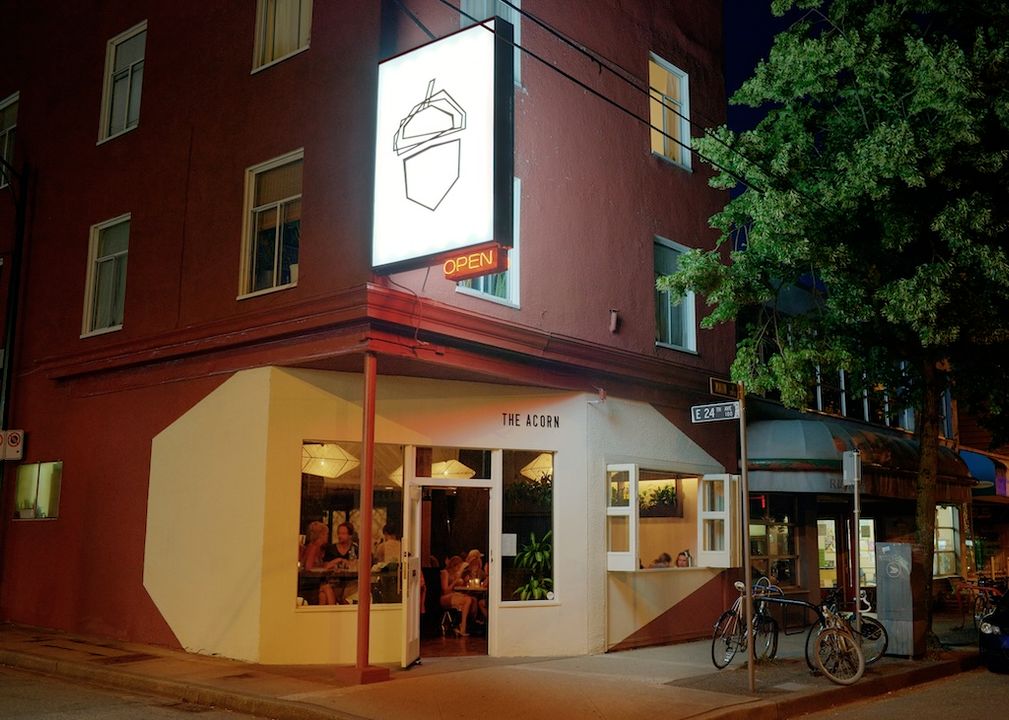
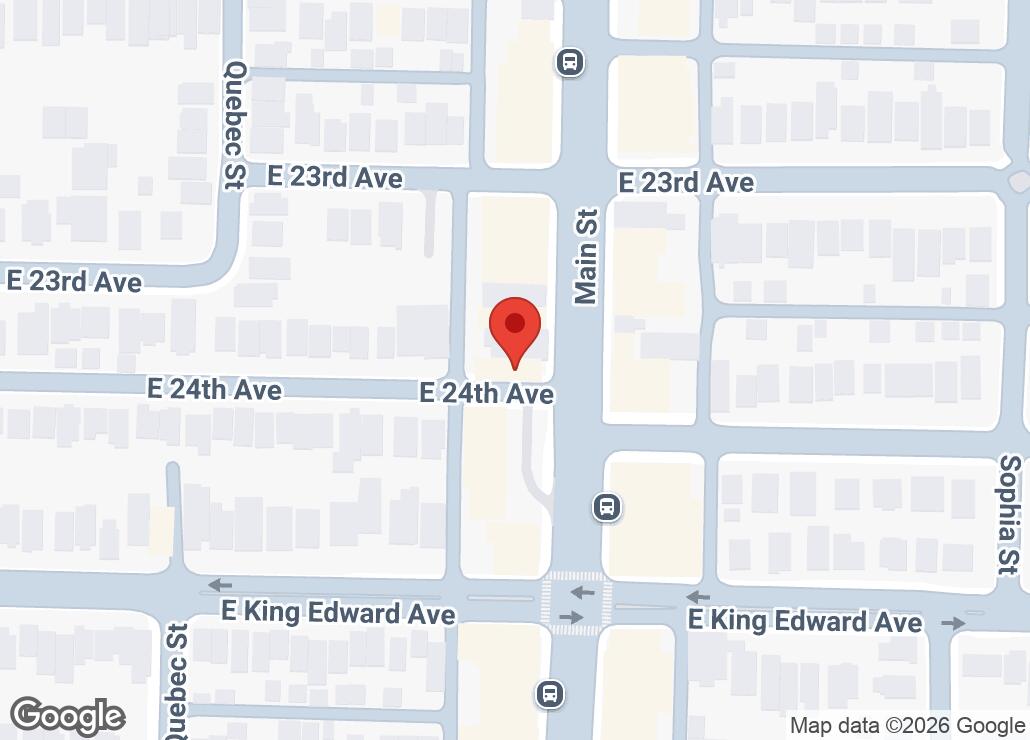
She had lived a couple of blocks away for years when the space at the corner of Main and 24th came up for sale. It had housed Cipriano’s, an Italian institution, for almost 30 years, and before that a pizzeria, making it a restaurant for some 70 years in all. The price tag felt far out of her league, but after a few meals there, the owner told her he wanted her to have the space. With the help of a restaurateur who became her mentor and a community of friends, the team built the restaurant on almost no budget.
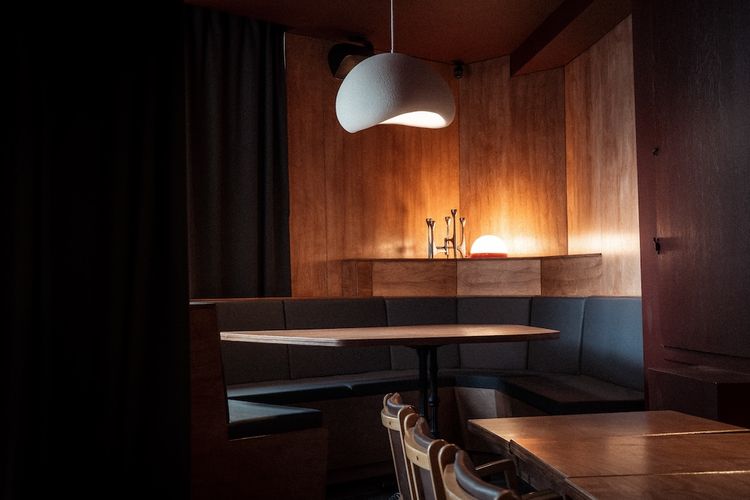
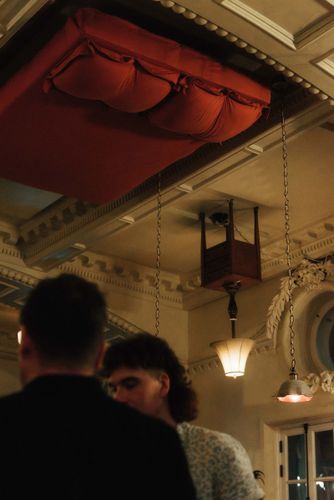
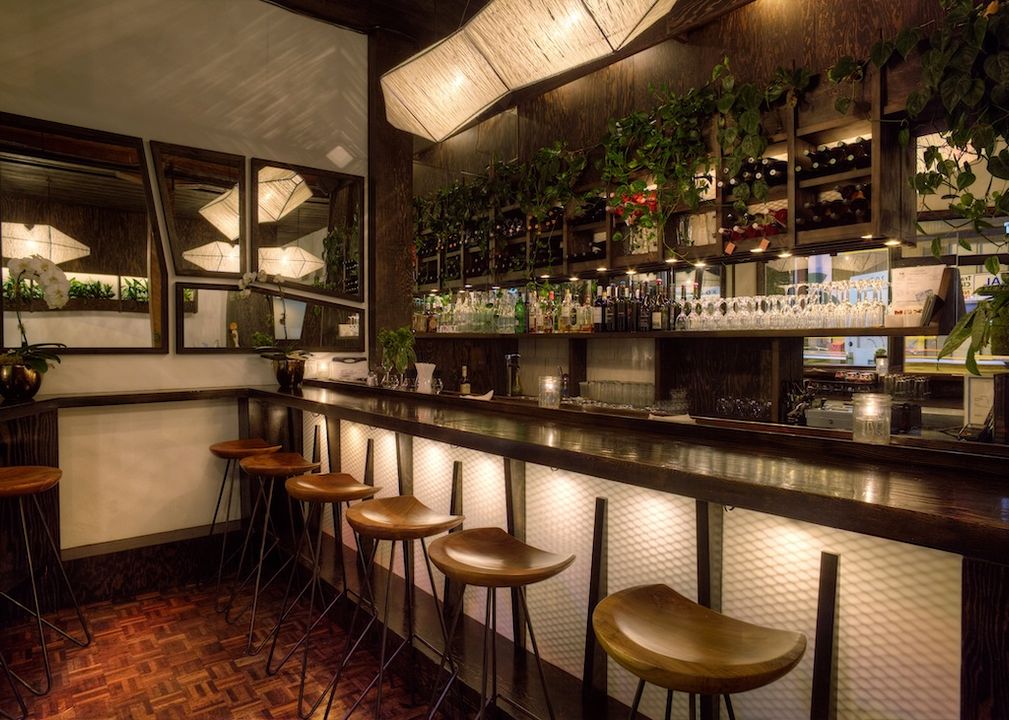
The bones of the 100-year-old building stayed, while the red checkered tablecloths, faux terracotta roof and drop T-bar ceiling went. The designer Scott Cohen, known for his love of circles and mid-century dark wood, was handed one firm rule for The Acorn: no circles anywhere. Following the angles of the building’s frontage, even the light fixtures became angled welded metal wrapped in yarn and wool. The result reads as an urban, mid-century forest in dark tones, a room that sets the mood through lighting and music.
Mood matters to a founder who comes from music and shares her life with a painter. She often compares a service to a band on tour, with every member playing a part in one performance each night. When she asks her servers about their best day at work, nine out of ten describe a service where everyone clicks.
“Where’s the meat?”
Before opening, she looked for signs that the city wanted this kind of restaurant. Years earlier, a local food writer had already pointed out that Vancouver was missing a vegetable-focused dining room. Once the doors opened, at a time when many rooms in the city took no reservations, the line formed outside every service, with a two-hour waitlist for a tiny room that turned two and a half times a night. Some guests waited an hour and a half, sat down, read the menu and looked up to ask where the meat was. (Good news: these days, you can book a table!!)
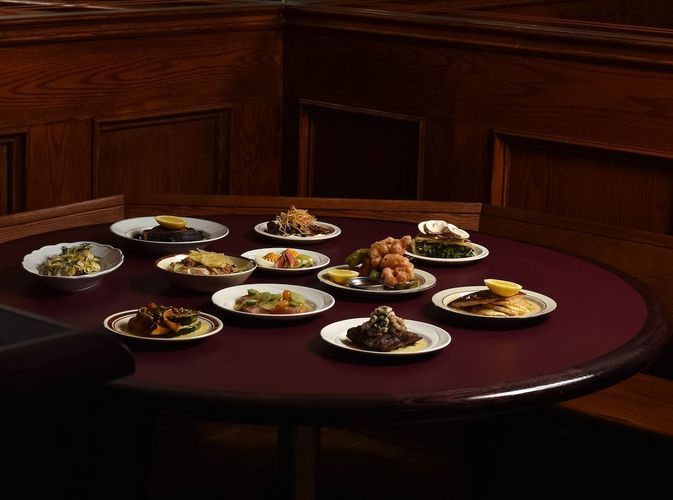
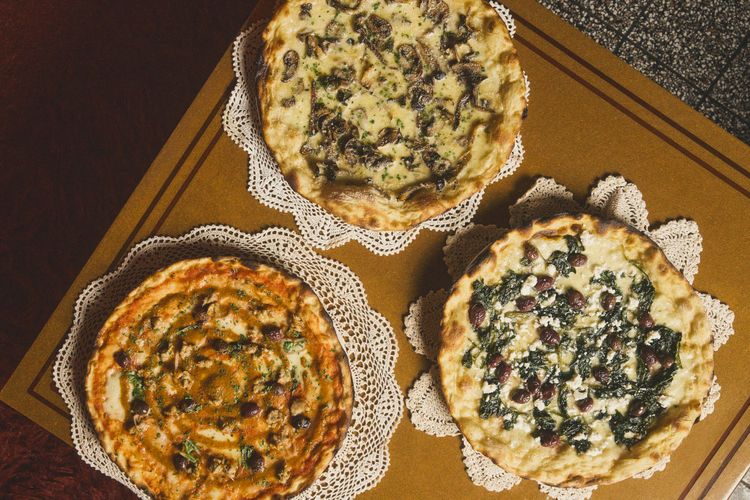
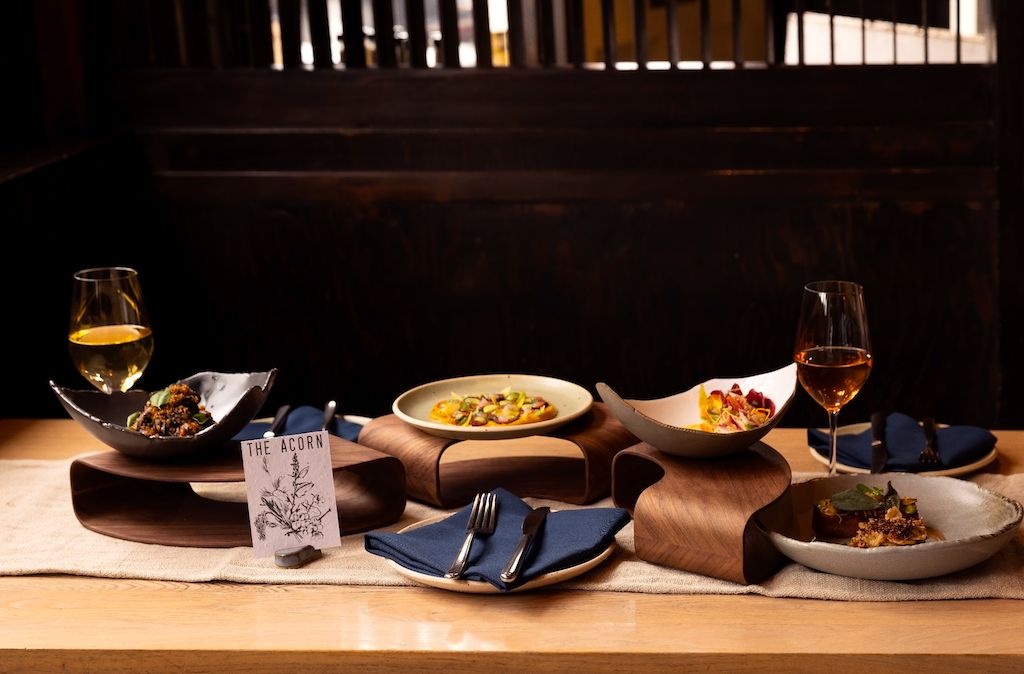
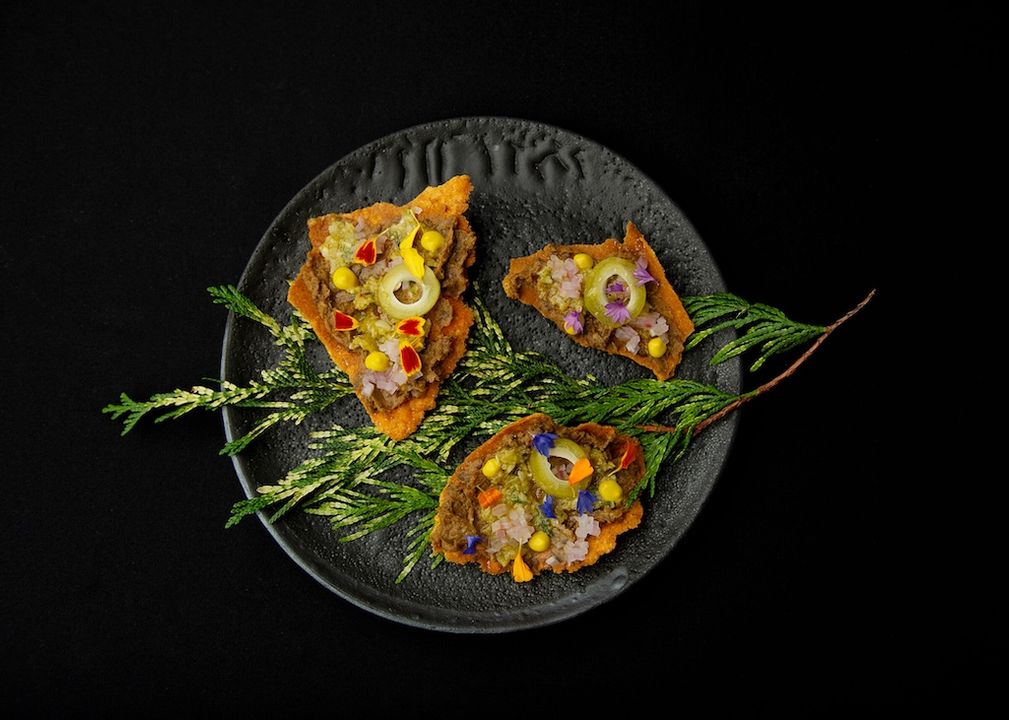
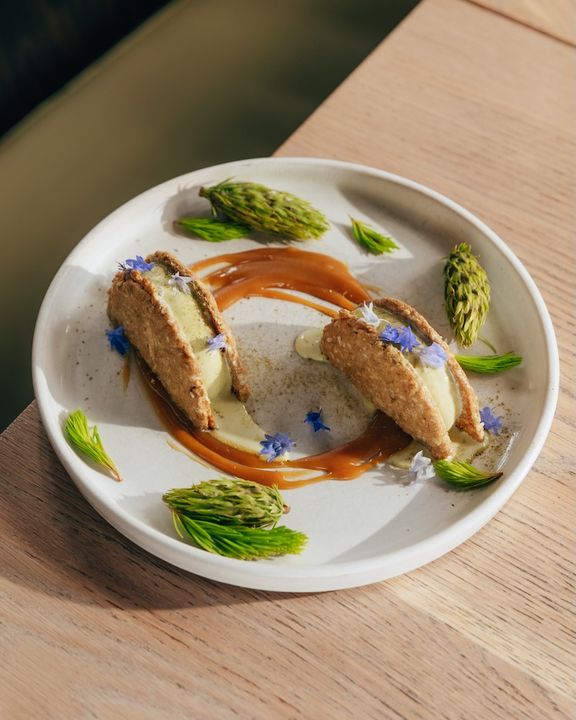
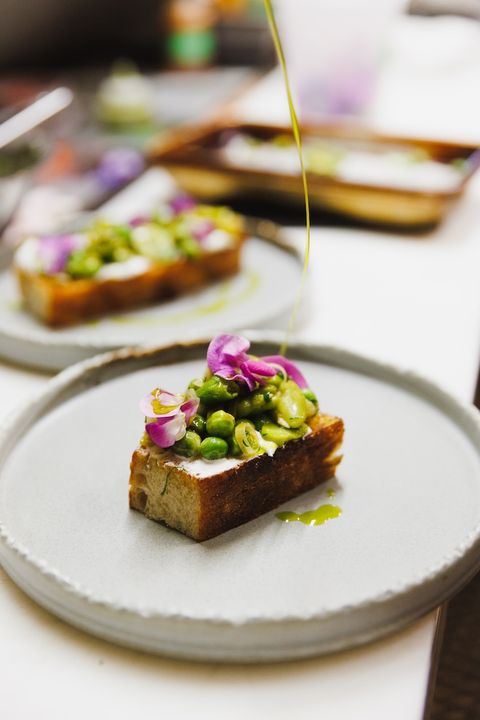
But back to the meat: the kitchen never set out to imitate it. At The Acorn, protein comes from grains, legumes and nuts, with no prepackaged products, and fresh pasta is made from scratch with local flour. Diners’ priorities have shifted over the years, from raw food to gluten-free, vegan and, lately, protein, and the restaurant has adapted while holding on to its mission and values. Vegan and gluten-free options are always on offer, and the focus stays on organic farmers and foragers, some of them a 15-minute drive from the restaurant.
A menu shaped by its farmers
This commitment to local sourcing grew step by step, and it calls for choices that take time, energy and sometimes money, though some prove well worth it. At a provincial forum pairing chefs with farmers, the team met a garlic grower from the Interior just as they were struggling to replace imported peeled garlic, shipped in tubs of water. He came back six months later with a solution, but one that would cost the restaurant a lot more. The founder agreed to a trial, and the freshly peeled cloves proved so potent that the kitchen cut the garlic in its recipes by about two-thirds, which more than covered the difference and showed the team that going local can be a bet worth making.
Other choices meant letting go of a favourite. The longtime fish and chips riff, built on battered halloumi with a potato pancake, mushy peas and minted yogurt, eventually left the menu, since the peas were hard to find anywhere but in the frozen aisle of the grocery store. Halloumi fans, however, can rest easy: a local farm went on to develop a halloumi-style cheese for the restaurant, and it still appears on the menu in different forms.
The approach also feeds the curiosity and creativity of both the kitchen and the farms. Head chef Matt Gostelow, who started at The Acorn as a cook, left to work in other kitchens and returned years later as sous-chef, now works with farmers who have grown more adventurous over the years. Many of them ask the restaurant what to grow, and some even plant crops specifically for it.
A carrot, from top to peel
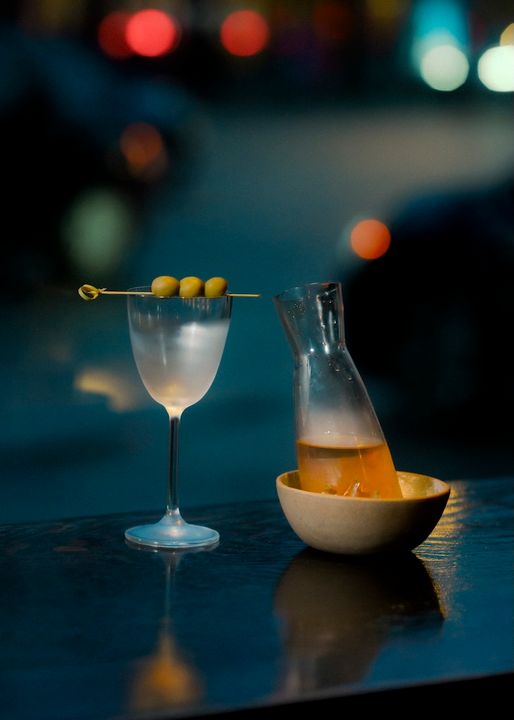
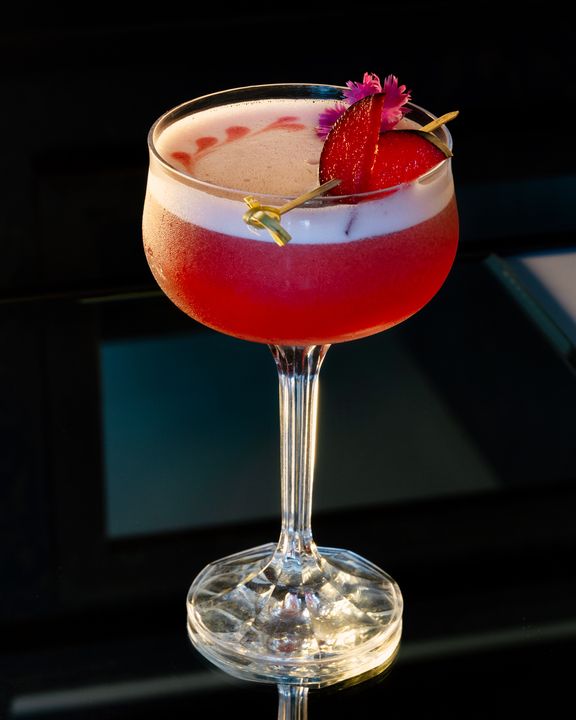
Zero waste sits at the heart of the restaurant’s philosophy, and it demands a new way of looking at every ingredient. Carrot tops become pesto, washed peels are fried into crispy garnishes, the roots are sometimes juiced and the pulp is dehydrated into a seasoning. Corn goes further still, with the husks, silk and cob all finding a use, from stock to candied garnishes. The bar works from the same pantry, turning kitchen leftovers into syrups and vinegars for its cocktails, which favour local spirits and breweries. The wines come from sustainable farming and low-intervention winemaking.
The Acorn, bound in a book
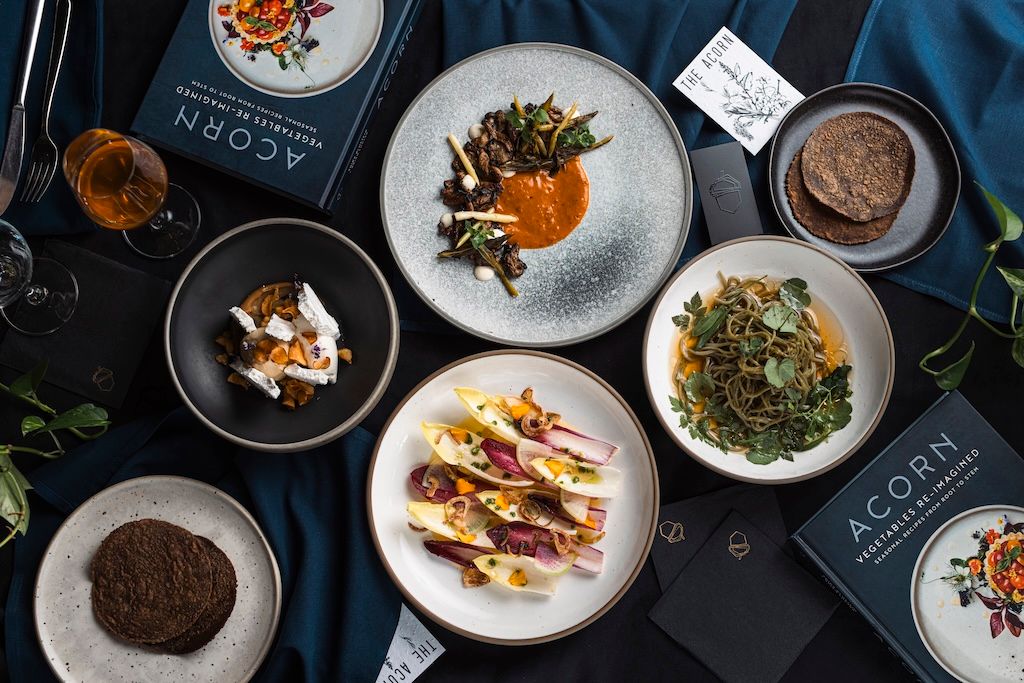
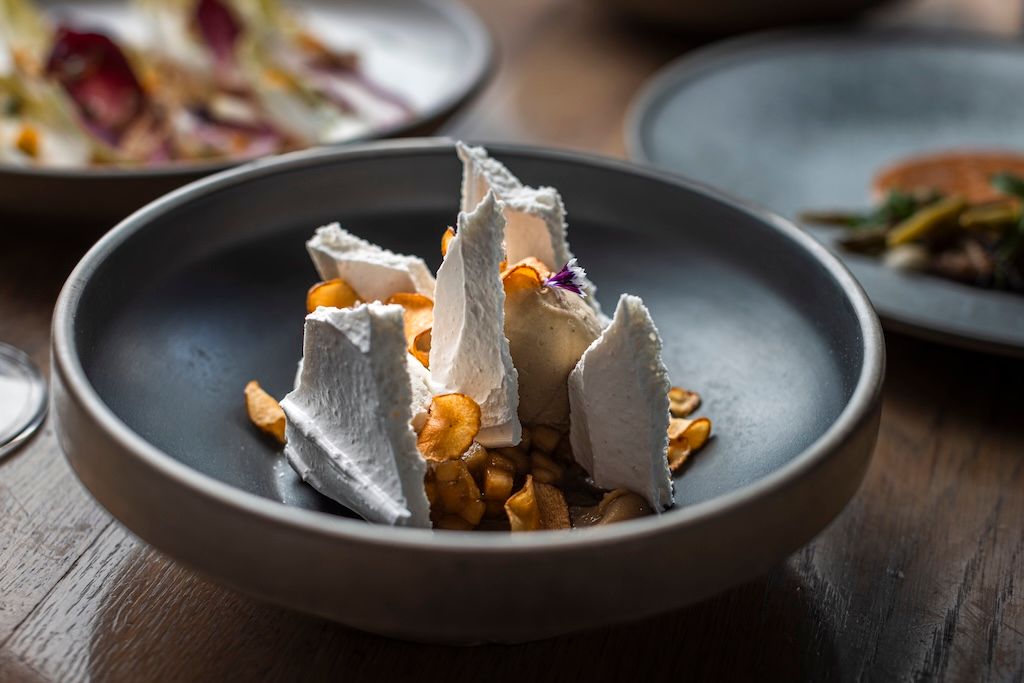
For a musician used to writing and releasing albums, a restaurant’s work could vanish with its last service. The founder wanted a body of work that would outlive the room, and the cookbook Acorn: Vegetables Re-Imagined, written with chef Brian Luptak, took four years to complete. Photographer Gabriel Cabrera shot the dishes over a single year, cooked in real time with the seasons, and the team ate every plate right after it was photographed. The chef insisted on serving the food exactly as it would reach a table, so the photos would bring back how each dish tasted. The founder’s husband, Scott Lewis, drew the illustrations.
A snack at the bar or the full tasting menu
Since the pandemic, dinner has added a tasting menu to the à la carte offering, and most guests now choose it. The founder is just as happy to see someone drop in for a glass of wine and a snack at the bar as she is to watch a table work its way through the tasting menu. The Acorn is often booked for birthdays and anniversaries, though a special occasion is never required. The founder and her husband have since opened Lila, a modern Indian restaurant also on Main Street, with chef Meeru Dhalwala, co-founder of Vij’s.
Brunch is another way to discover The Acorn, and a favourite for many families who come with their children. Its longest-standing dish nods to chicken and waffles: the house vegan, gluten-free Belgian waffle, now sold as a retail line, topped with crispy fried oyster mushrooms, a house miso gravy and a sweet chili sauce. The cooking follows the seasons here too, as it has for every service since the beginning, through the farmers and foragers who bring Vancouver’s landscape to the table.
Written by Marie-Françoise Malo
Photography by Shira Blunstein, Chris Haylett, Jenille Marigomen, Alison Boulier, Andreanna Cheng & Bizent Harrewyn