Lodeo: An Homage to Chinatown by the Fleurs & Cadeaux Team
LODEO
- $$
- Booking
-
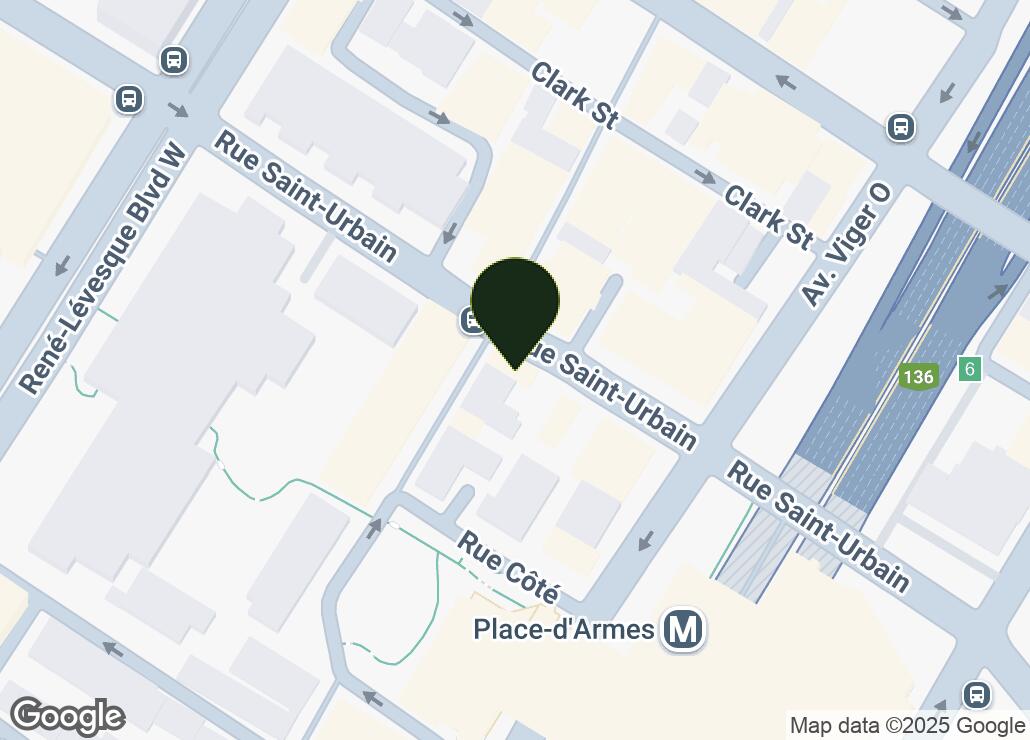
1018 Rue Saint-Urbain Montréal H2Z 1K6
+1 514-868-9738 -
Monday: Closed
Tuesday: Closed
Wednesday: 5:00 PM – 11:00 PM
Thursday: 5:00 PM – 11:00 PM
Friday: 5:00 PM – 11:00 PM
Saturday: 5:00 PM – 11:00 PM
Sunday: 5:00 PM – 11:00 PM
-


- Restaurant
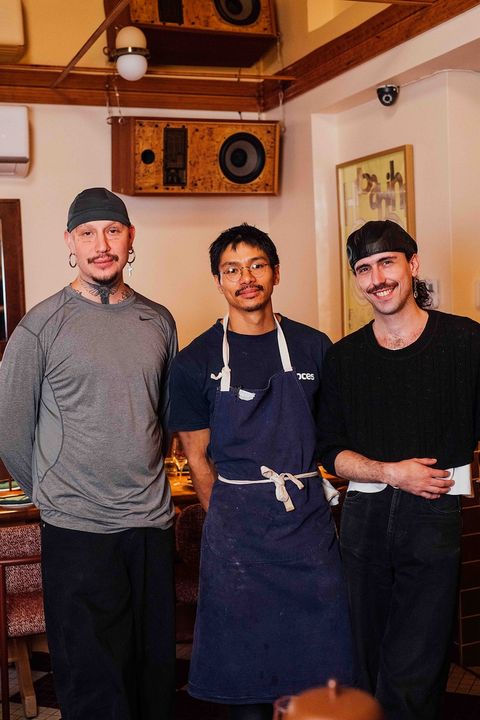
Every Chinatown in the world tells a story of migration, of flavours carried far from home and reinvented along the way. Lodeo is a tribute to that idea of Chinatown, where Chinese cuisine meets everything it has picked up on its travels. The little cousin and new neighbour of Fleurs & Cadeaux and Café Cadence carries the same warm, easygoing energy we’ve come to expect from this crew.
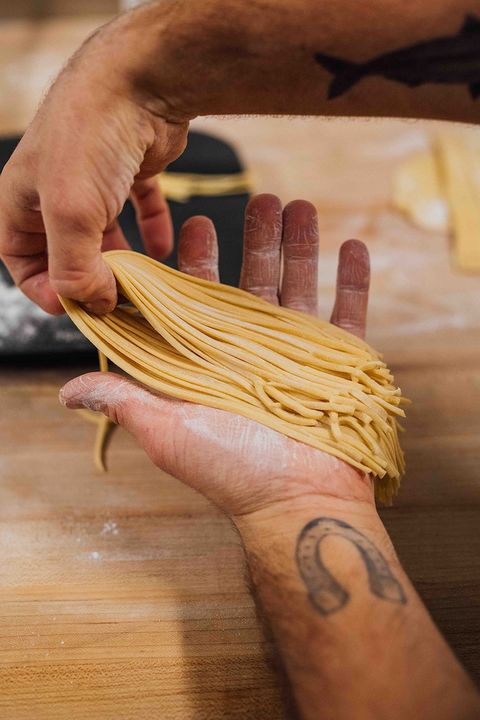
Lodeo now occupies the former Noodle Factory, an iconic Chinatown spot known for its hand-pulled noodles, whose owners passed the torch when they retired. The building itself holds a ton of stories: it was once home to Café Rodéo, a Western-themed bar, renamed Café Lodéo in 1972 by owners King and Wesley Chan because it was easier for their Chinese clientele to pronounce. The new restaurant borrows that name and its playful cross-cultural spirit.
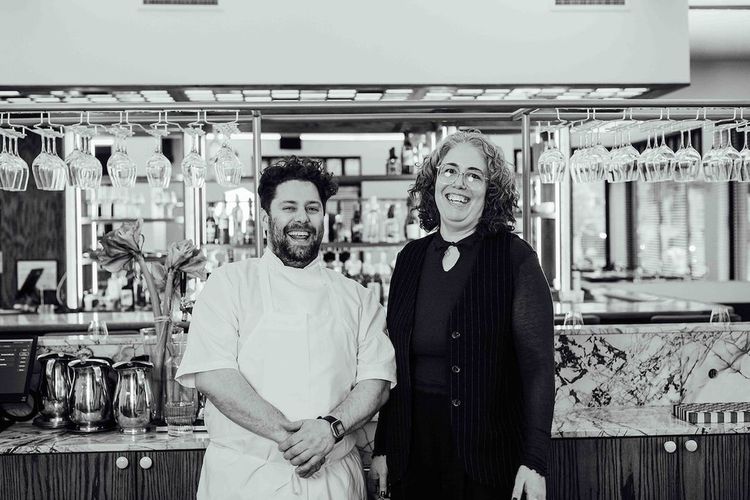
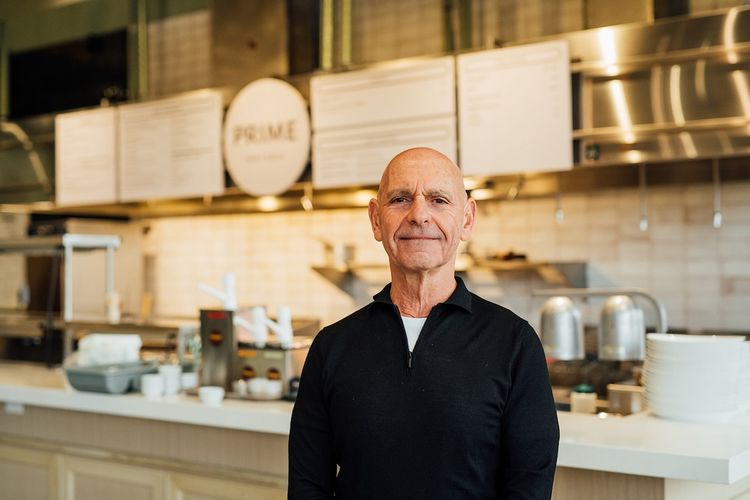
Today, Lodeo is reborn and run by Marc Villanueva, better known as chef Marky. Born in the Philippines and raised in Spain, he started cooking in Toronto before landing at the Cabane du Pied de Cochon. He later cooked at Denise alongside David Schmidt, one of the partners behind Fleurs & Cadeaux. Marky now leads Lodeo as chef-owner alongside Schmidt, Xavier Larivière and Romain Peynichou, long-time managers at Fleurs & Cadeaux.
Chinatown as a State of Mind
“Chinatown, all over the world, is this microcosm of not just Chinese food,” Marky explains. “As an immigrant, you go to a Chinese supermarket and you find familiar ingredients and familiar flavours, things that make you remember base memories.” That feeling is the heart of the project. “It’s not traditional Chinese food. It’s things that feel familiar to me, and hopefully they become familiar to other people in some form or another.”
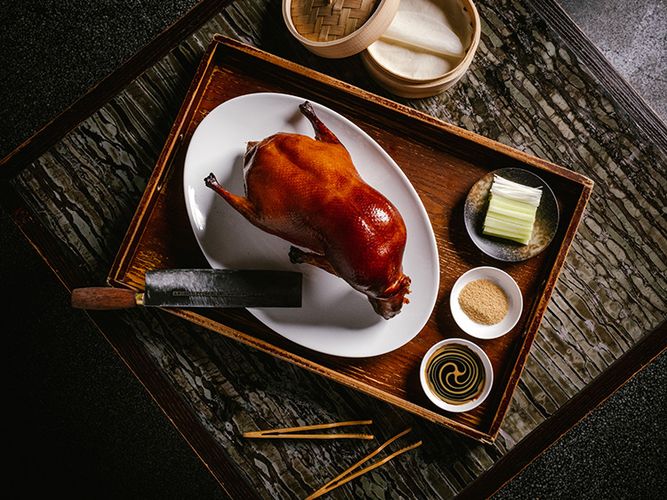
His base seasonings are Chinese (Shaoxing wine, soy sauce, white pepper), but the influences reach much further: to the Philippines, where pancit, the umbrella term for noodle dishes, takes its name from a Hokkien word, and to Malaysia, Indonesia and Japan, where he recently traced those same Chinese accents. “For me, the easiest way to describe it is: it’s Chinatown,” he says. Noodles are made in house, and duck is the protein of choice, a nod to the three-course Peking duck meals that always stood out to him. “Sticking to recipes doesn’t really make sense to me. It’s the techniques and the base ideas that stand out. Then whatever you have, you work into it, and that’s when the food becomes fun.”
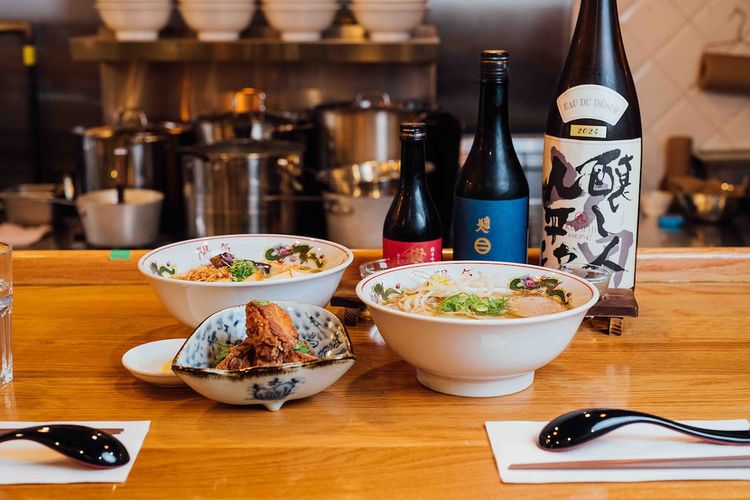
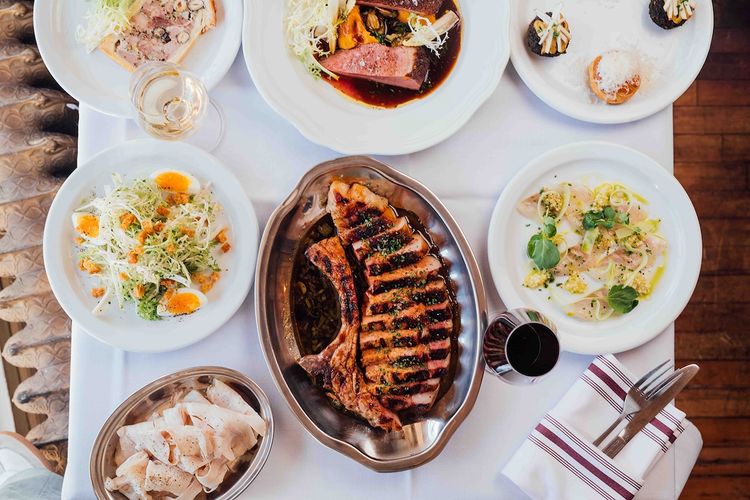
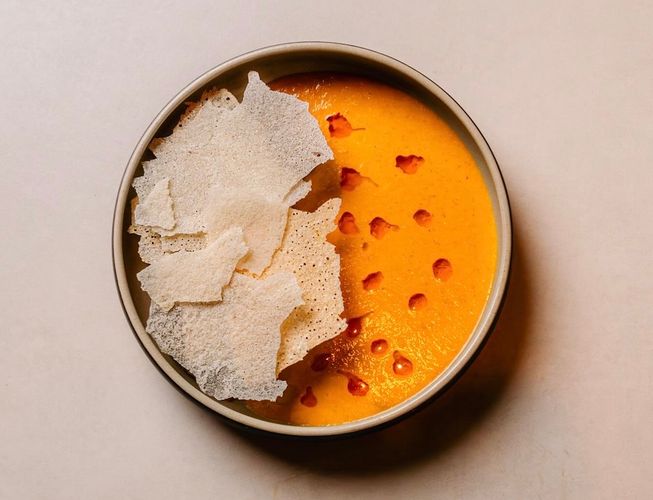
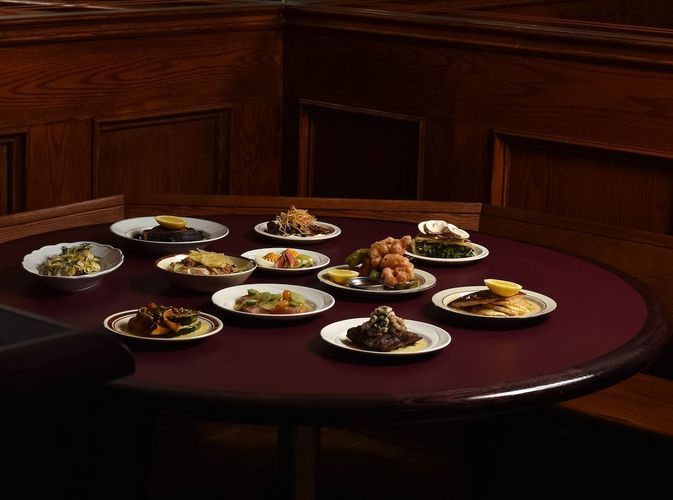
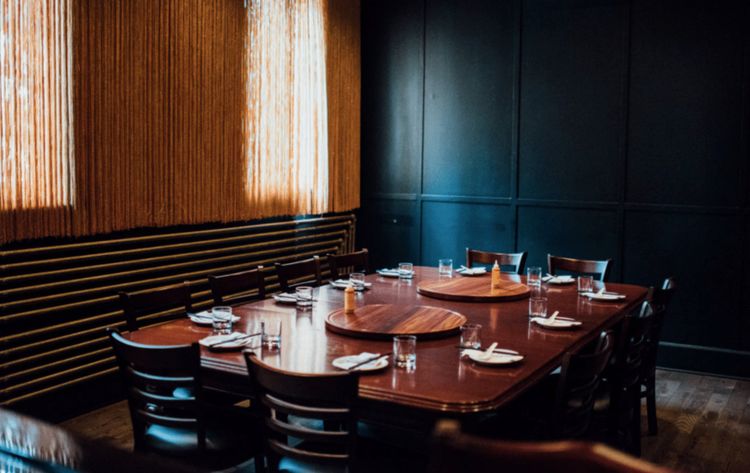
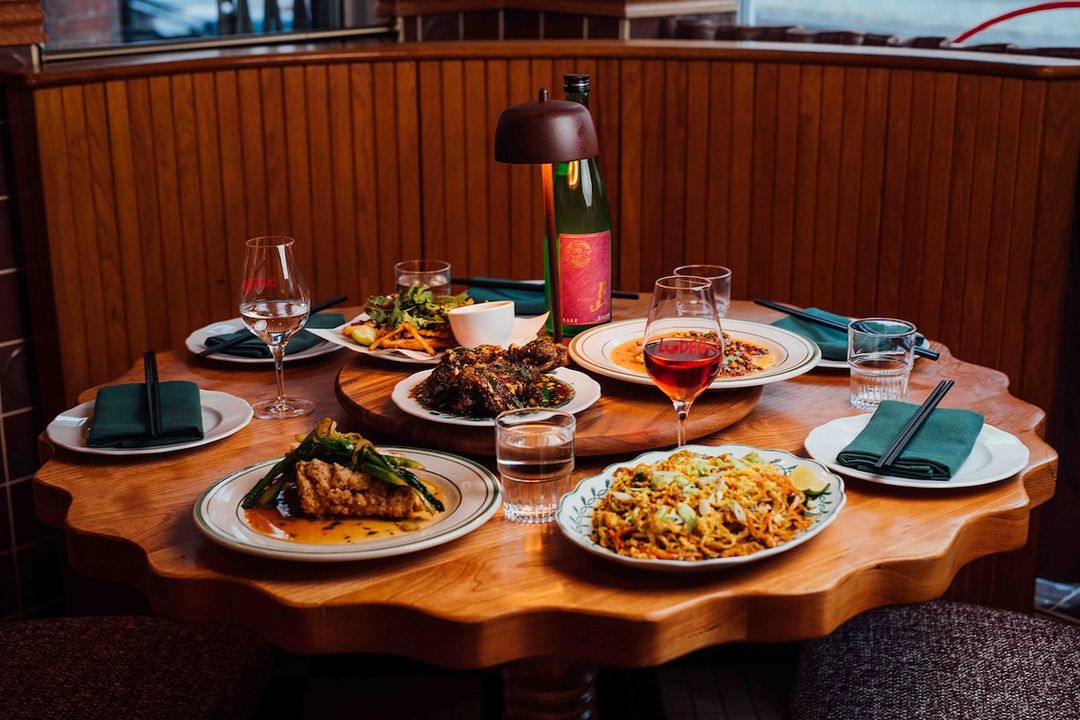
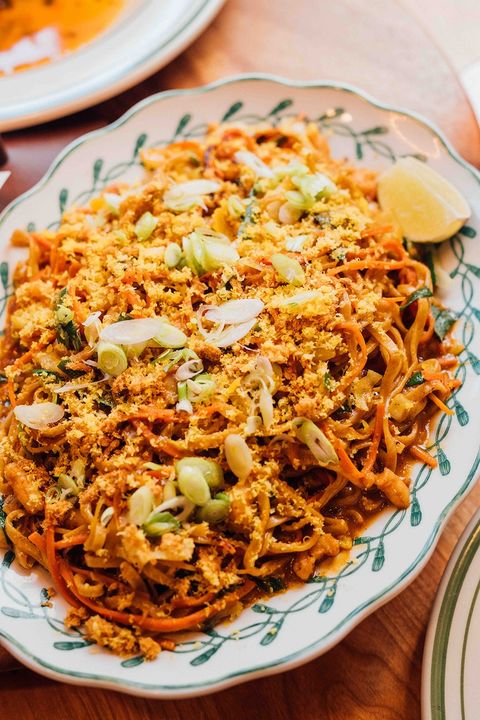
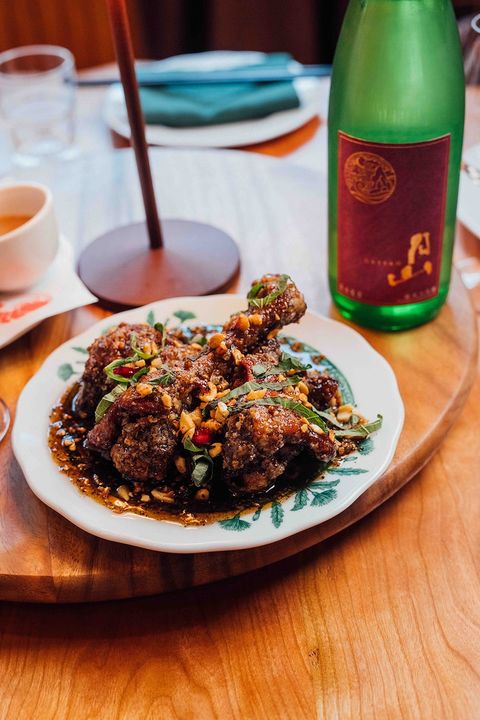
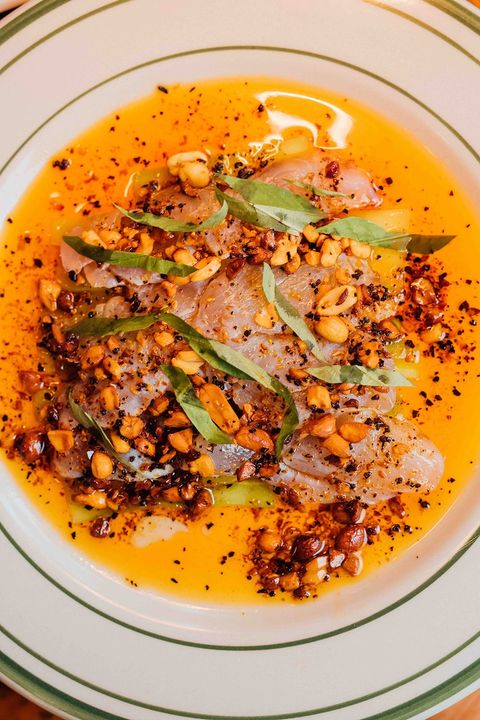
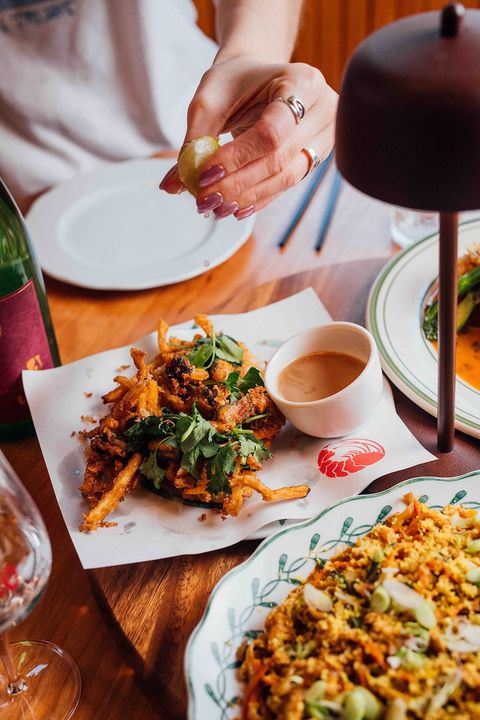
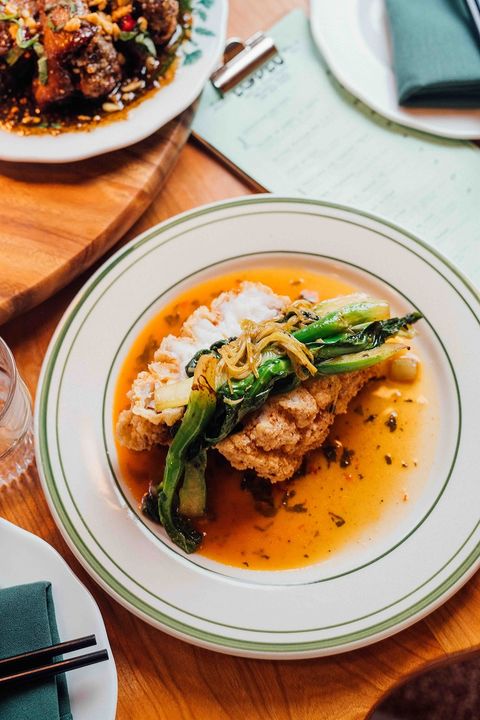
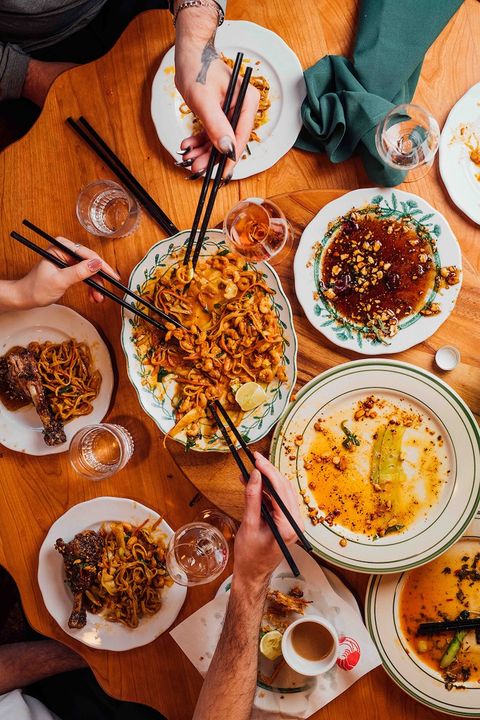
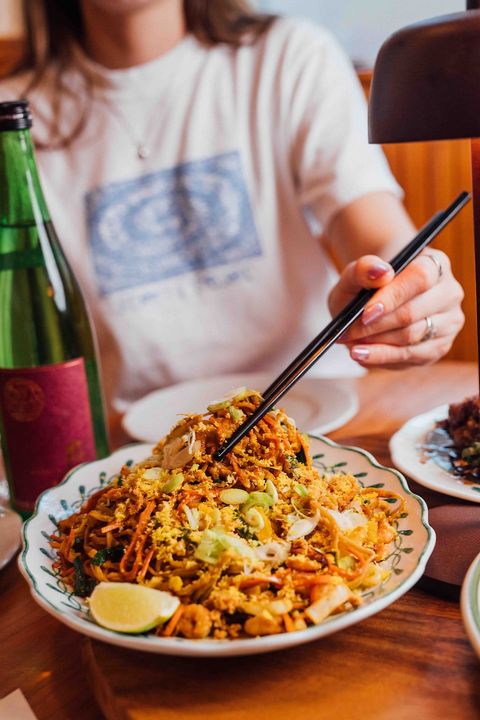
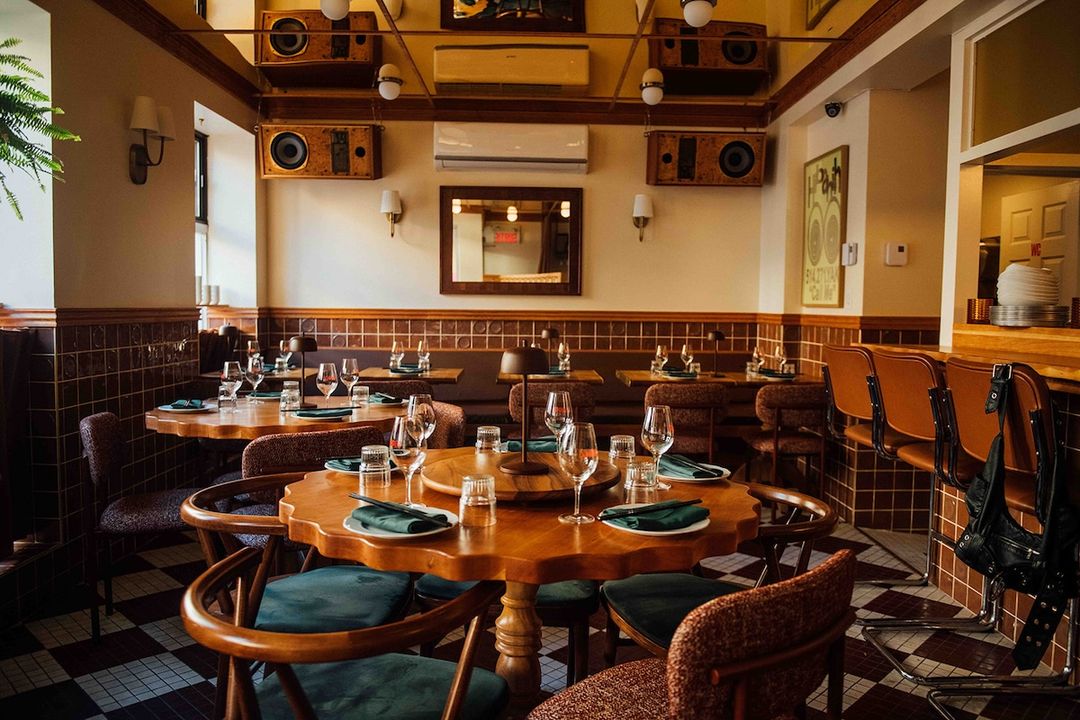
Most dishes here are fun to share, with lazy Susans in the middle of the bigger round tables, in true dim sum hall fashion. Our favourites go to the duck wings, lacquered in a sweet and sticky glaze, and the pancit palabok, noodles in a bisque sauce with plenty of Nordic shrimp mixed in, topped with a shaving of cured egg yolk. The chef sees each plate as a work in progress, so the menu is bound to evolve with the seasons, but noodles and fried rice will remain a cornerstone of Lodeo.
Make sure to end with the ube flan cake, the only dessert on the menu, and a seriously good one. Here, the ube leans almost chocolatey in a very moist cake crowned with a layer of flan. It’s a rich finish, and Marky counts it among the few dishes that have to stay on the menu.
A New Chapter for an Old Building
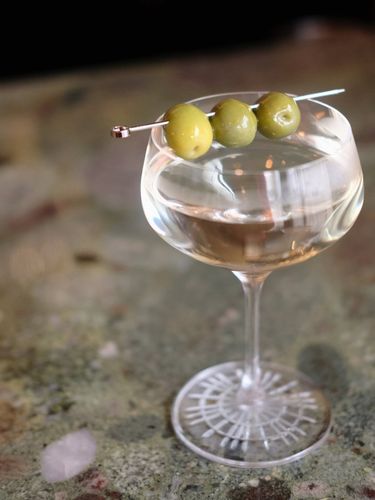
Wine and sake are the stars of the drinks list. Beyond them, it’s a single cocktail, a sparkling ginger highball, and a rice lager on tap.
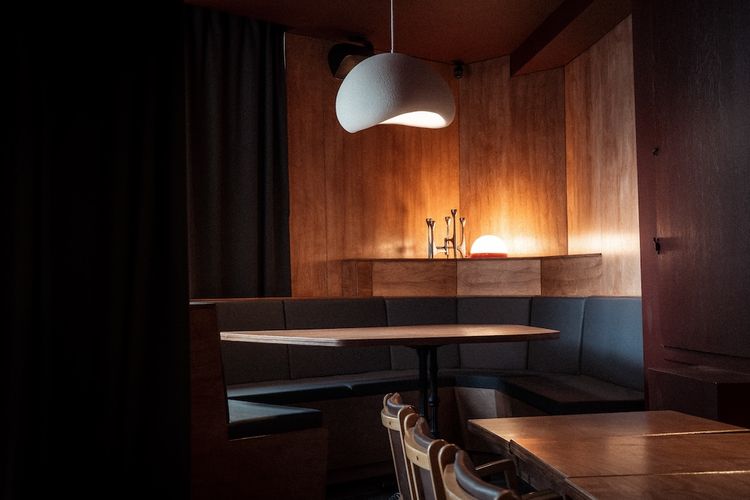
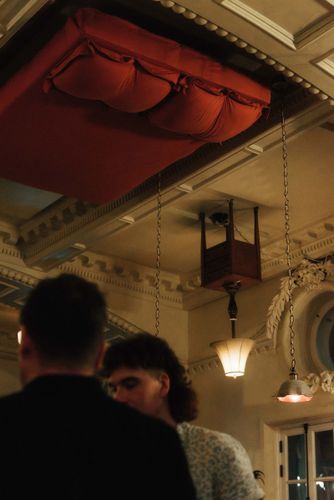
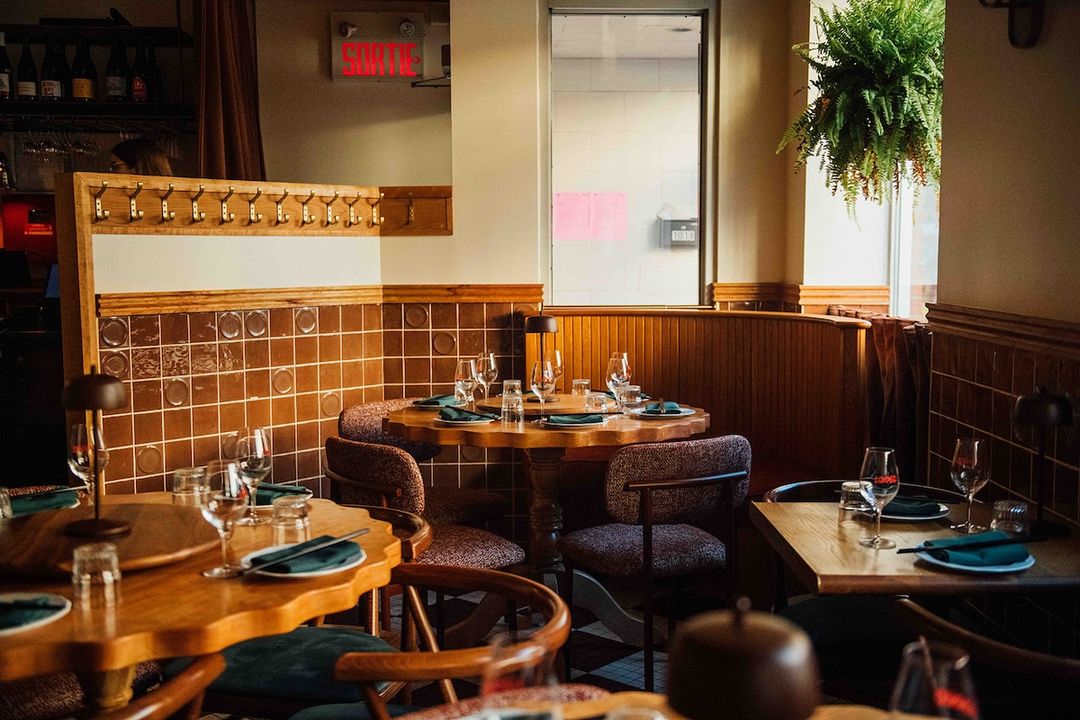
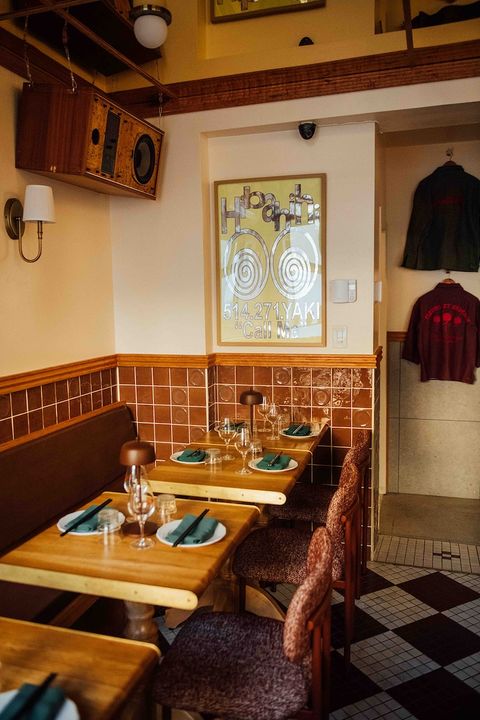
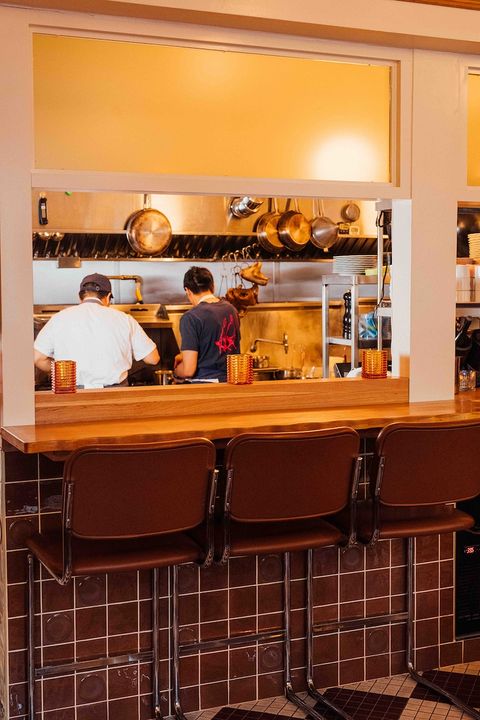
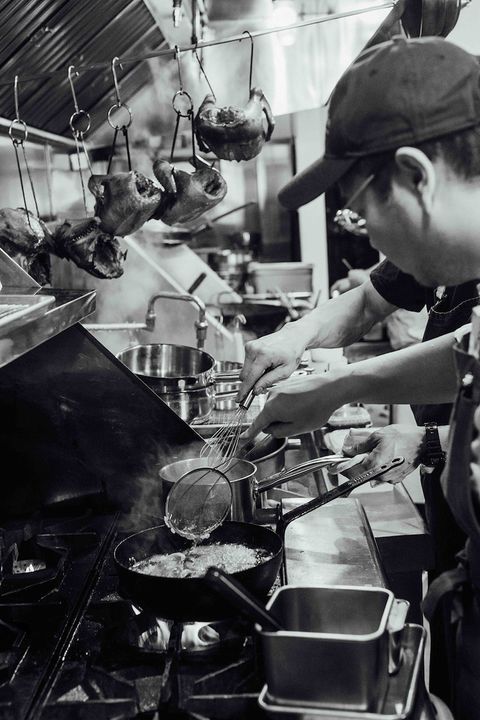
The space is small, about 30 seats, with warm retro decor, a mirrored ceiling, lamps on the tables and a few winks to the other restaurants in the family, like a Yakitori Hibahihi poster on one of the walls. The open kitchen keeps the mood lively and fun, and you can even see ducks hanging above the woks.
Marky hopes to honour the neighbourhood’s legacy. “I would love to pay homage to all these classic Chinese restaurants that have been here before us,” he says. With Lodeo, a building that already holds so many stories has found a new one worth telling.
Written by Marie-Ève Godin
Photography by Alison Slattery