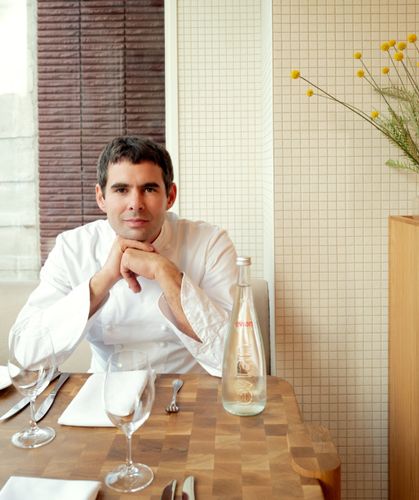
Teo Paul : The Quiet Force behind Toronto’s French Restaurant Empire.

There’s a particular kind of Toronto restaurateur you meet at industry parties. They quote ADW numbers, talk about their “concept,” and have an Instagram strategy for each napkin fold. Teo Paul is not that person. He’s the one in the corner with a glass of natural wine, slightly sunburned, looking like he just rode in from somewhere he’s not going to tell you about. He probably opened a restaurant while you were having that conversation.
At 50, Paul owns five of the most singular rooms in Toronto: Union, Côte de Boeuf, Brasserie Côte, Le Tambour in Hamilton, and Heart’s Tavern up north. They don’t look like each other. They don’t try to. What they share is something harder to manufacture than a mood board: they feel like someone actually meant them.
The Long Way Here
Paul didn’t arrive at his restaurants by design. He arrived by cooking everything he could get his hands on, everywhere he could find a stove.
It started with his grandmother. He cooked with her constantly growing up, absorbing something about the act of eating people that no culinary school would have taught him. By 16 he was already working in restaurant kitchens, moving through Toronto’s dining scene with the restlessness of someone who understood early that there was no ceiling if you kept moving. Arlequin, one of the city’s best French tables, got him serious. Then a year in Boston. Then, at 25, an email that changed everything: come to Paris. It was from Eamon, a man he’d worked with, who was opening something south of Montmartre.
He went. He cooked at Somo for four or five years. Big lunches, serious tables, the particular education you can only get by working through hundreds of covers in a Parisian kitchen where no one is performing. But Paris wasn’t where it crystallized. It was when he started cooking in people’s apartments: private dinners, six courses, once a month in someone’s home. Not a pop-up brand, not a content play, just cooking, intimate and intentional.
From Paris, to Italy. Piedmont specifically, that corner of northern Italy where the food is built from patience and the taverns are unassuming in that way that makes you feel lucky to have found them. He cooked at a hotel there, shopped the market on Tuesdays for dinners at the Ferrero factory (yes, the Nutella Ferreros), worked and ate a lot with Nico in Torino. Piedmont gave him a template for something he’d spend the next fifteen years building: places that don’t announce themselves, that let the food do the work, where you feel like a guest at someone’s table rather than a customer in a transaction.
He came back to Toronto at 33.
Union: The One That Started Everything
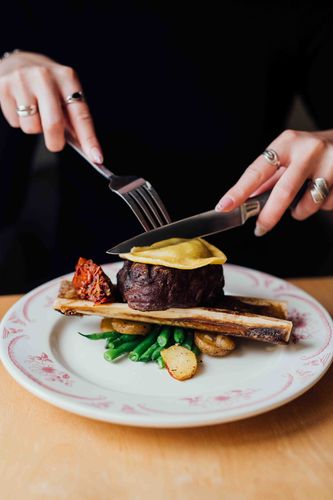
Ossington Avenue in 2009 was the beginning of something for Toronto, and Union was part of why. Paul gutted an old karaoke bar and spent a year and a half building the room he wanted: a neighborhood restaurant with a back patio, a menu anchored in things like Union salad and steak, and a sensitivity rooted in the farm his father kept north of the city. The menu has barely changed since. Five items are staples and have been there from the start and a couple rotate with the seasons. That kind of discipline looks like stubbornness until you understand what it actually is: respect for the people who come back. Union is where Toronto has its anniversaries, its first dates that turned into marriages, its Friday nights that stretch into Saturday mornings. The room holds those stories because Paul decided it would. One year after opening, his father died. He kept cooking and improving the place.
Building the Neighbourhood
Côte de Boeuf came next, in 2012, out of pure logistics. His brother Chase suggested a butcher shop for the space below where he was living, and Paul agreed. What arrived instead, slowly, was something stranger and better: a wine bar, then dinner service, then Eamon walked back into Paul’s life. The same man who had called him to Paris years earlier had spent thirty years working the dining rooms of the French capital and brought that whole way of life with him when he moved back to Toronto. The rest took care of itself.
Heart’s Tavern came from Tyler, a collaborator who found a property up north and saw what Paul always saw in a space before he’s done anything to it: the possibility. An old country house with a cellar room, the kind of place that reminds you of a Piedmontese tavern you stumbled into once. Two years of renovation. A lot of skiing. A room worth waiting for.
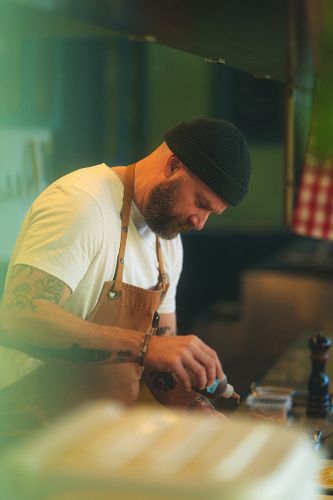
Le Tambour is the outlier and perhaps the purest expression of Paul’s instincts. Hamilton. Open fire. Rock and roll. A guy who’d been to Heart’s saw the vision and brought Paul the space. In a city that has been more characterized by heated rivalry than collaboration, Paul saw something he could do that Toronto hadn’t let him: cook with fire in a room that felt like a concert.
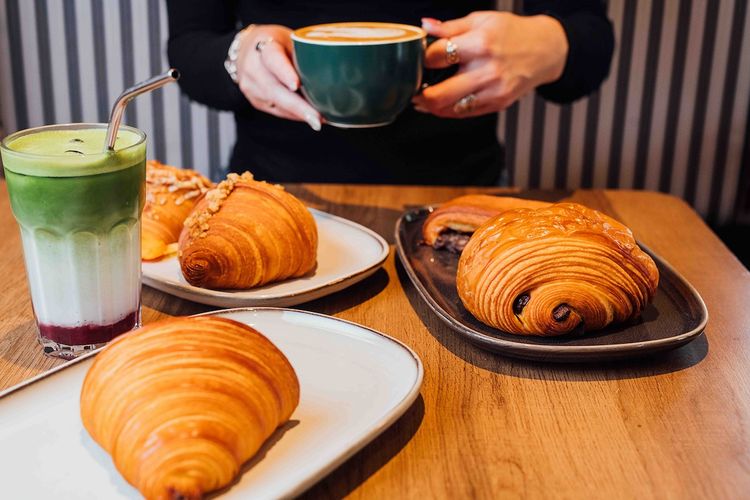
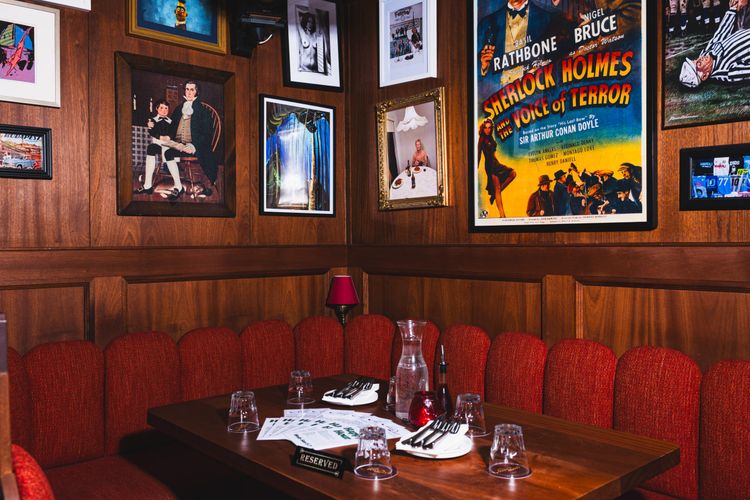
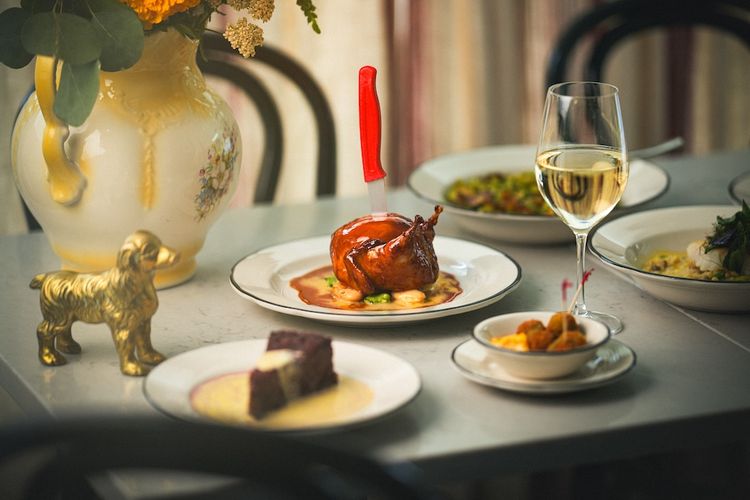
And Brasserie Côte, the newest addition, arrived this year and is one of our favorites in the city. Eamon, who helped build Côte de Boeuf into what it is, had been looking for the right space for years. The pieces finally came together, and this place is unlike anything else in Toronto. The ambiance, the service, the food, you feel like you’re having lunch in Paris.
What He’s Actually Building
Paul has a phrase he keeps coming back to: “You are only as good as your last service.” He could have coasted after Union. The restaurant has been packed for fifteen years. He didn’t. He keeps opening things because he can’t not, because building is what he does, and because each new room is a chance to solve a different problem more elegantly.
There’s a Bob Dylan quality to it. Paul talks about building his places as if he’s constructing something with enough permanence and enough meaning that the right ghosts might show up. His father. The people he cooked for in Paris. The farmers he works with. A room isn’t just a room if you build it right. It’s a place where stories accumulate.
What he won’t do is taken at night for granted. The consistency across five very different restaurants, in different cities, at different scales, is not accidental. It comes from the same place his grandmother’s cooking did: presence. Building with intention, cooking with love. Not as philosophy, but as practice.
This fall, Penguin Appetite publishes his first book, Done Right . All the recipes from Union. Stories from every kitchen he passed through. A document of everything he learned by doing it the hard way, with his hands, in other people’s countries, in restaurants that no longer exist and rooms that somehow never change.
The Lonely Cowboy Is Never Actually Alone
The solitary romantic image only goes so far. Paul builds his restaurants through people, the right collaborator showing up at the right time: the man who called him to Paris at 25 and twenty years later became his business partner. A brother who saw the potential in a space below his apartment. A guy who found a property up north and could see exactly what he wanted to become. The farmers north of the city. The same faces coming back on Friday nights, year after year. “I can’t do this by myself,”.
He evolves through people who want to build things, build legacy places.
Teo Paul is a man of few words but he speaks through his restaurants.
Written by Daniel Neuhaus
Photography by Daniel Neuhaus