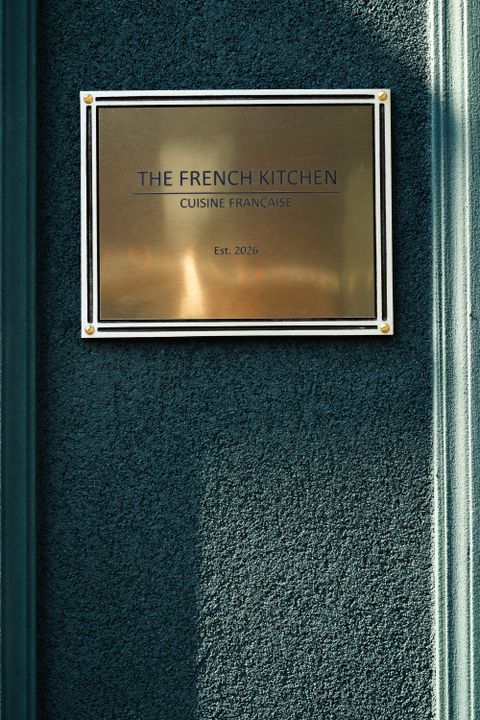
The French Kitchen: Didier Leroy’s French technique, Canadian ingredients, and twenty seats in the Junction
The French Kitchen
- $$$$
-
3054 Dundas Street West Toronto M6P 1Z7
+1 647-969-3054 -
Monday: Closed
Tuesday: Closed
Wednesday: 5:45 PM – 10:00 PM
Thursday: 5:30 PM – 10:00 PM
Friday: 5:30 PM – 10:00 PM
Saturday: 5:30 PM – 10:00 PM
Sunday: Closed
-


- Restaurant

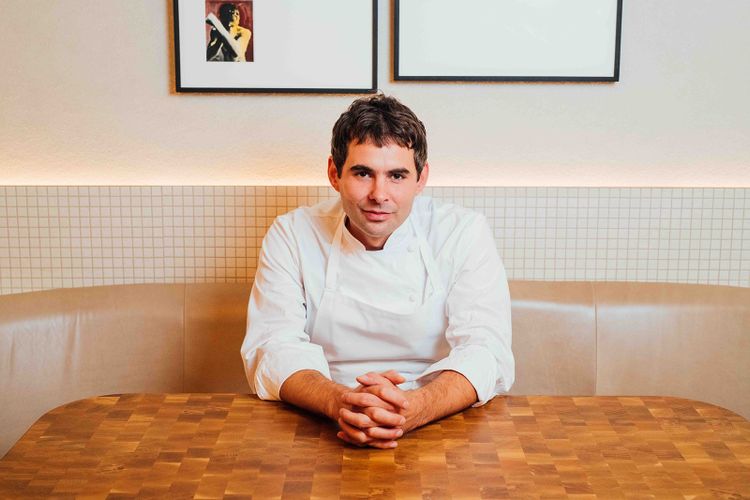
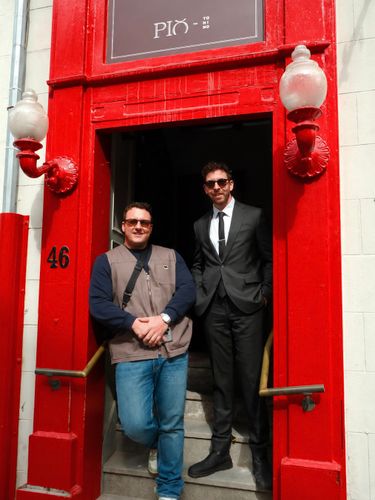
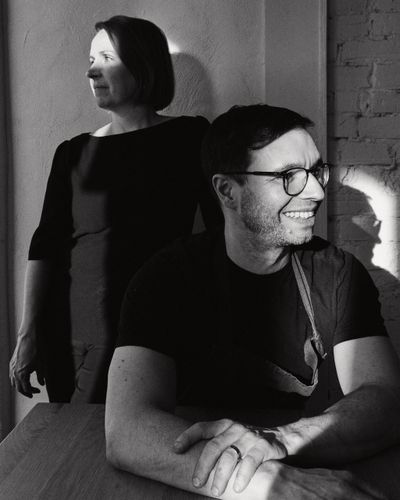
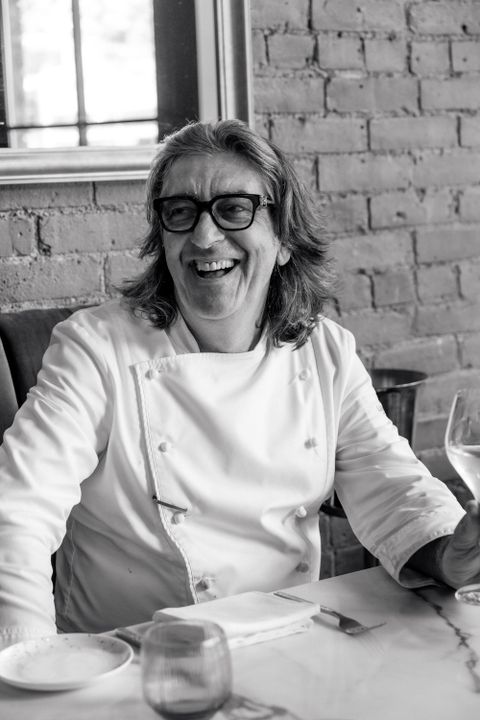
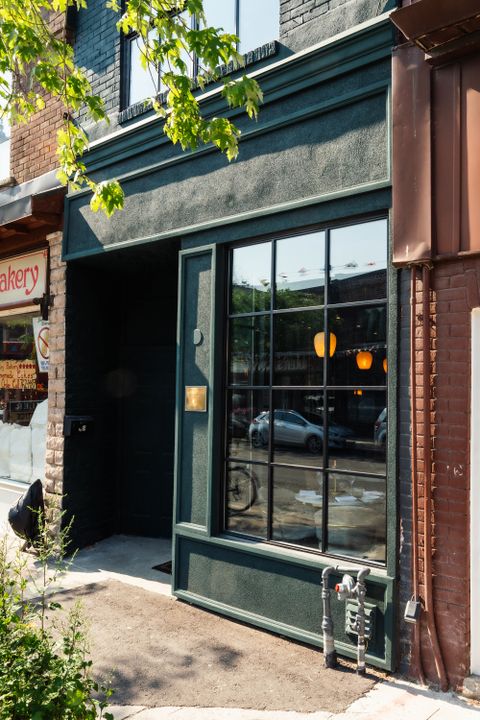
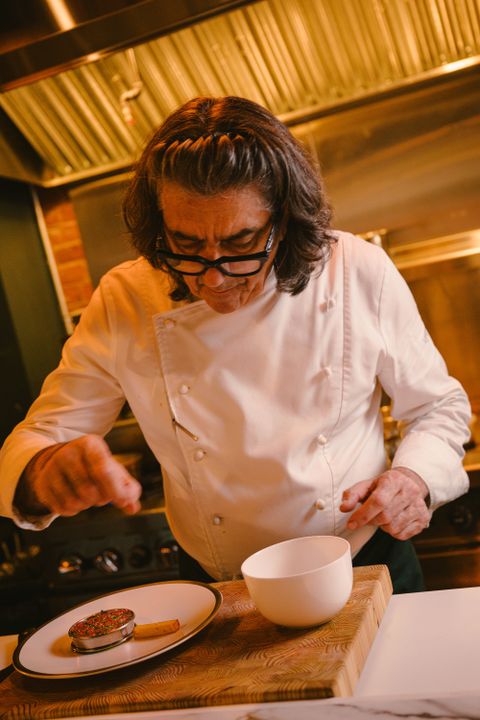
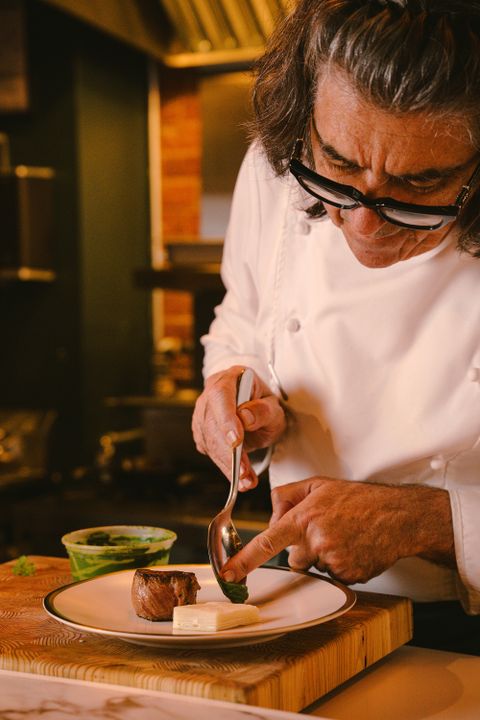
Behind an unassuming storefront on Dundas Street West, twenty seats fill months in advance for a chef this city’s cooks quietly revere. Before every service, Didier Leroy debones his quail by hand, one bird at a time, with no machine and no shortcut, exactly the way he learned it more than five decades ago. There is no tasting-menu theatre here and no wall of noise, only a man from Picardy cooking as though ours was the only table in the room.
Fifty-five years of technique, from Picardy to Paris to Dundas West
Leroy went to work in a professional kitchen at 15. He spent nearly two decades in Paris and five years in school, earning every diploma the trade offers up to a master’s, and the master he names, without a flicker of modesty, is Paul Bocuse. A long Buddhist practice and ten trips to Japan have left their mark on how he cooks. France made him a chevalier of its Order of Agricultural Merit, and in Canada he cooked for the French consulate for years before opening the Arlington Estate in 2017.
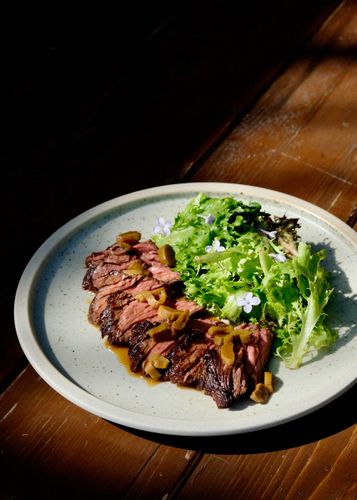
He came to Toronto for love, following a Canadian partner home, and the early years were hard, marked by a language he didn’t speak and a stretch of real loneliness. He still tells of spotting a war memorial from the streetcar and finding his hometown’s name among the Canadians who died in Picardy, and in that coincidence he decided he belonged here. The French Kitchen is what that belonging tastes like. “It’s not about being French,” he says, and his point is to show what a French hand can do with Ontario quail, Canadian pickerel and an Alberta cut of beef.
Twenty seats, booked to August, and everything written in French
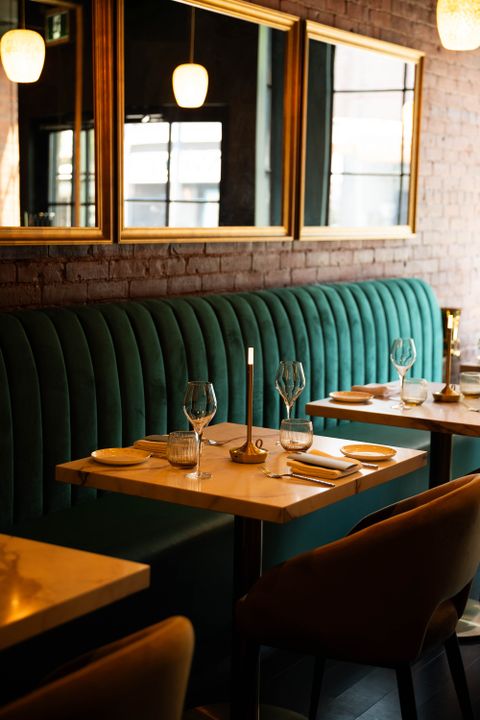
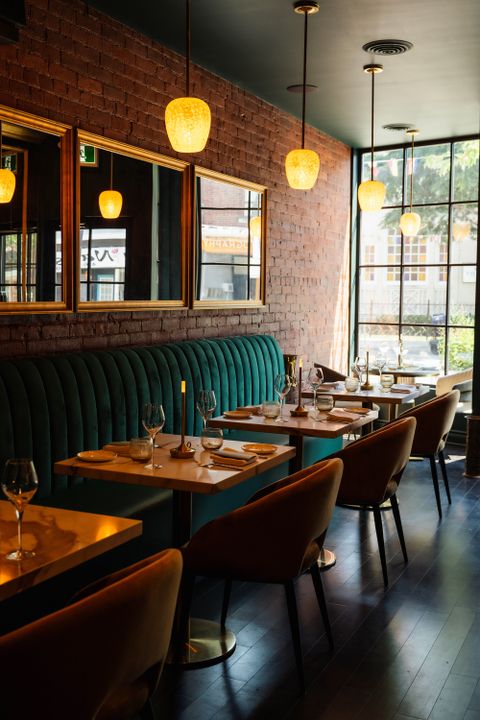
The room seats twenty, and that number is the whole philosophy. Reservations open two months ahead, and by the time we visited the book was already spoken for well into late summer. You reserve by texting Lucie or booking through OpenTable, and someone who actually works here answers. Service runs in two seatings, and the kitchen would rather you linger over the later one than rush out.
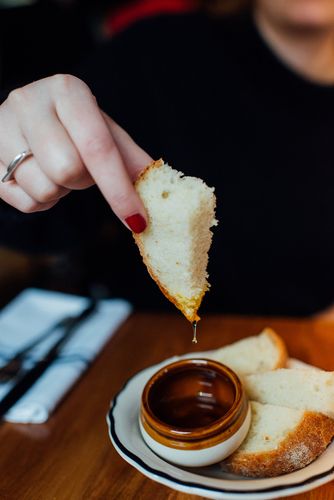
The French here runs deeper than the menu. The kitchen tickets are written entirely in French, and the staff who don’t speak the language learn the words anyway, pronouncing them and passing them down the line. “Food is culture, language is culture,” the team says. The crowd skews francophile, and the room is intimate enough to feel like a private club, though nobody here is trying to keep you out. Bread and water arrive as a matter of course, an old French couvert, and everything settles into a slower gear.
Sauces built from bones, and a gâteau he’s perfected for forty years
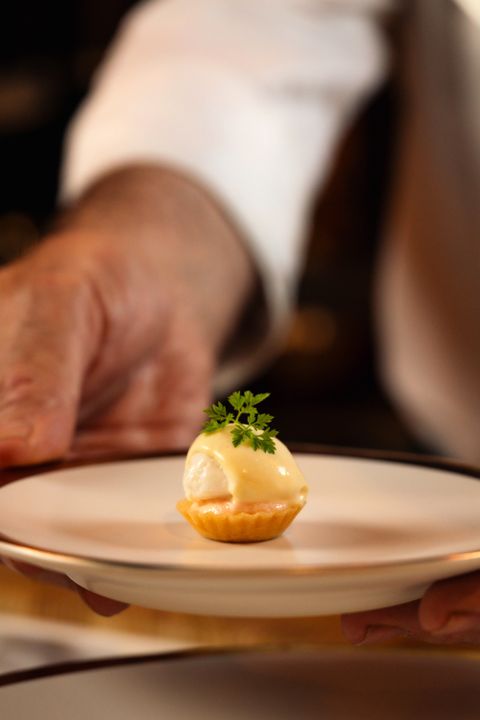
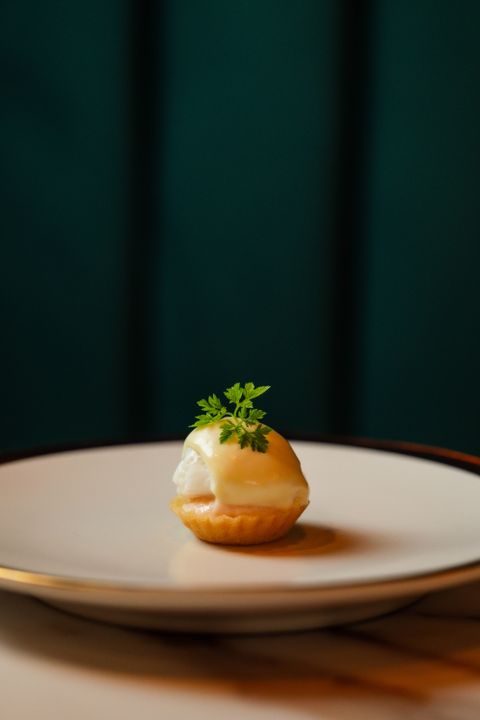
The meal opens with an amuse-bouche designed to wake the palate. It is a single bite-size pastry, feather-light, hiding a whisper of salmon, and it arrives timed to the glass of bubbles that starts every meal. You eat it in one bite, and in a second your senses are open. Leroy is unsentimental about the moment. “If you don’t like it, I need to know why,” he says. “That’s my job.”
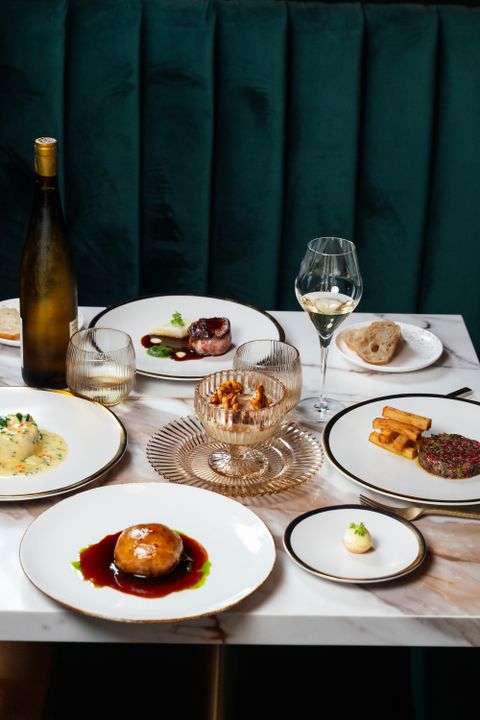
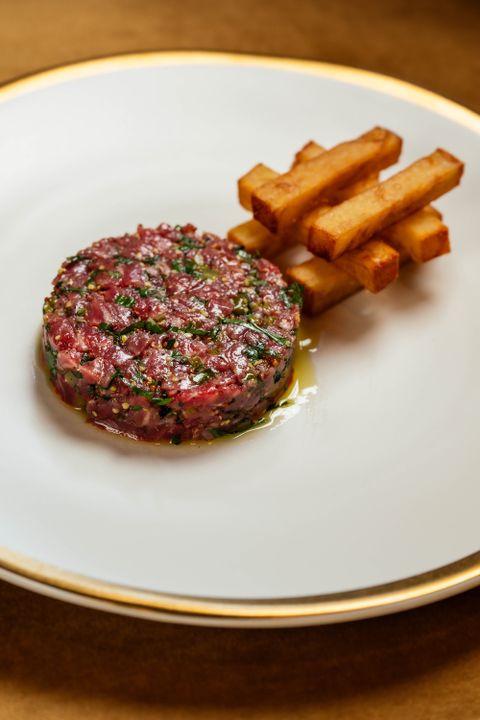
The steak tartare is his own recipe, and one he clearly loves. The beef is deboned and cut by hand, then folded with shallots, grainy mustard, cornichons, parsley and a knowing hit of Worcestershire, and the whole plate is built around brightness and acidity rather than richness. It comes with pommes Pont-Neuf, thick-cut fries named for the oldest bridge in Paris. There is no triple-fried gimmickry here, only potatoes and care. Guests told him they tasted like the fries from a Canadian ice rink when they were kids, and he took it as a compliment.
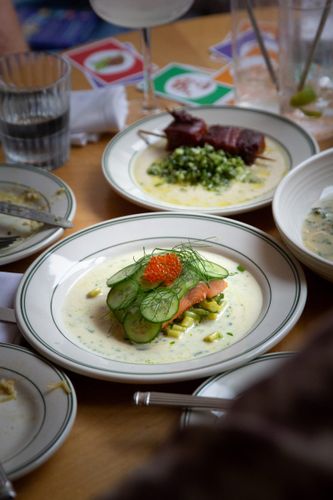
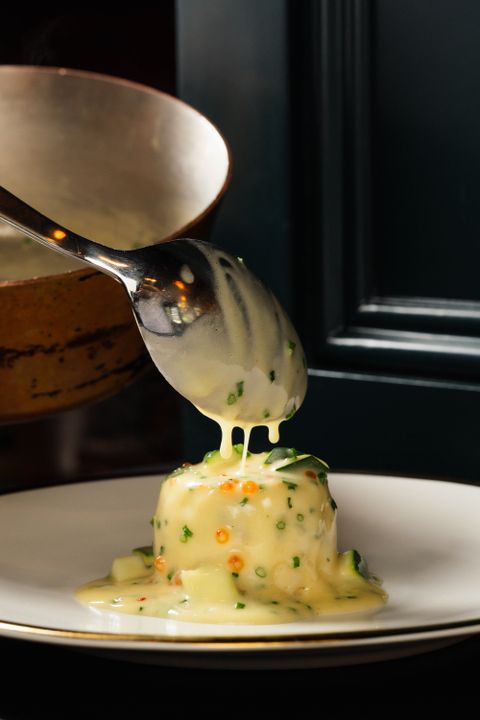
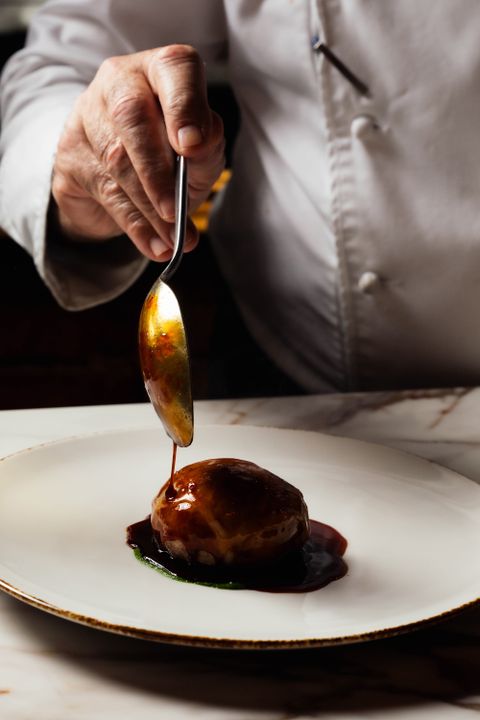
The centrepiece is the gâteau de sandre, his pickerel cake, a dish he has been refining for forty years. He first built it in Paris with brochet, or pike, and rebuilt it in Toronto with Ontario pickerel, shaping a fish cake that he crowns with trout roe and zucchini and naps in a white-wine sauce drawn entirely from the fish’s own bones. Nothing is wasted, because the sauce you are tasting is the rest of the fish, coaxed into silk. This is French technique in its purest form, and you can see what it means to him in the way he watches the table eat it. The bigger the smile, he admits, the more time he pours into the next one.
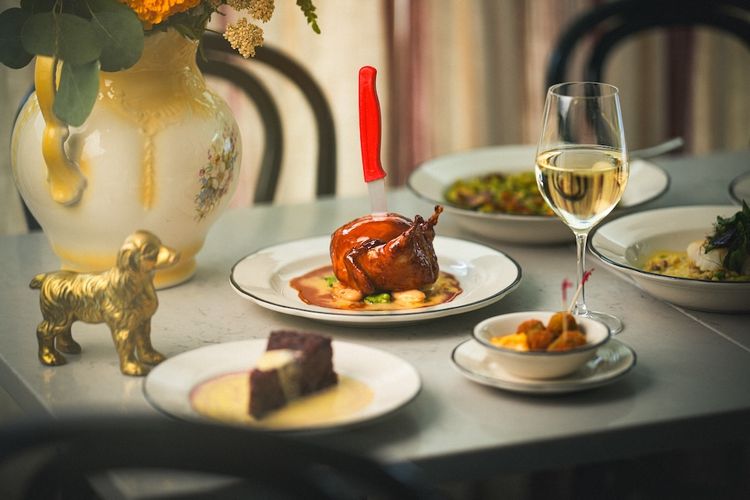
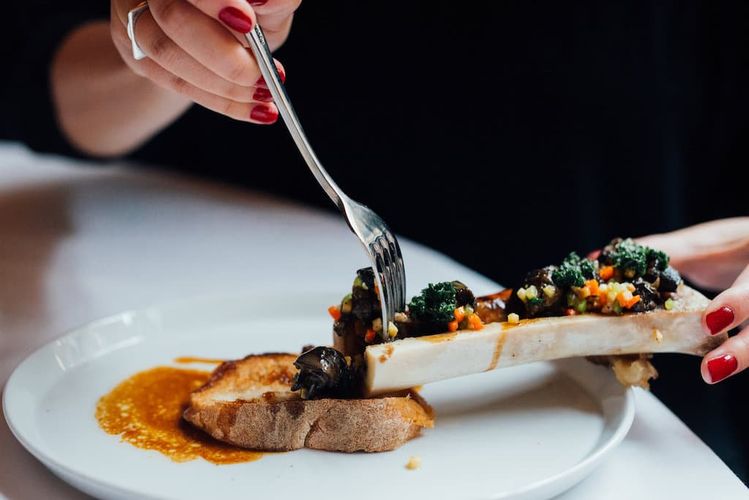
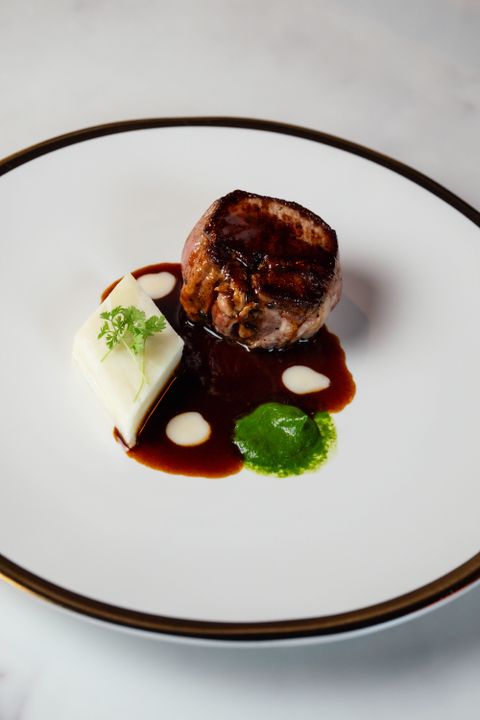
The quail is the other signature, and the one the front of house confesses is their personal favourite. Deboned by hand every morning, it is stuffed with spinach, chicken mousse and French escargot, then set over a spinach purée with a sauce reduced from the bones and lifted with a touch of cherry. All of that is hours of labour for one small bird. “People chose to spend their time here,” our host said, almost protective of the dish, and you taste that intention in every bite.
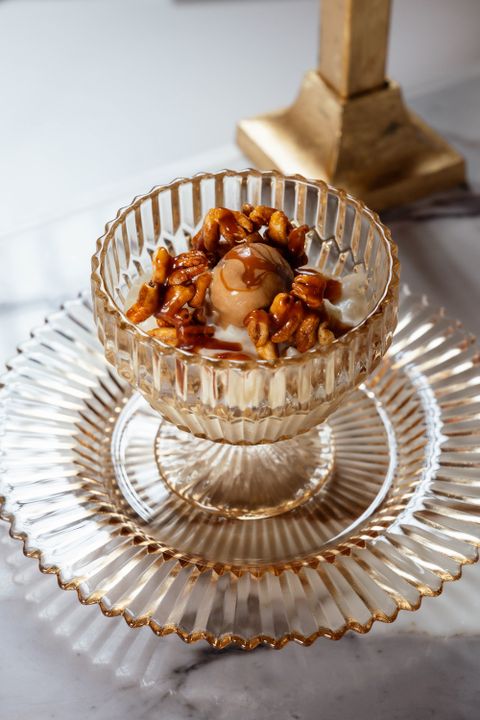
Dessert is the most personal plate on the menu. It is riz au lait, a rice pudding made with risotto rice that tastes of Leroy’s childhood in the north of France. If he had one last dish, he tells us, this would be it, and it is the kind of ending that makes an entire meal fall into place.
Bubbles to open, wine priced like a favour
Every meal begins with a glass of bubbles, a ritual repeated at every table. Alongside the five courses come two wine pairings to choose from, as well as a thoughtful non-alcoholic option for anyone sitting the wine out. The list is where the restaurant makes its margin, yet the pricing stays deliberately gentle, because Leroy believes the value has to be fair enough for regular people to say yes.
Text him a week ahead and he’ll cook you cassoulet
One detail tells you exactly who Leroy is. Text the restaurant a week in advance and he will cook you more or less whatever you want, whether that is a cassoulet, a Burgundy-themed dinner or a private meal any day of the week. “If you want something, give me a week, I’ll make it. That’s my job,” he says, and he means it. Vegetarian, and gluten-free tables are handled with the same seriousness as everything else. The menu shifts every couple of months with the seasons, but the anchors stay in place, so that regulars can watch the gâteau and the quail get quietly better with each visit.
The verdict
The French Kitchen isn’t chasing a trend, a rating or a feed. It is a chef with fifty-five years behind him, cooking French technique with Canadian ingredients for twenty people at a time, everything cut, deboned and sauced by hand. Go if you want to slow down and eat food made with real care. If you fall for the quail or the gâteau, do what Leroy hopes and book again to try what you missed.
Written by Daniel Neuhaus
Photography by Daniel Neuhaus