Liliana : Marvin Palomo’s New Personal Tribute on Queen West
Liliana
- $$$$
- Booking
-
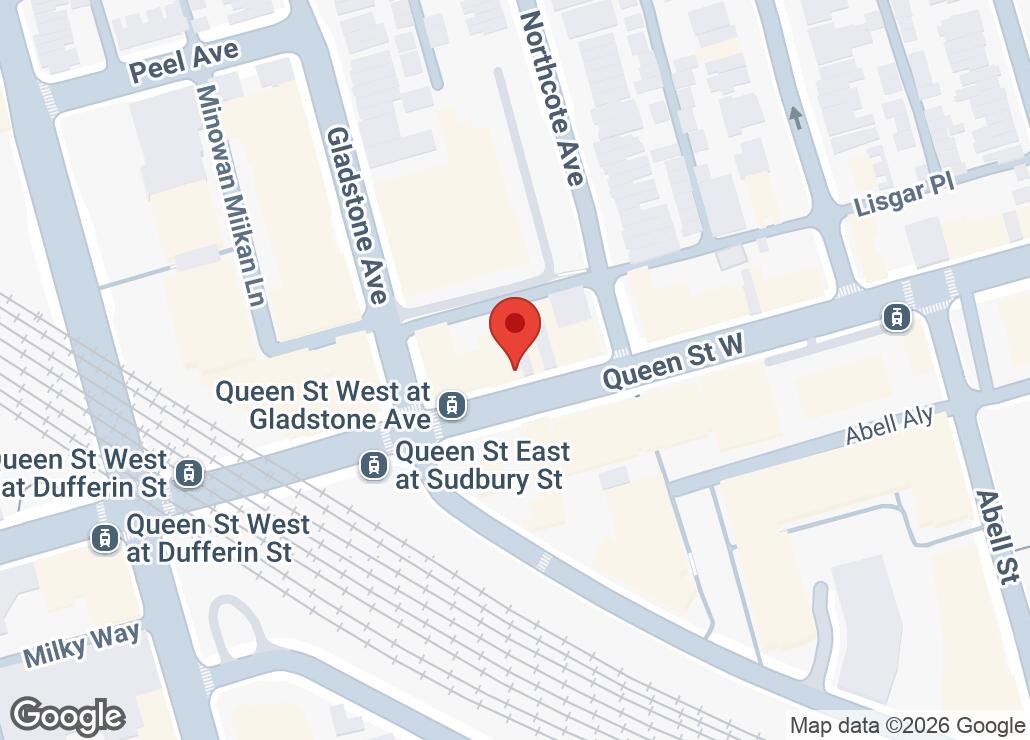
1198 Queen Street West Toronto M6J 1J6
+1 416-539-0101 -
Monday: Closed
Tuesday: Closed
Wednesday: 5:00 PM – 11:00 PM
Thursday: 5:00 PM – 11:00 PM
Friday: 5:00 PM – 11:00 PM
Saturday: 5:00 PM – 11:00 PM
Sunday: 5:00 PM – 11:00 PM
-


- Restaurant
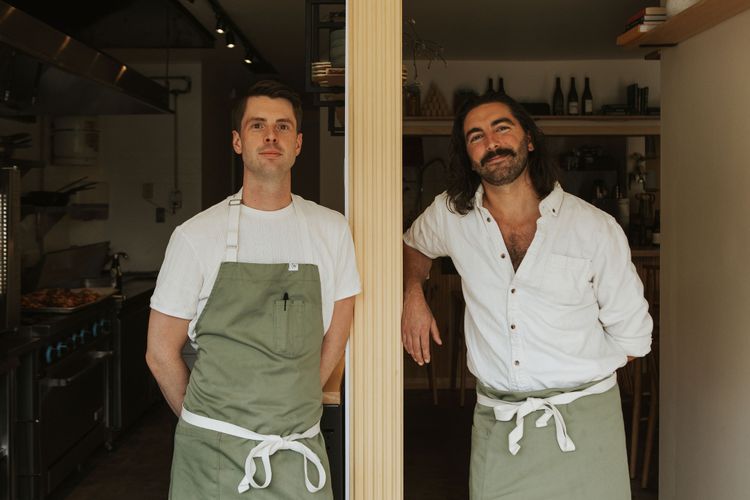
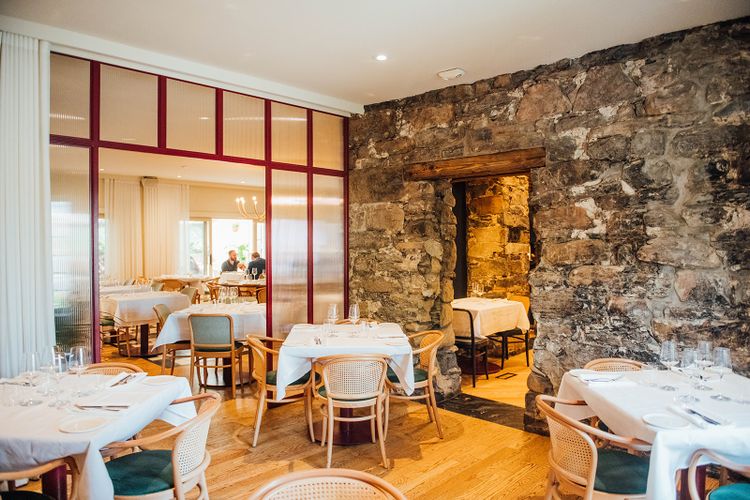
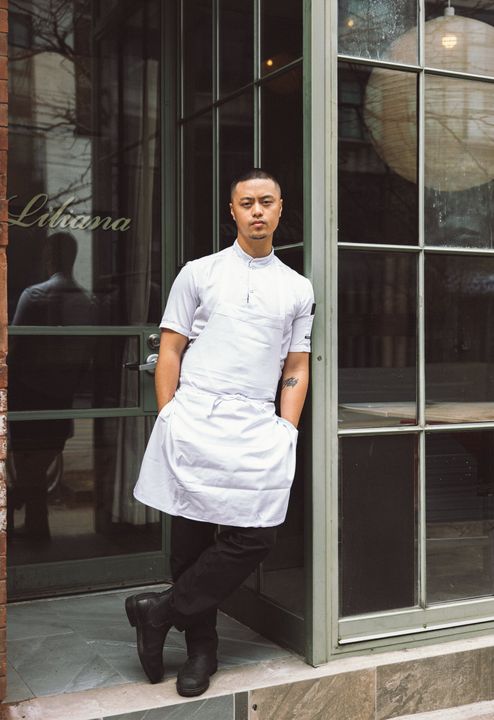
On the western end of Queen Street West, in a 30-seat heritage room that once housed both Dandylion and J’s Steak Frites, Marvin Palomo has opened the most personal restaurant of his career. Liliana is named after a late Italian mentor, built with the team that survived a fire, and serves Italian classics filtered through years of work in Hong Kong, Oakville, and Toronto. It’s a love letter, but it’s also one of the most exciting openings of the past year in the city.
A Career Shaped by Mentors
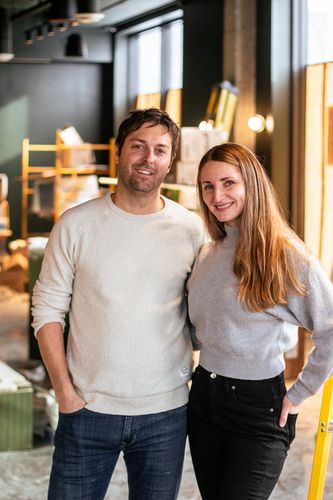
Marvin Palomo was raised in Toronto. He studied at George Brown College, and at twenty he enrolled in a postgraduate culinary programme that took him to Piedmont, Italy, to work at La Contea di Neive. There, he met chef Liliana, who would become one of the most defining figures in his career.
“She taught me more about just cooking,” Marvin recalls. “She taught me about the care and compassion that goes towards true hospitality.” Liliana passed away a few years ago, and the restaurant that now bears her name is a tribute to everything she gave him.
Back in Toronto, Marvin worked at Dailo, the influential Asian-leaning restaurant whose imprint is still visible in his cooking today. “Very classic Italian, but a lot of Asian influence,” he explains. “That’s the two influences in the way I cook, because I’m classically trained Italian, but also worked in modern Asian restaurants.”
After Toronto, he moved to Hong Kong to work at VEA under chef Vicky Cheng, a Michelin-starred kitchen that further refined his technique. He came back to take the chef de cuisine role at 7 Enoteca in Oakville, where Rafa Covarrubias was executive chef at the time. Four years later, he was approached to take over as executive chef and partner at Vela on King Street West, a Michelin-recommended Italian restaurant.
From a Fire to a New Beginning
The year 2025 started rough. Just days after what Marvin describes as a “magical” New Year’s Eve service, a fire forced Vela to close its doors indefinitely. He had built a team of forty staff, a kitchen, an identity. And just like that, it was all on hold.
“It was a very hard time,” he says. “Everything that you sort of worked so hard for, like, was gone like that. If you were to ask me last year that we would be doing this, I would say that you’d be crazy.”
He nearly left Toronto. Then, alongside co-owner Cole Diamond, the opportunity to open his own place came up, and he jumped at it. The lease at 1198 Queen West was signed on September 1, 2025. Liliana opened on September 26. Three weeks of construction, no margin for error, and roughly ninety percent of his Vela team came with him.
Some of those Vela knives, the ones he was able to salvage from the fire, now hang framed on the wall of the new restaurant. Equal parts art and artifact.
The Room
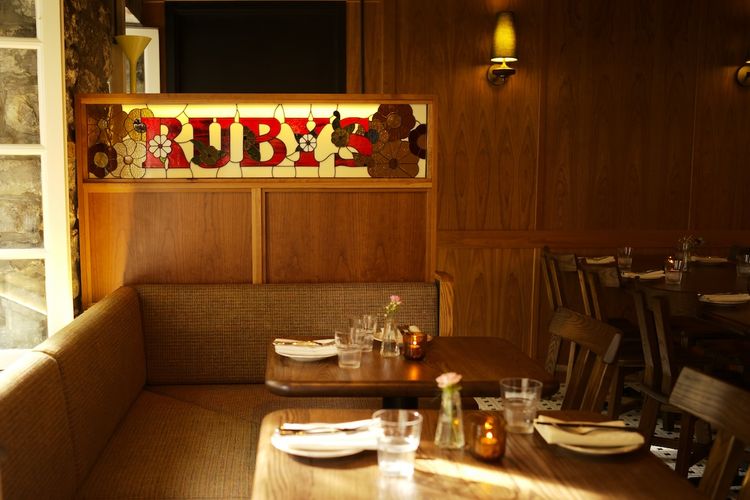
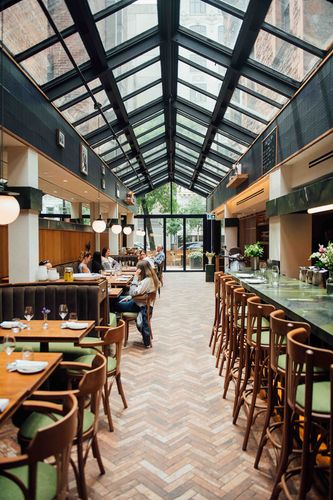
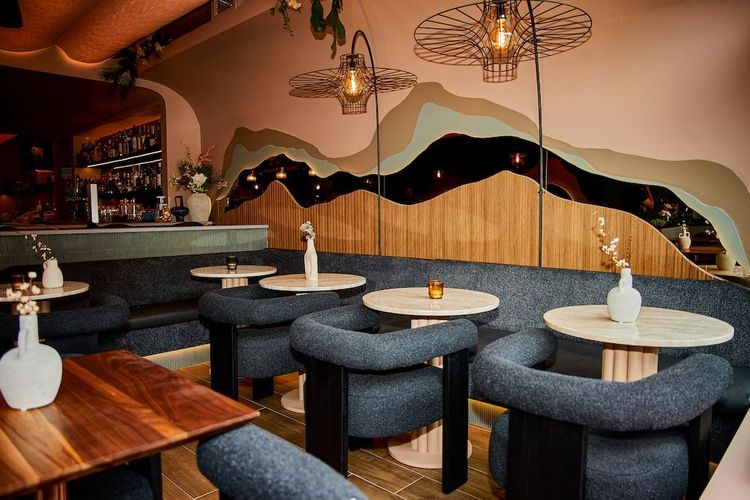
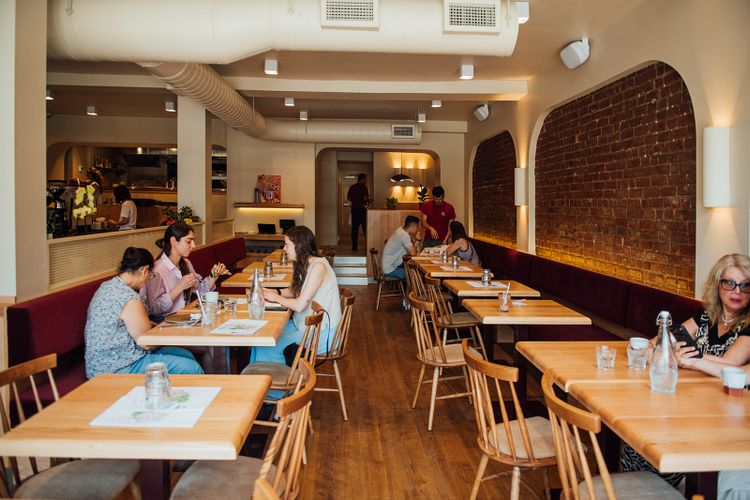
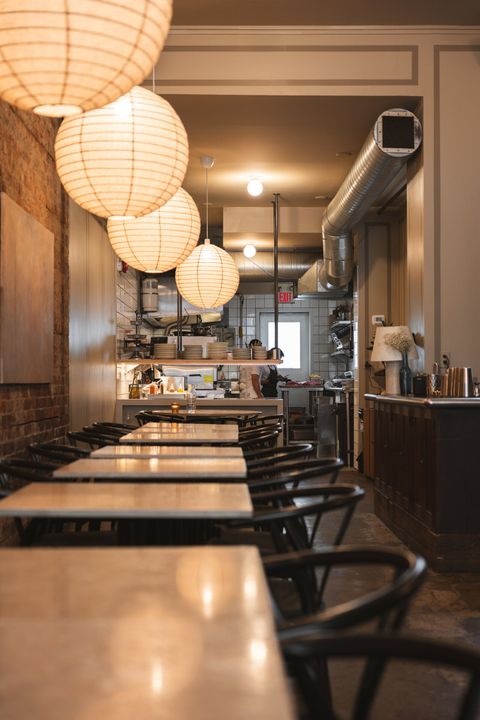
The space was designed by Montana Labelle, the Toronto designer known for her work on luxury residential interiors. Liliana is her first restaurant, and that residential sensibility shows: the room reads less like a restaurant set and more like a domestic space, warm and unhurried, with a layer of polish that only comes from someone who designs homes for a living.
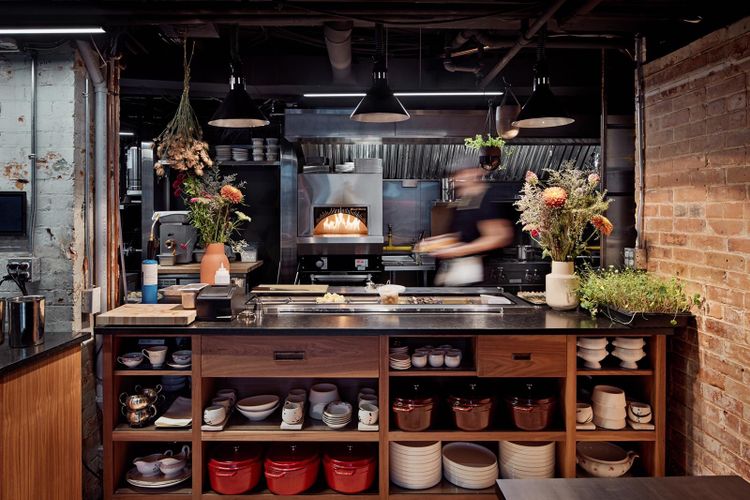
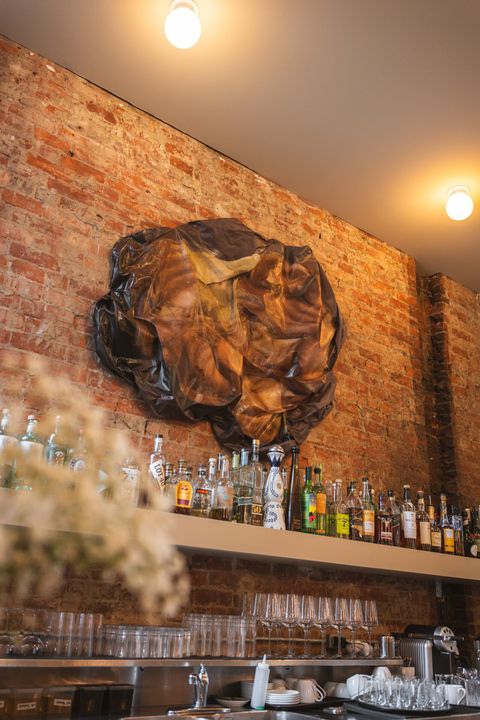
Exposed brick walls, floor-to-ceiling warehouse windows, a 1950s vintage bar back, and washroom sinks repurposed from old park water fountains anchor the space. Paper lanterns soften the concrete and brick. The thirty seats fill quickly, but the room never feels crowded.
“We just really wanted to make people feel at home,” Marvin says. That feeling is intentional, and it’s why every detail, from the lighting to the furniture, works in service of warmth and welcome.
The Food
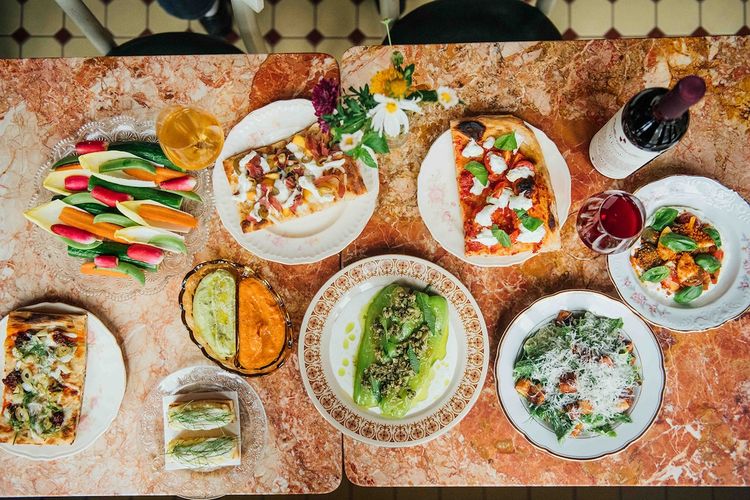
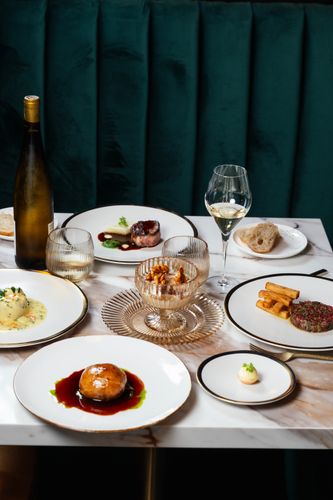
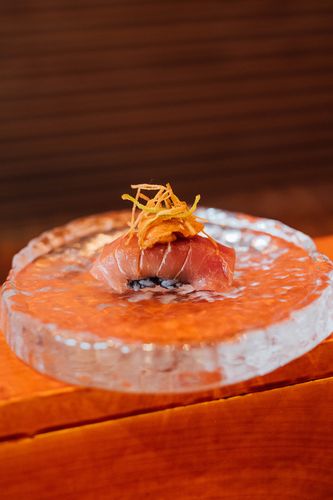
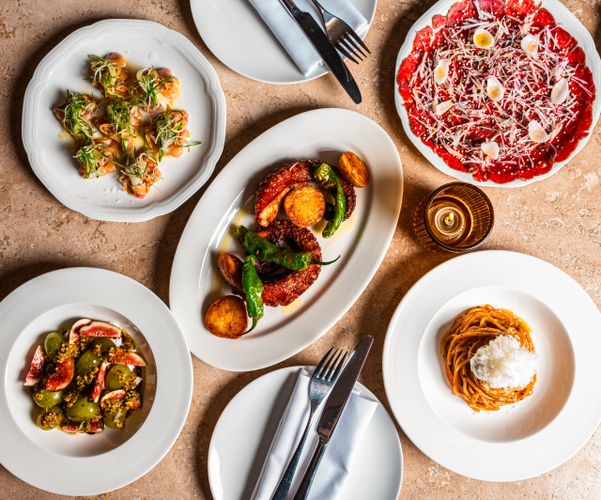
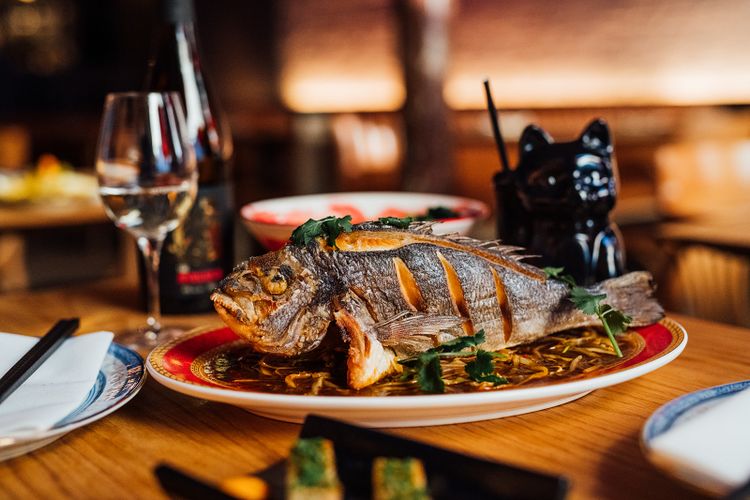
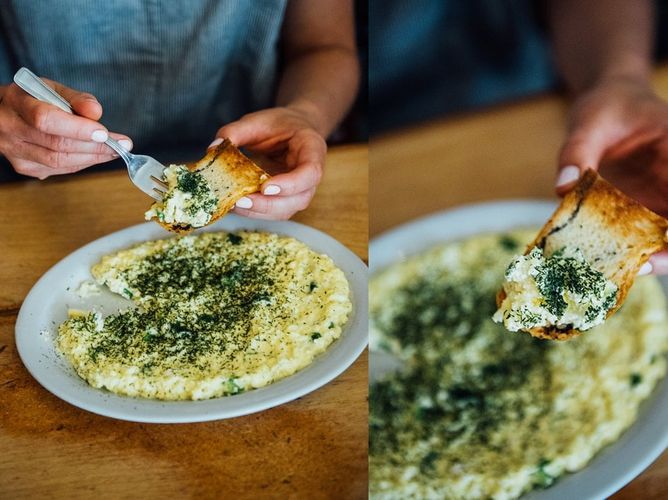
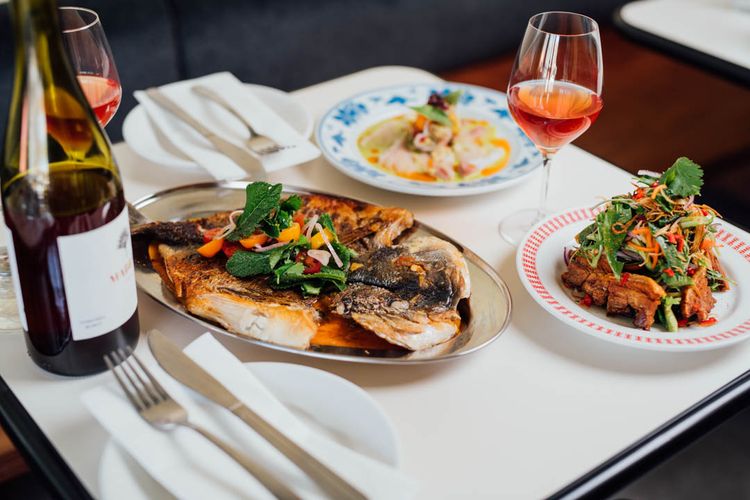
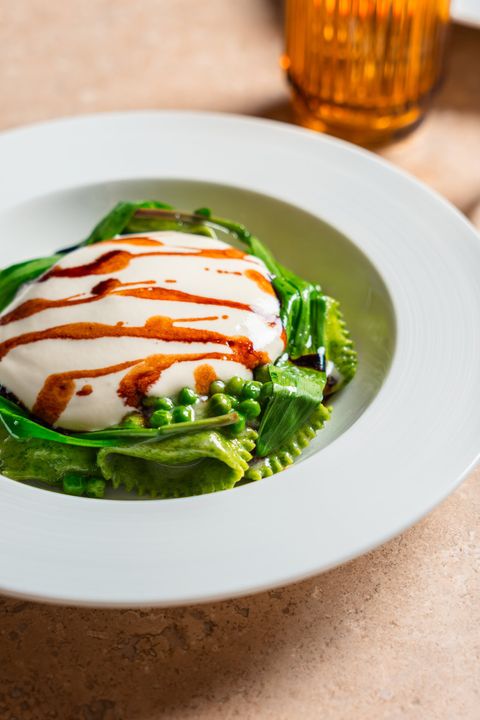
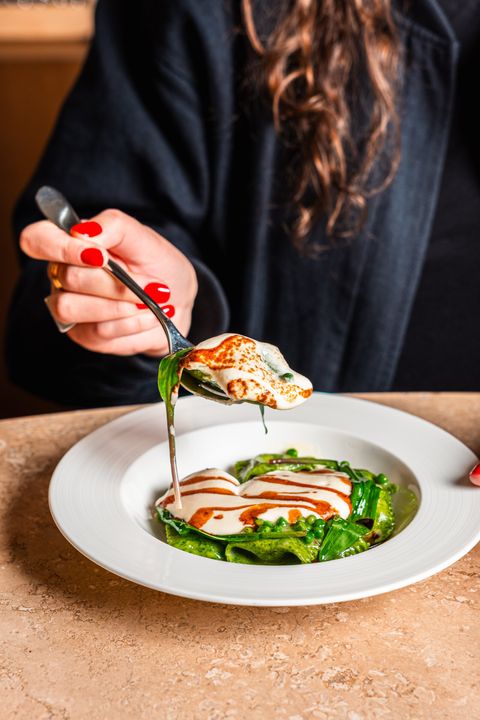
The menu follows the traditional Italian structure: antipasti, primi, secondi, contorni, dolce. Take a closer look and the architecture starts shifting. There’s Szechuan demi, umeboshi, dashi vinaigrette, furikake, miso, togarashi. The menu also nods to Filipino and Chinese cuisines.
“By no way would I consider this a fusion restaurant,” he says. “It’s a respectful and subtle way of recreating Italian classics.”
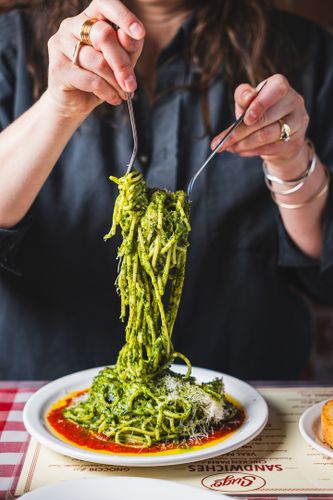
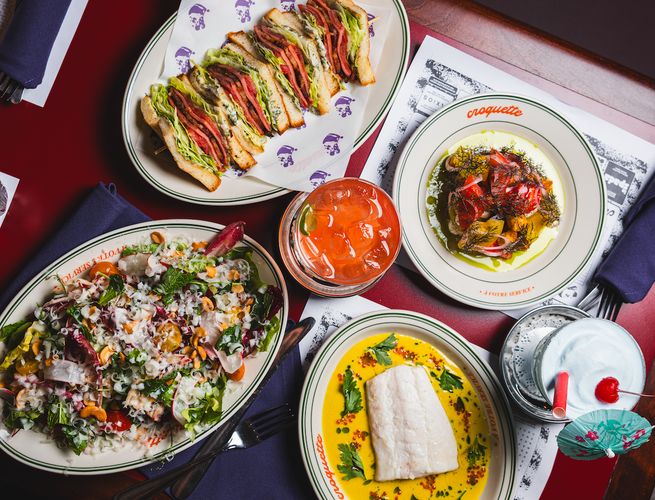
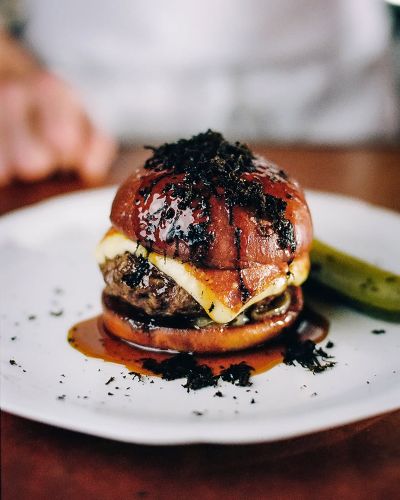
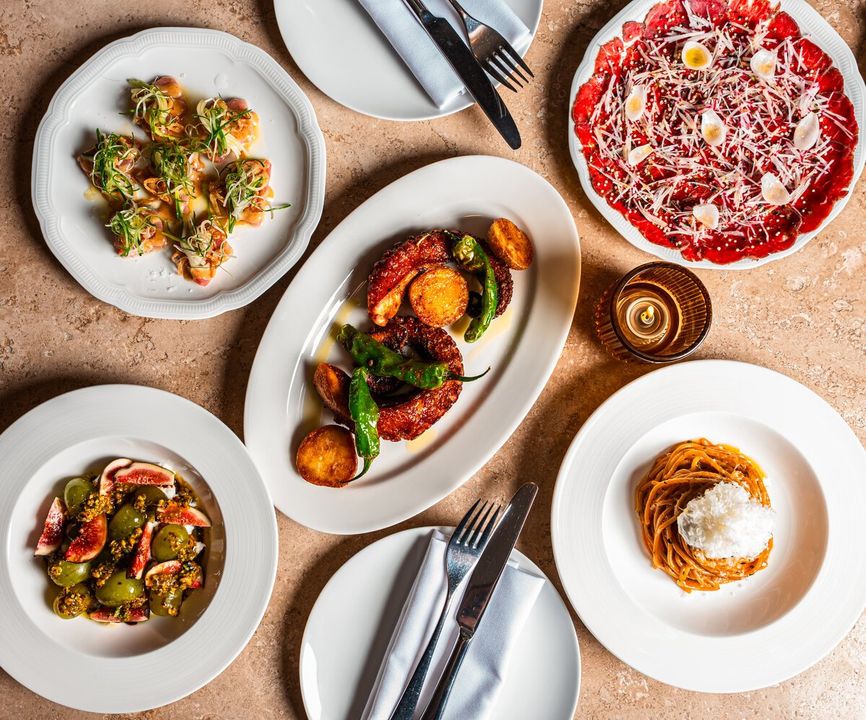
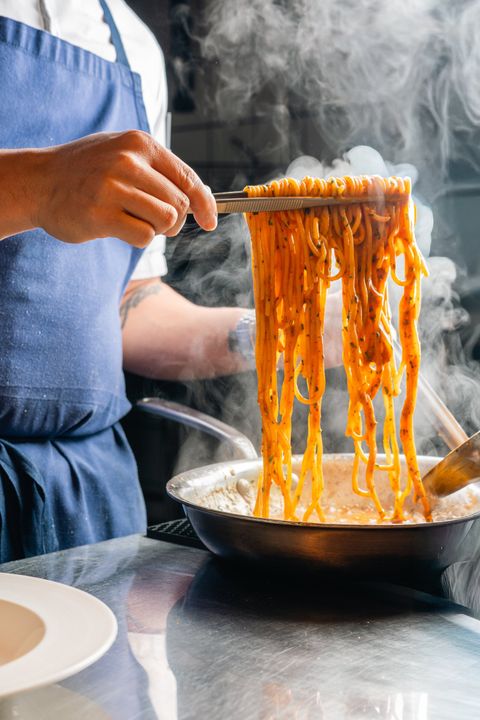
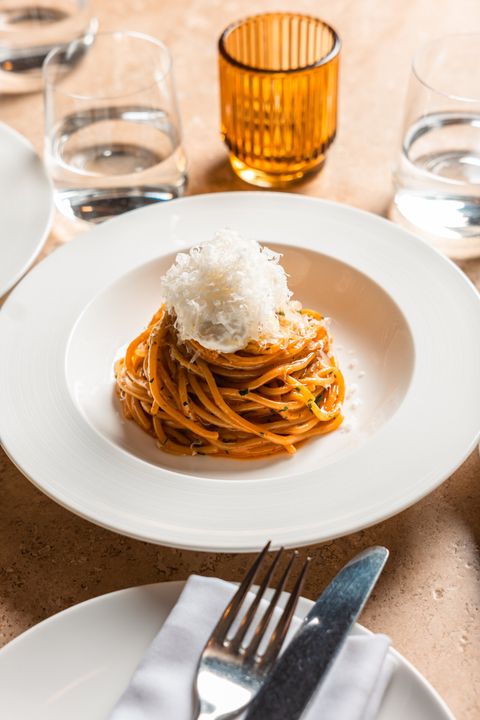
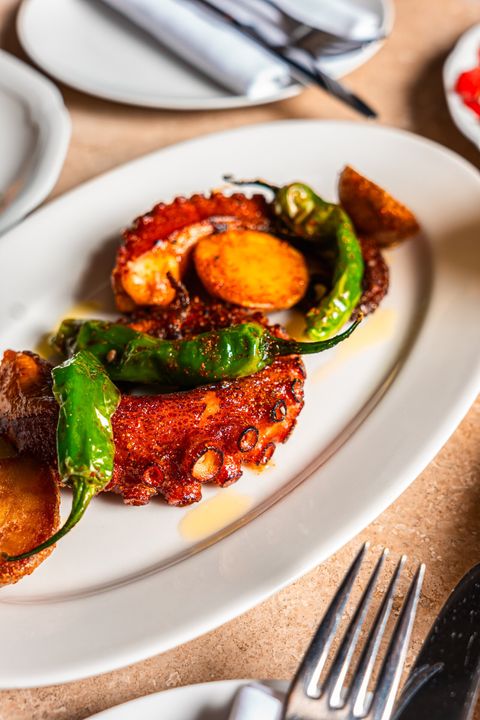
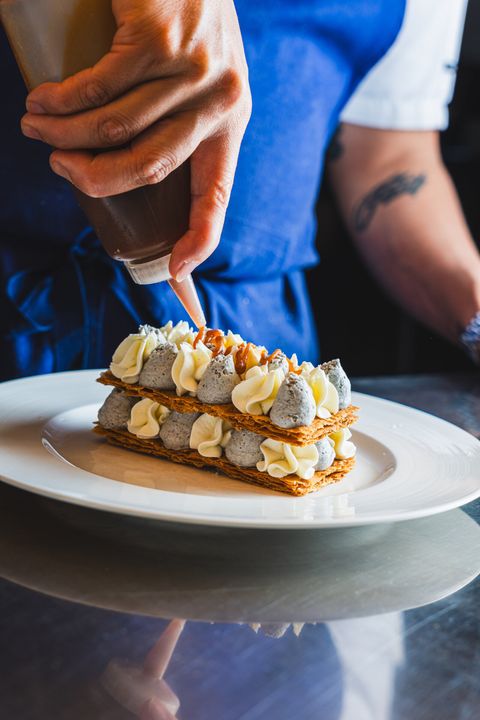
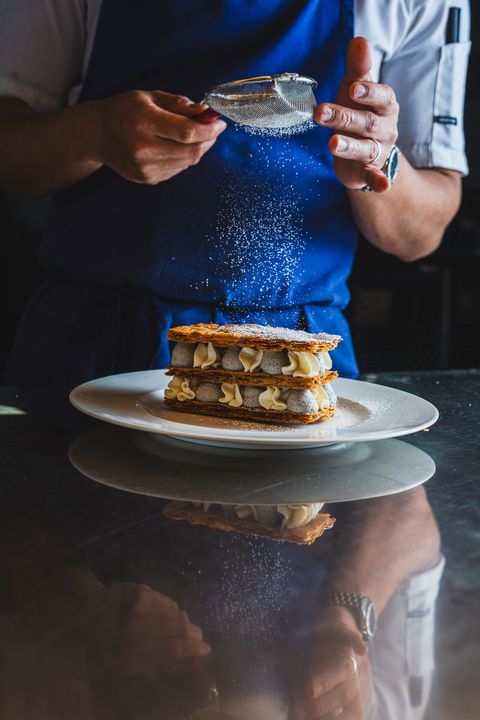
A few dishes have already taken on the status of menu fixtures, and Marvin says removing them would cause a riot. The octopus is treated dim-sum style: steamed until tender, then fried and tossed with blistered shishitos and new potatoes in a tamari glaze, with a dusting of togarashi. The aglio e olio, made with fresh spaghetti from Tiny Market Co., gets emulsified with chili crisp and finished with a cool cap of Puglian burrata that melts into the pasta. The millefoglie layers crisp puff pastry with black sesame and vanilla whipped cream, bound by miso caramel.
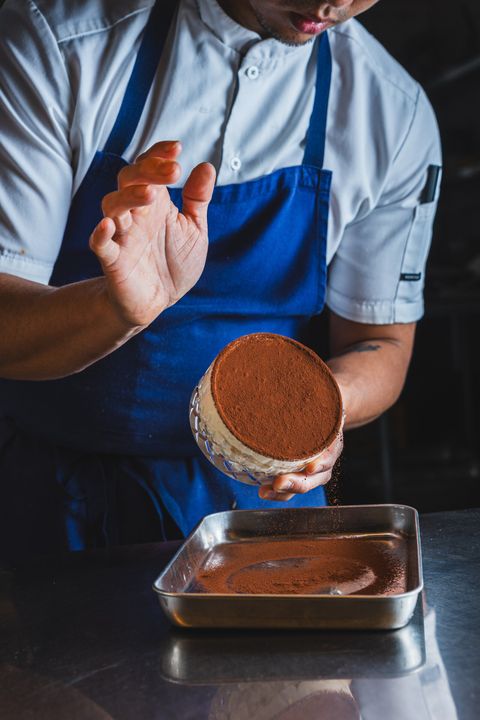
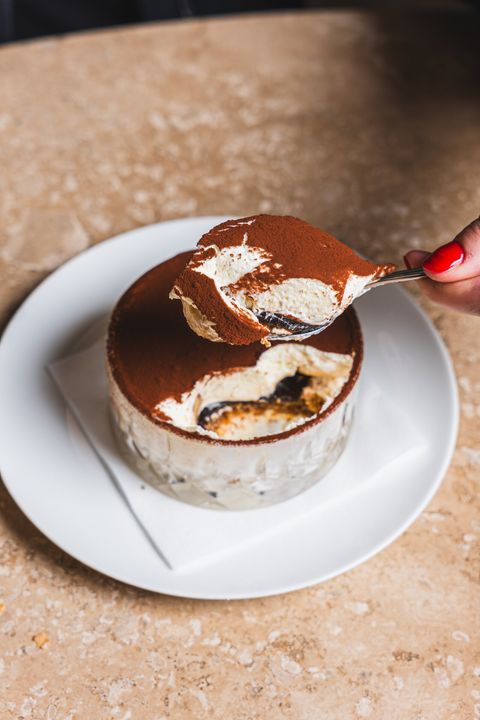
And then there’s the tiramisu, possibly the most discussed dessert in the room right now. Inspired by Asian café culture’s use of coconut milk in lattes, Marvin and his pastry chef rebuilt the classic from the ground up: a mascarpone base lightened with coconut cream, fresh banana, coffee gelée in place of espresso-soaked ladyfingers, and a thick dusting of cocoa powder to anchor it. Four layers of texture, instant cult dessert.
“Visually what people expect when they look at it, is it familiar?” Marvin says. “But when you taste it, it’s not familiar at all. It’s almost a pleasant surprise, the unfamiliarity when you taste it.”
The Drinks
Beverage director Michael McMullin runs a program that mirrors the kitchen’s philosophy: classical and natural side by side, with no allegiance to either camp. “We’re not really set on being an all-natural restaurant or an old-school restaurant,” Marvin says. “We like what we like, and we’re very catered to just taste.”
Why We Talk About It
The room buzzes, the team is tight (about ninety percent came from Vela), and every dish carries the unmistakable signature of a chef who has clearly thought about it.
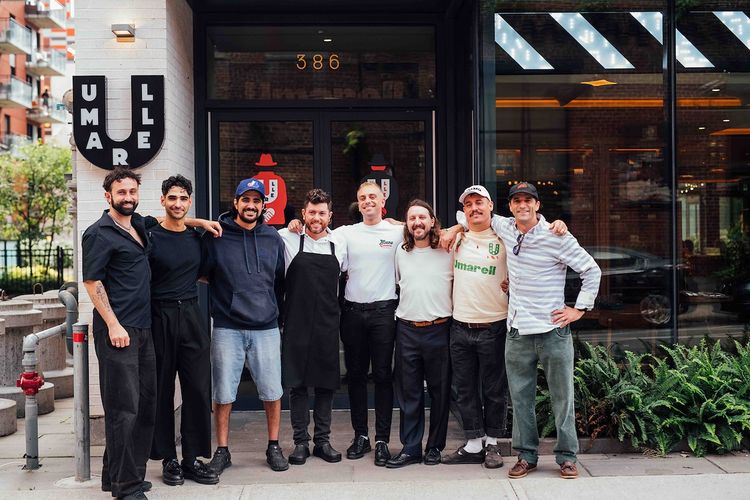
When asked what makes him proudest about the project, Marvin doesn’t hesitate. “The team,” he says. The same team that worked through the fire, found a new home in three weeks, and now anchors one of the most distinctive openings on Queen West.
In a city that loves to label restaurants quickly (Italian, fusion, neighbourhood, fine dining), Liliana resists every category. It’s classical and modern, restrained and inventive, accessible and personal. It’s a tribute to a mentor who never got to see it, and a working kitchen that doesn’t pretend to be anything other than itself.
Written by Fabie Lubin
Photography by Scott Usheroff (Craving Curator)