JC Poirier: The Quebec He Brought West

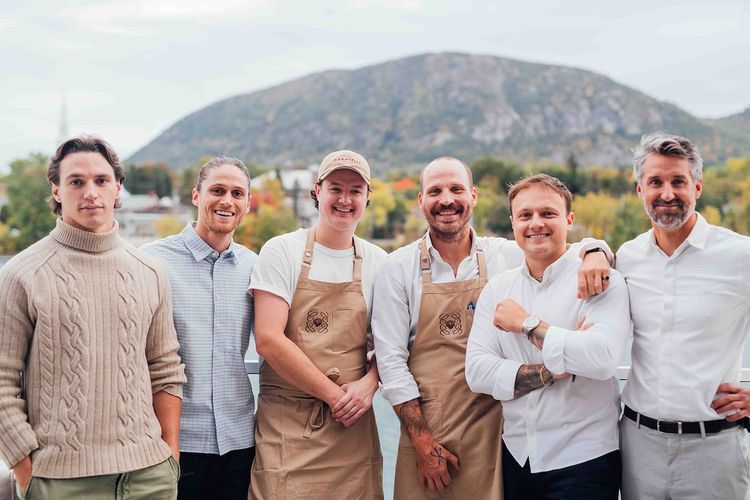
December 24, on a Vancouver balcony. JC Poirier is in a t-shirt, cigarette in hand, at his friend Jérémy Bastien’s barbecue with the Lumière cooks who have no family in town. He had landed a few months earlier with a backpack and his knives, figuring he would last a year. “December 24th in a t-shirt. I said to myself, I think I’m going to stay here a couple of years.” Twenty-two years later he is still here, running St. Lawrence, the restaurant that put pâté en croûte and rice pudding into the West Coast’s vocabulary.
The roommate who always ran the barbecue
Jean-Christophe Poirier grew up in Saint-Jérôme, in the Laurentians. There were no restaurants growing up. “It wasn’t part of the budget.” Cooking arrived in his teens, making his own meals after school, and took hold when he left home at 17. In the apartment he shared with friends, he was always the one at the stove, always the one at the barbecue. They were the ones who pushed him toward school at 19, because everyone liked what he cooked and he disliked the job he had at the time. The ITHQ was not an option just then, so it was a one-year program in LaSalle.
He chose his apprenticeship at Les Remparts, a classic French restaurant in Old Montreal, now closed after more than 30 years. Toqué! was already in his head, but he knew he was too green for that kitchen. At Les Remparts he learned how to cook veal sweetbreads served with grapes peeled one at a time, he learned how to make a sauce grand veneur to be served with venison, “Those are all real French classics that a lot of people used to make. Mastery.” Two years in, he was promised the sous-chef job, but he felt he wanted to gain even more experience. He was young and wanted to learn as much as possible. He sent his résumé to Normand Laprise, who called him back.
The Saint-Denis brigade
At Toqué!, everything was different: product first, seasoning and cooking to bring it forward without transforming it, a purée on the plate, the vegetable, the protein, a proper sauce. A bigger brigade too, where a chef de partie had a lot to learn. He stayed two years, two and a half, alongside Cheryl Johnson, Angus An and Charles-Antoine Crête, and was part of the team that moved from rue Saint-Denis to Place Jean-Paul-Riopelle. He dreamed of Tetsuya’s in Australia, but the process dragged on.
It was Marc-André Choquette, then chef de cuisine at Lumière, who changed his plan. Rob Feenie had just won Iron Chef and was closing the restaurant for renovations. A few cooks had left. Would JC be interested? He did not know the West and did not speak English. “So it was a good challenge.” He made the jump in 2004, planning to stay a year.
A backpack, his knives, 80 hours a week
He had sold everything before leaving. The first challenge was finding a place to live in a city far more expensive than Montreal. He found a room two blocks from Lumière, which suited him fine: six days a week, 80 hours, all he did was work. English came fast when there was no choice. The hard part was leaving friends, family behind. “Emotionally, it’s still a good challenge.” He thought about going back to Quebec more than once, but an opportunity always turned up and he put it off. After four or five years, Vancouver had become home.
What kept him was the climate, the beach, the ocean, mountains you can ski. “Even when you look at the sky, the clouds, it’s crazy.” And an Asian restaurant scene he had never seen. During the week he cooked his French food; on days off he discovered ramen, Vietnamese pho and Korean tables.
Chow, a first menu of his own
His first chance as a chef came at 26, at Chow on Granville. The owners wanted an Asian name and French cooking, which still amuses him, but he finally had a menu of his own. It lasted two years, until 2010, and that is where he made his name in Vancouver: people were finally tasting the food he wanted to cook. After that chapter he treated himself to a well-earned break in South America, with a backpack and no responsibilities. “It does you some good.”
An email from Robert Belcham brought him back: chef de cuisine at Campagnolo, Italian cooking, a year spent learning what he did not know. Then the people at the Pourhouse in Gastown asked him to rethink their menu. JC has a theory about how to do that. “A restaurant is a bit like a frame. It’s not your painting, but you have to stay inside the frame. If you draw outside it, it doesn’t work.” A beautiful bar, classics, bread and meat done in-house: he redrew the menu inside the frame and got along so well with the owners that they became partners, the start of a long association with the Kitchen Table Restaurants group.
Thirty seats and fresh pasta, against everyone’s advice
One of the partners was Italian. JC sold him on a tiny pizzeria making a set number of artisanal pizzas and closing when the dough ran out. That became Pizzeria Farina. Then, in 2013, Ask for Luigi, at a time when Vancouver had few Italian tables and almost none where fresh pasta was the main course. No bistecca alla fiorentina, no chicken parm, no grilled fish. Fewer than 30 seats, in a still-quiet corner. “Everybody thought I was crazy, but it really worked.”
The lineups formed every day. Vancouver Magazine gave it Best New Restaurant, Restaurant of the Year and Best Italian, in an era when the same big houses swept everything year after year. Small fresh-pasta rooms have multiplied since. Di Beppe followed in 2017, the same year as a more personal project.
Pâté en croûte as a trend coming back around
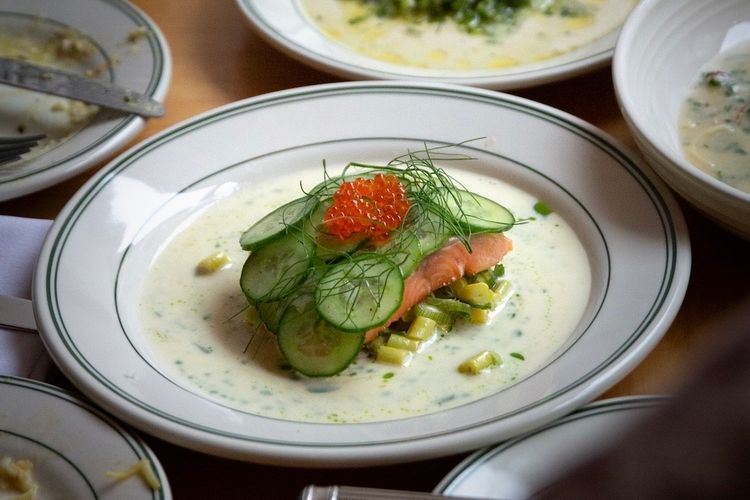
The idea for St. Lawrence was in his head the whole time. A return to classic French, to ballotines, galantines, pâté en croûte, the dishes nobody makes consistently anymore, every day, in a busy restaurant. “Sometimes it’s a bit like fashion, fashion comes back. It’s been so long since people have seen this that it’s going to be new again.” A space opened up not far from Ask for Luigi. St. Lawrence opened in 2017, on Saint-Jean-Baptiste day.
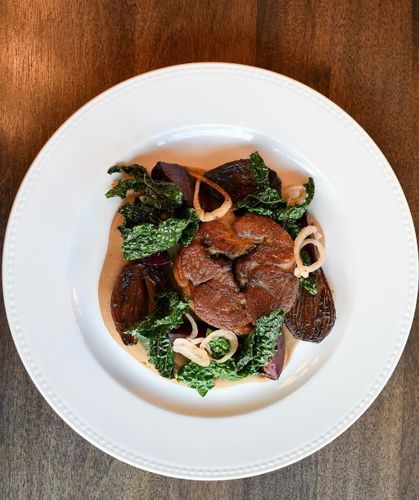
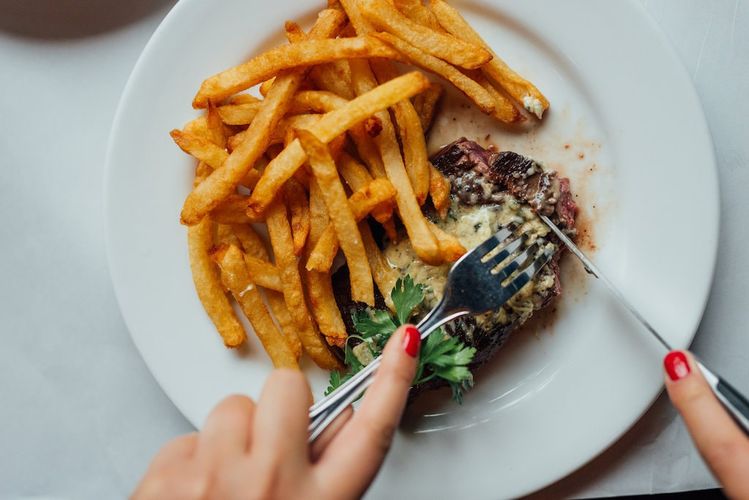
People often ask whether his cooking is Québécois. He answers that it is classic French first, with Quebec showing through mostly in winter: pork, potatoes, cabbage, the peasant cooking of a cold country, with its English resemblances, pea soup, baked beans. Summer belongs to the market. The principle never changes. “My idea was to treat the cuisine a bit as if Quebec were a region of France.” He missed Quebec. Since he was not going back, this was his way of bringing it here, day to day, with a staff that speaks French, and of showing Vancouver that a bistro holds more than the croque-monsieur, salade lyonnaisse and steak frites.
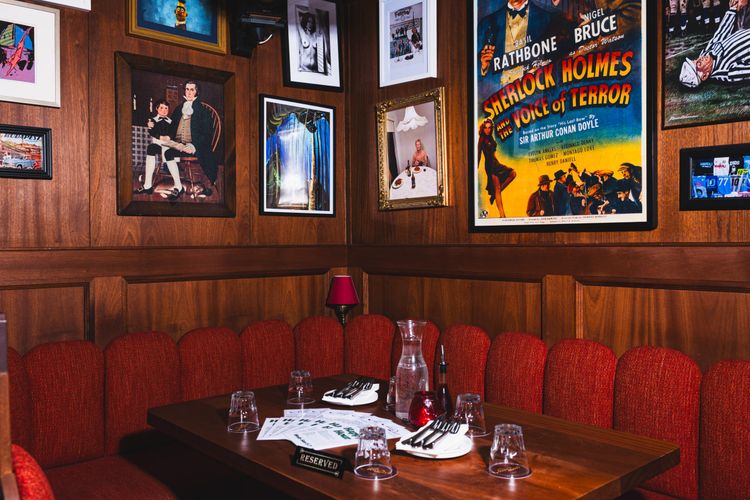
The name was weighed too. St. Lawrence is solid, people remember it, and the reference to the river held everything together: the food, the name, the decor. He had been collecting that decor for years, antiques piled under staircases waiting for the moment he could hang them on walls. The result feels like a country house, like grandma’s.
David, Margot and the St-Hubert-style chicken
After about five years, JC and his partner in the other restaurants went their separate ways, amicably. He took over St. Lawrence, gave up his shares in the rest, and each went his own way. The honours kept coming: Best New Restaurant, Best Restaurant and Best Chef at the 2018 Vancouver Magazine Restaurant Awards; on Canada’s 100 Best, St. Lawrence entered at No. 20 in 2018, climbed to No. 5 in 2019, No. 2 in 2020 and No. 3 in 2021; in 2022 the Michelin Guide gave it a star, held ever since.
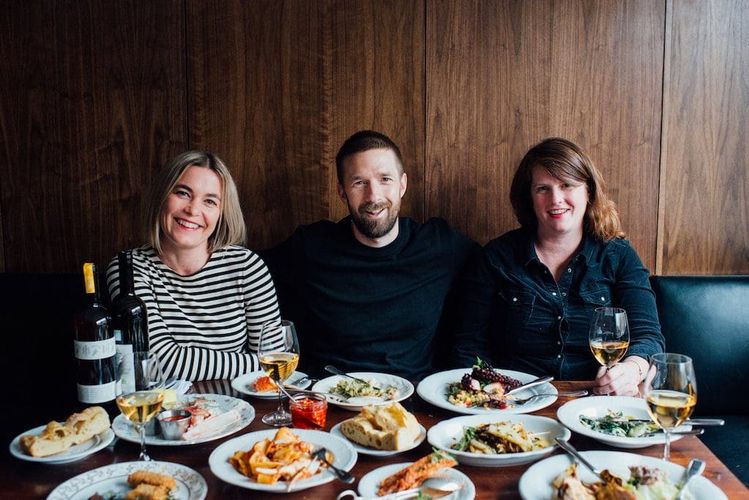
He began stepping back from the kitchen to watch his daughters grow up. Around him, a team that stays. David Lawson, his sommelier, an Ontarian from the Quebec border who speaks French and worked at Joe Beef for a long time, and Margot Herder, his sous-chef, came to him about wanting a restaurant of their own. He found a space, made an offer, bought the restaurant. That became Chez Céline, St. Lawrence’s little sister, opened in 2025 in Fraserhood with the edgy charm of Montreal, the elegance of Paris and the warmth of a Quebec table.
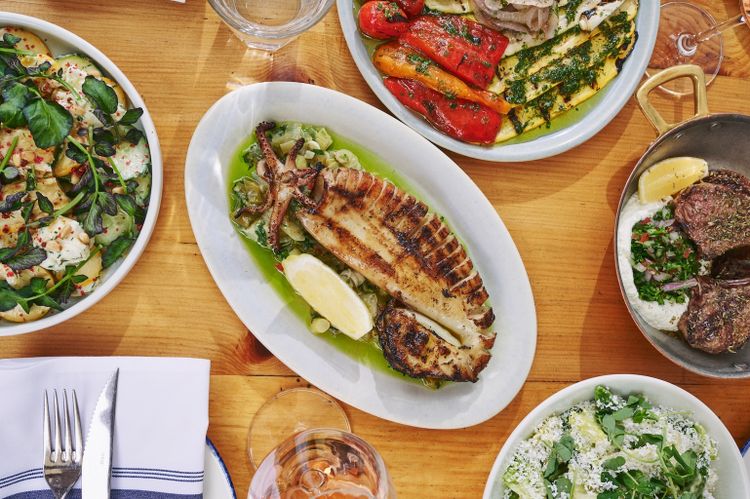
The brief there is clear: no chasing stars. “I really wanted a neighbourhood restaurant where people could come several times a week.” Same products, same rigour, but a more generous plate, less precious, set in the middle of the table to share, which is how Vancouver prefers to eat anyway. Fun dining rather than fine dining, as he puts it. “We pride ourselves on preparing food that is at turns rustic, generous and honest. For us, simplicity is the ultimate form of sophistication.”
A little Montreal after 8 p.m.
If he could bring one thing from Montreal to Vancouver, it would be the habit of eating late, of coming out to celebrate, of drinking wine with friends until midnight, the European table culture he loves so much. Vancouver, for its part, loves cocktails, beer, early nights, which he thinks is a fine thing too. Service after service, he keeps bringing a little of that culture to the city he chose.
Asked about what comes next, he talks first about David and Margot. “I really enjoyed supporting them in this new project, helping them make their dreams happen. If I can do it one more time with certain employees who are ready for it, I won’t say no.”
Written by Fabie Lubin
Photography by Hakan Burcuoglu