Angela Pastificio: Handmade Pasta on Powell Street
Angela Pastificio
- $$$$
- Booking
-
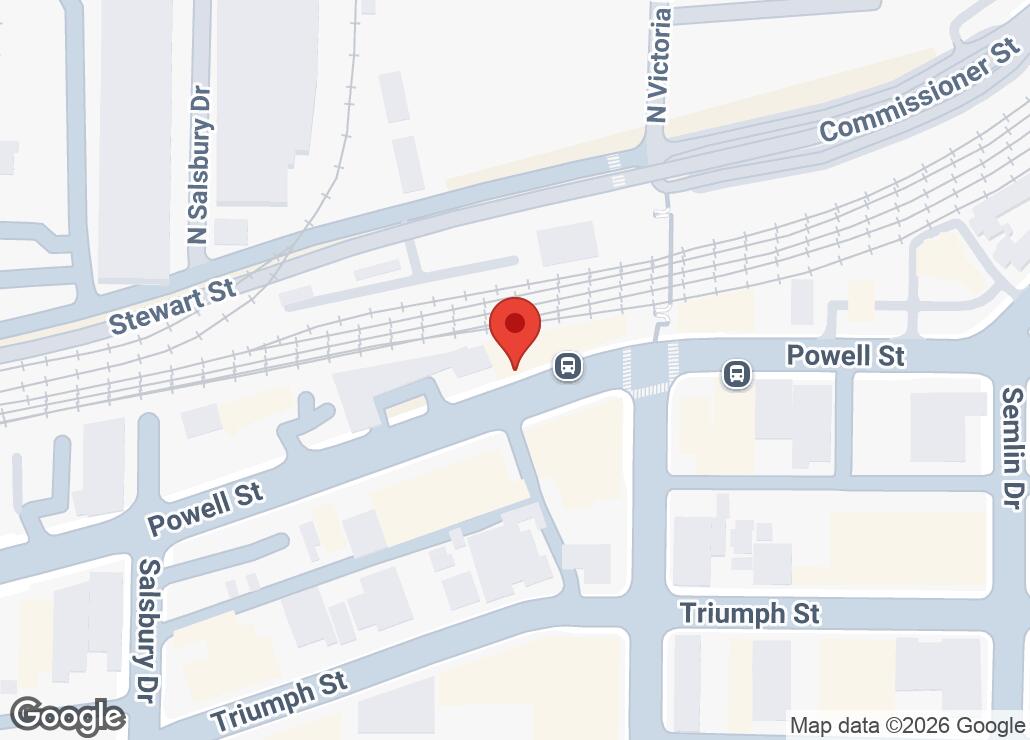
1869 Powell Street Vancouver V5L 1H8
-
Monday: Closed
Tuesday: Closed
Wednesday: 5:00 PM – 10:00 PM
Thursday: 5:00 PM – 10:00 PM
Friday: 5:00 PM – 10:00 PM
Saturday: 5:00 PM – 10:00 PM
Sunday: Closed
-

- Restaurant
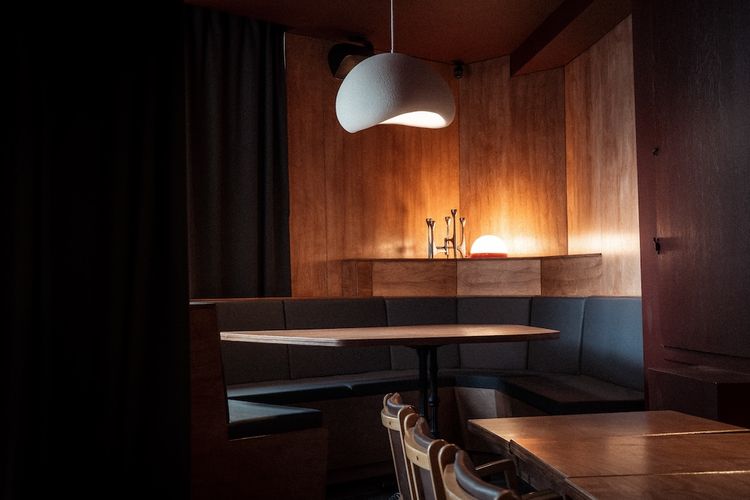
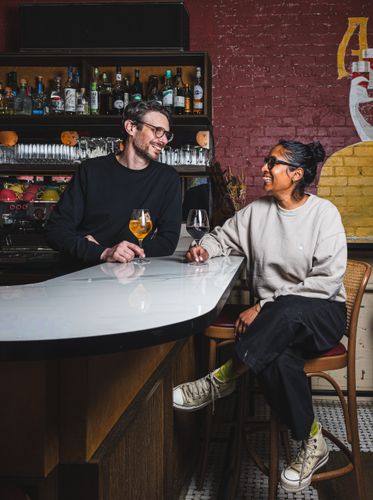
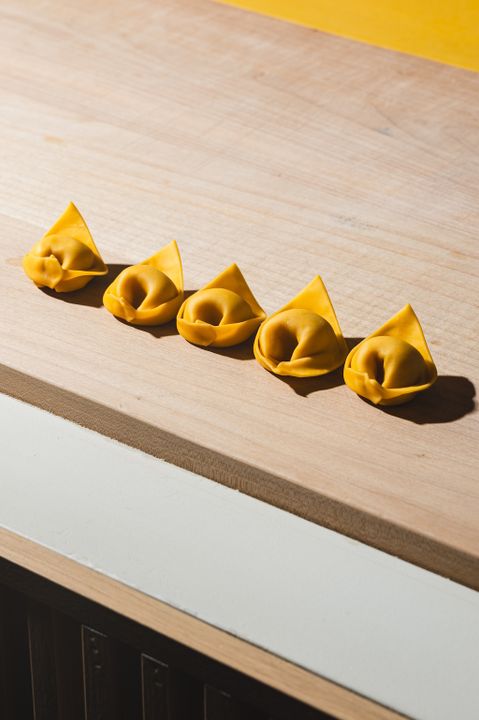
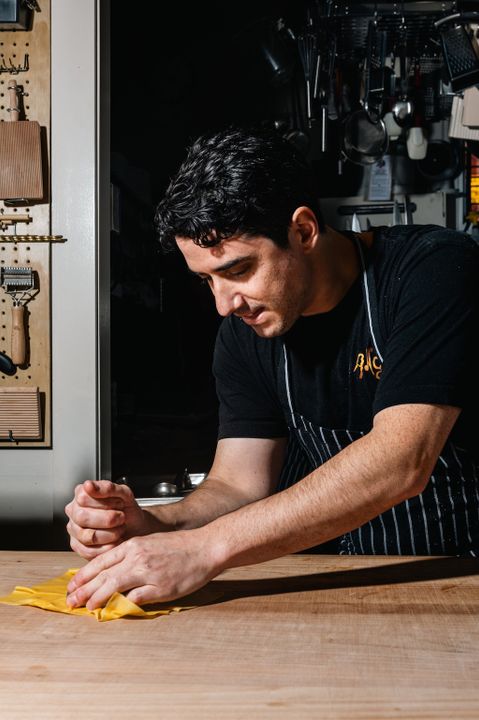
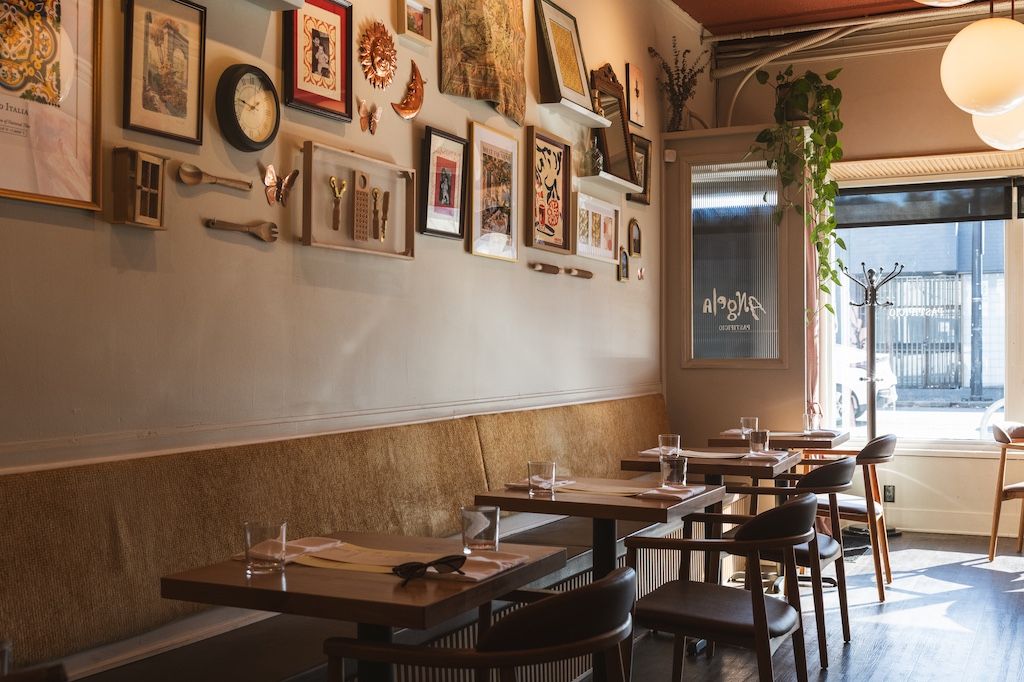
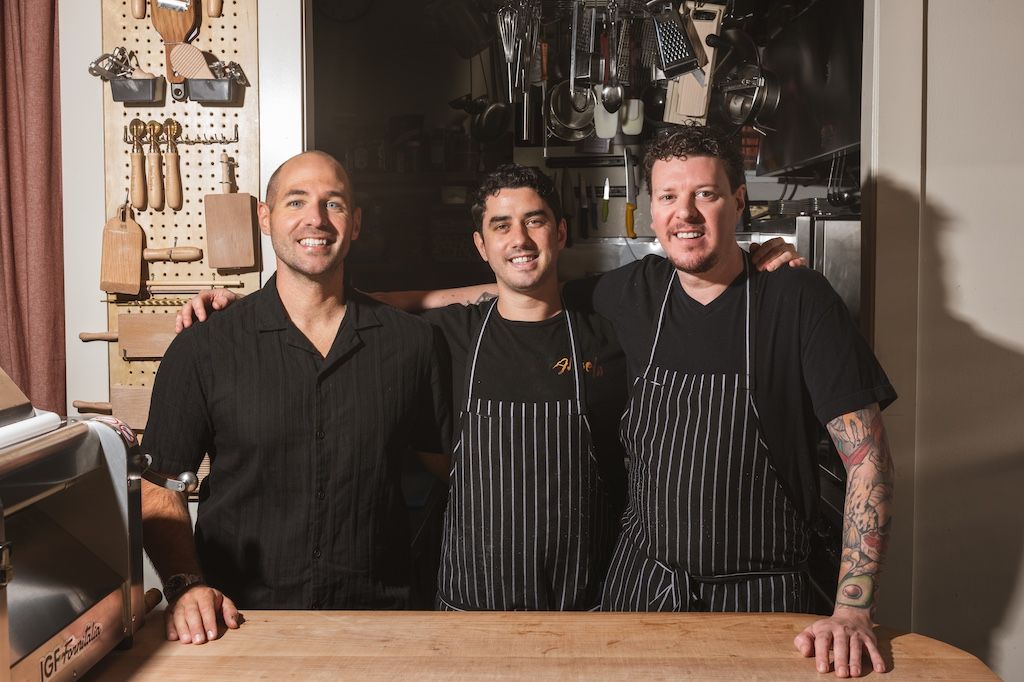
Behind the counter of a Powell Street dining room, two cooks spend their afternoons rolling, cutting and folding the pasta that will fill its 20 seats that evening. At Angela Pastificio, dinner is a tasting menu built around five pastas, each one shaped by hand, piece by piece, and many of them drawn from small Italian towns whose names rarely travel as far as Vancouver. Chef and owner Calvin Vogstad describes the restaurant as a love letter to pasta, and the menu reads that way from the first course to the last.
From pipe dream to tasting menu
Angela Pastificio grew out of years spent perfecting the craft. Before opening his own place, the chef spent five years making pasta at La Quercia. “People were just coming in and saying, we want pasta,” he recalls. Watching that demand year after year slowly turned a pipe dream into a plan. Co-chef Nolan Bayliss, also a La Quercia alumnus, joined him, and the two have been the only cooks in the kitchen since day one. To the chef, pasta sits in a category of its own, somewhere between savoury cooking and pastry, because so much of the craft comes down to working with dough.
When Angela opened, a small à la carte menu ran alongside the tasting, so nobody would be left out if they simply wanted a bowl of pasta. Diners settled the question themselves. The tasting menu quickly won over almost everyone who walked in. The restaurant dropped the à la carte and has served the tasting menu only for at least a year.
For a kitchen of two, the format makes sense. “Basically we just get to make our own menu,” the chef says, and the time it frees up goes into the small, detailed work that sets the place apart.
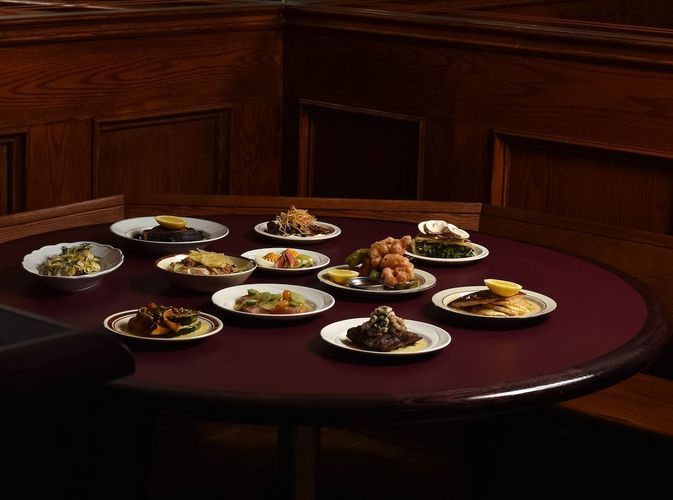
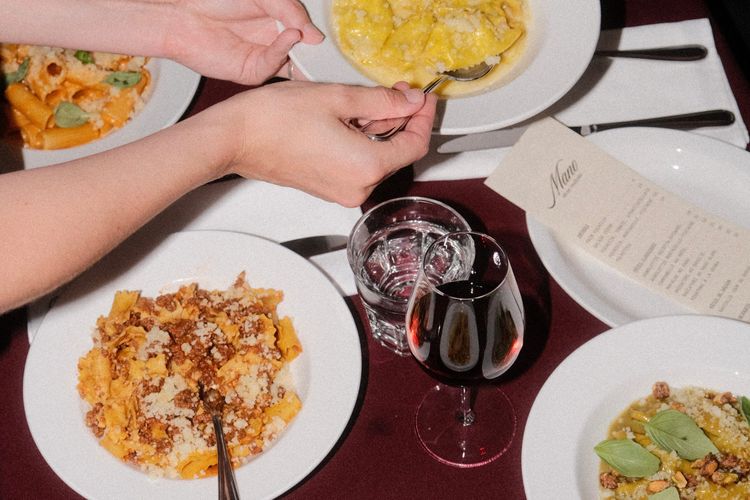
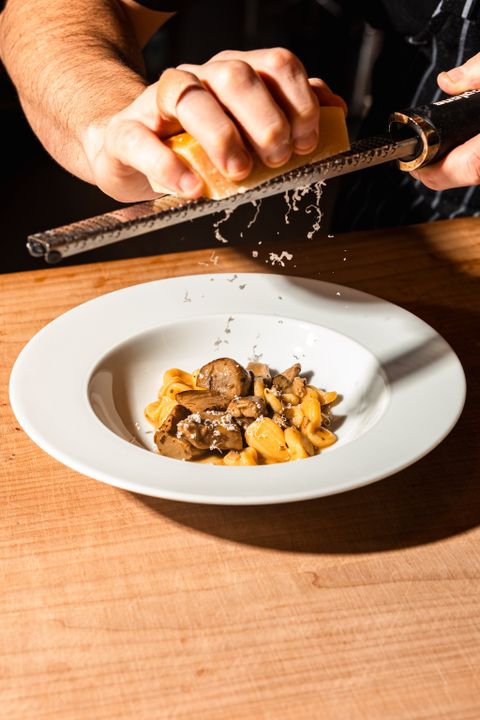
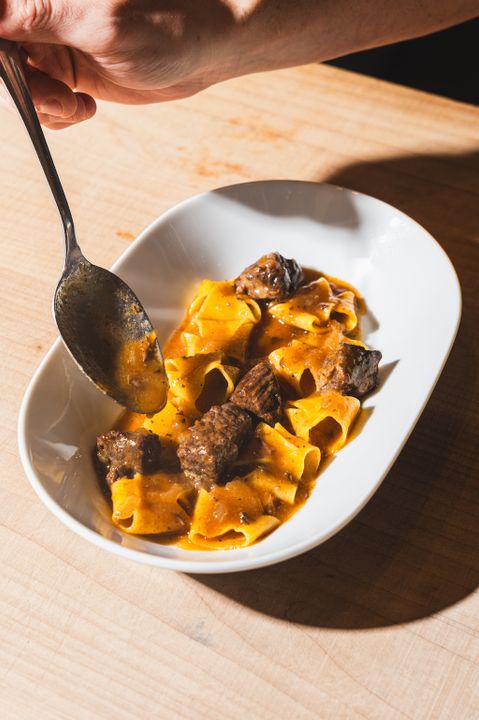
The meal at Angela Pastificio opens with antipasti and a salad, moves through five pastas and closes on dessert. Antipasti and dessert shift gently with the seasons, while the salad and four of the five pastas change completely every month. That rotation keeps the cooks exploring, and it lets the chefs build a progression from course to course, growing heavier and richer as the weather cools.
The raviolo at the end
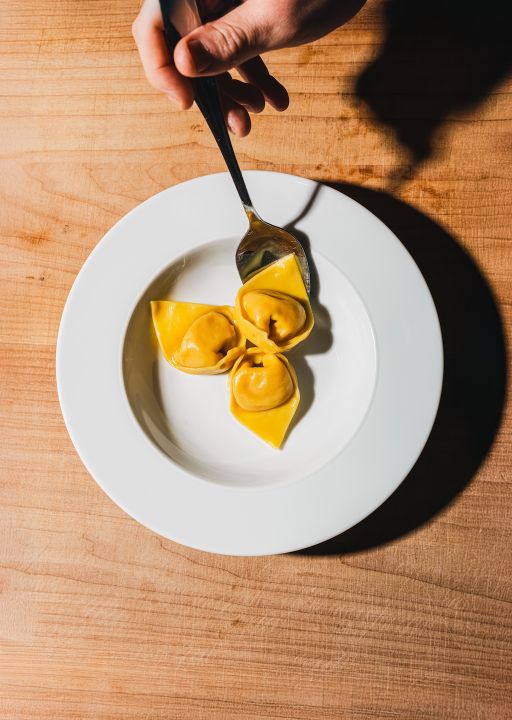
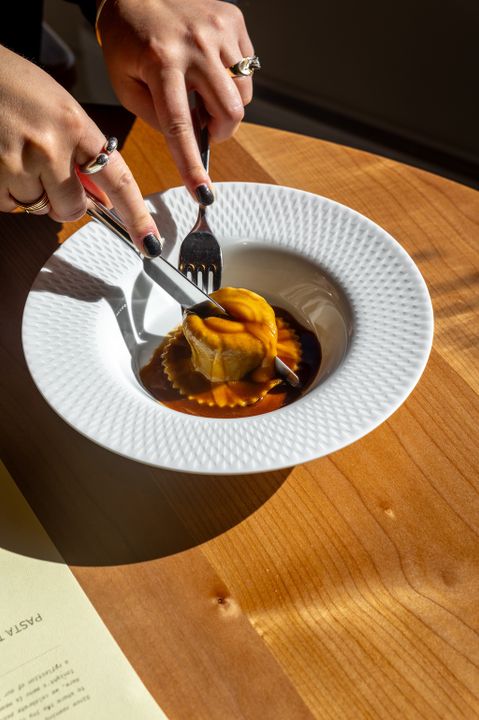
One pasta never leaves the Angela Pastificio’s menu. Served last, the raviolo ottimo is a single large raviolo holding an egg yolk, its filling of braised beef and provolone set firm enough to form a cup around the yolk, all of it served in a rich meat jus. With no main course on the menu, it plays that role. “I think very few people would eat that and feel the need for something else,” the chef says.
It also frees the four pastas before it. Knowing the meal will end on something rich and familiar, the kitchen can go lighter and more experimental earlier on, and regulars get a fixed point to look forward to while they discover what’s new that month.
Recipes from small Italian towns
Much of what comes out of the kitchen originates in modest places, tiny towns where people had little and made pasta from flour and water. The results tend to surprise, even for seasoned pasta lovers. The chef has grown fond of these unusual shapes, and the tasting format suits them: a small portion invites curiosity, without the commitment of a full bowl.
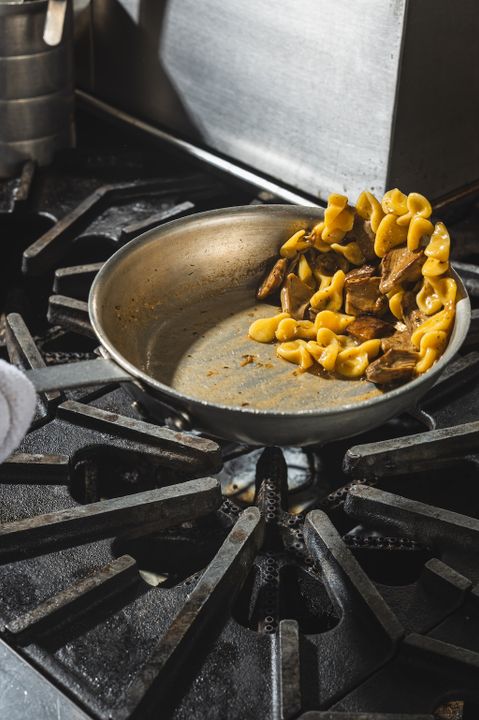
Finding them takes research, a part of the job he clearly enjoys. He digs through information online, follows a lead layer by layer, like a lasagna, then checks the map to see what the next town over might make. His notebook, filled with more than a hundred pastas recorded over the years, serves as a starting point, and the menu at Angela increasingly heads south, toward the regions he is most curious to explore. One spring menu featured ferretti with peperone crusco, the sweet dried pepper of Basilicata, alongside dishes from Lazio, Emilia-Romagna and Tuscany.
Sometimes a dish finds exactly the right table. One night the kitchen served crespelle in brodo, thin crêpes covered in cheese, rolled, sliced and dropped into broth, where they soak up the stock. A visiting family from Abruzzo, where the dish comes from, could hardly believe they had found it outside their region. For the chef, moments like that confirm his role. “I’m the medium,” he says, someone who finds these dishes and passes their stories along.
Gelato churned in house
Dessert has remained largely unchanged since Angela Pastificio’s opening. Making gelato was something the chef had always wanted to do in a restaurant, and the gelato machine was one of the first things he bought for Angela. After a long stretch spent perfecting a recipe, the kitchen now churns it every day or every other day, so it reaches the table soft and fresh. The flavour changes from time to time, and it comes with two small cannoli, a long-time signature of the co-chef.
Italian wines, from north to south
The wine list, built by general manager and sommelier Roberto Galletto, follows the same logic as the pasta. It is entirely Italian and travels from the north of the country to the south, with a few options by the glass and plenty of bottles. Each month, he also puts together a pairing to match the pastas, using wines that appear nowhere else on the list, a chance to pour more niche bottles and share their stories.
In the dining room, servers Fernando and Kelsey, there since day one of Angela Pastificio, carry the stories behind each pasta from the kitchen to the table, and the restaurant considers them integral to its identity.
A strip of chef-driven tables
The chef looked at spaces all over the city and admits he would never have guessed the restaurant would end up here, but one visit to the room was enough to convince him. Angela now shares a short stretch of Powell Street with Nero Tondo and Niwa, three young, chef-driven restaurants that each give the tasting menu a central place in their own way. The block has a relaxed, friendly feel, some guests make the rounds, and the cooks like to ask them how last week’s dinner next door went. What he hopes guests bring along is an open mind. Every piece on the plate is made by hand, rolled off the board, shaped around a dowel or folded one at a time, and many of these traditions are slowly disappearing. Sitting back, paying attention to the textures and flavours, and wondering why each dish is the way it is turns out to be the best way to eat here.
Written by Marie-Françoise Malo
Photography by Scott Usheroff