Jacob Richler: The Man Behind Canada’s 100 Best

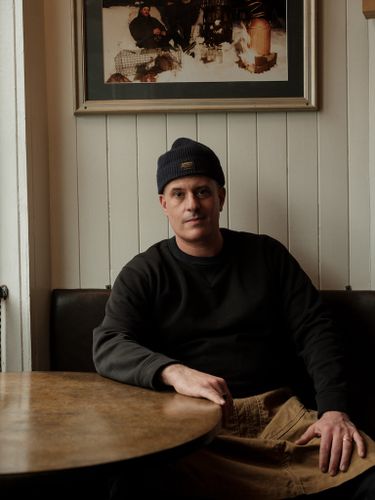
There’s a particular kind of authority that only comes from having eaten your way through a country for over 25 years — not as a tourist or a trend-chaser, but as someone who genuinely cares about what ends up on the plate, and why. Jacob Richler is that person. As the founder, publisher, and editor-in-chief of Canada’s 100 Best, he has quietly built what has become one of the most trusted guides to dining in this country. But the story of how he got here is far more layered than a single list could suggest.
A Literary Table
Jacob grew up in Montreal, the youngest son of the celebrated novelist Mordecai Richler and Florence Richler — a former who became Mordecai’s most trusted editor — and, by Jacob’s own account, a terrific cook. If you’ve read Jacob Two-Two Meets the Hooded Fang, you’ve already met a version of him: his father wrote the beloved children’s book with young Jacob in mind.
But it was at the family table that the real education began. “My mother was a terrific cook and my father loved great restaurants,” Jacob recalls. The combination left its mark. While the Richler household was steeped in literature, it was equally steeped in the pleasures of a well-made meal — the kind of upbringing where taste, in every sense, was cultivated early.
From Generalist to Gastronome
Jacob didn’t set out to become a food writer. For years, he was a magazine journalist of the old school — reviewing cars, covering politics, critiquing books. He wrote for Saturday Night, Maclean’s, National Post, GQ, Toronto Life, and a half-dozen other publications. He was good at all of it, earning two National Magazine Awards along the way.
The pivot to food came almost by necessity. When he moved from a monthly magazine to a daily newspaper, the pace shifted dramatically. “You go from taking a month to research and rewrite and perfect a story to having to write three or four a week,” he explains. “You can’t learn a new subject four times a week.” So he specialized, and his food writing — sharp, informed, unafraid to be critical — quickly gained a following. He became the first food columnist and restaurant critic at the National Post, and later took over the food column at Maclean’s.
Along the way, he co-authored cookbooks with chefs Mark McEwan and Susur Lee, and published his own culinary memoir, My Canada Includes Foie Gras — a title that tells you everything about the man’s unapologetic approach to the table.
Building the List
In 2015, Jacob launched Canada’s 100 Best, filling a gap he felt had long existed: a credible, national guide to where Canadians should be eating. The list is assembled by a panel of 160 voting judges — a mix of food writers, chefs, restaurateurs, and serious culinary enthusiasts from coast to coast.
What makes it different from other rankings is the philosophy behind it. Jacob himself doesn’t vote. “People recognize me because I’ve been around for so long, but I don’t actually vote,” he says. “They can do what they wish to try and please me — it doesn’t necessarily have any impact.” The integrity of the list matters to him deeply. When he hears that a judge has announced themselves at a restaurant to score a better table, they’re off the panel. No exceptions.
The writing in the guide is deliberately uncritical, too. “We let the vote define the rank, and we keep the text uncritical because it’s not the writer’s job to share what they think of a certain place. They’re supposed to share what the experience is like — is it noisy? Is it casual? Is it romantic? — so that people can base a decision on what they want to eat tonight.”
On Honesty, Influencers, and the State of Dining
Ask Jacob about the current food landscape and he doesn’t mince words. The rise of influencer culture in dining is, in his view, a net negative. “Has it made food better? No. Has it made a lot of food kind of irritating because it’s all about the show instead of the substance? Yes, definitely.”
He tells of a recent experience ordering what he thought was a $30 cocktail — it turned out to be $300. The same restaurant had one for $500. “No serious person would order a cocktail for $500,” he says, barely concealing his exasperation. “Turning dining into a spectator sport for the internet is lamentable.”
What he misses is honest criticism — the kind that keeps restaurants accountable. “Chefs can get a little greedy. They can price things too high. Service can get sloppy. It’s not a bad thing for somebody credible to point that out.”
Eat What You Love
For all his expertise, Jacob Richler is refreshingly uninterested in telling people what to think. When it comes to rankings and star ratings, he believes personal experience should always come first. “If you love a place, who cares what they’re rated? If you get pleasure out of it, what does it matter?” he says. “I don’t need other people’s affirmation in my restaurant choices.”
It’s a surprisingly freeing perspective from someone who runs one of the country’s most influential restaurant rankings. But for Jacob, the list was never meant to replace anyone’s instincts — it’s there for when you’re in unfamiliar territory and need a trusted guide. “Everybody knows their own market. We don’t bring out an issue so that Montrealers can understand better where to eat in their own city. We do it more so that when they’re traveling and visiting Vancouver, Winnipeg, Toronto, they’ve got a good guide to where they should be eating.”
A Deep Love for Quebec
Though Jacob now lives in Toronto, his ties to Quebec run deep. He still orders much of what he cooks at home from Quebec producers: poultry, cornichons, foie gras, lamb from Kamouraska or Charlevoix. “I think you have some of the best farmers in the country,” he says without hesitation.
He speaks fondly of Montreal’s dining scene — of decades of meals at Toqué!, of planning a trip to catch up with Simon Mathys at Mastard, of sitting at the bar at L’Express with a glass of wine. These aren’t professional obligations. They’re pleasures, rooted in genuine affection for a city and a food culture he grew up with.
Why Local Voices Matter
In a world where international guides parachute inspectors into cities they barely know, Jacob Richler is a fierce advocate for the local lens. He’s blunt about it: critics and food writers who actually live in a community bring something irreplaceable to the conversation. “Restaurants should be kept honest,” he says. “It’s good to have some informed opinions out there in the mix.”
He points to the limitations of visiting critics who rely on a single meal and a handful of recommendations from afar. A local judge knows whether a restaurant has been consistently excellent or coasting on reputation. They understand the seasonal rhythms, the supply chains, the stories behind the kitchen doors. That depth of knowledge is what makes a ranking credible — and what makes it useful.
It’s a conviction that resonates deeply with us at Tastet. From the very beginning, our mission has been rooted in the belief that the people best positioned to celebrate — and honestly assess — the restaurants of a city are the ones who eat there every week, who know the chefs by name, who’ve watched a neighbourhood evolve one opening at a time. What Jacob Richler has built with Canada’s 100 Best is proof that local expertise, assembled with integrity, can become a national reference.
As for the state of Canadian cuisine? Jacob is more optimistic than ever. “I’ve been eating pretty extensively around the country for a long time. I find regional expressions more distinct, better product on the plate, better harvesting — and I would say that in many ways, Quebec leads the charge.”
“We only have so many meals in the day. They should all be good.” On that, we couldn’t agree more.
Written by Valérie Boutet
Photography by Scott Usheroff