Hubert Marsolais: the art of creating beyond time

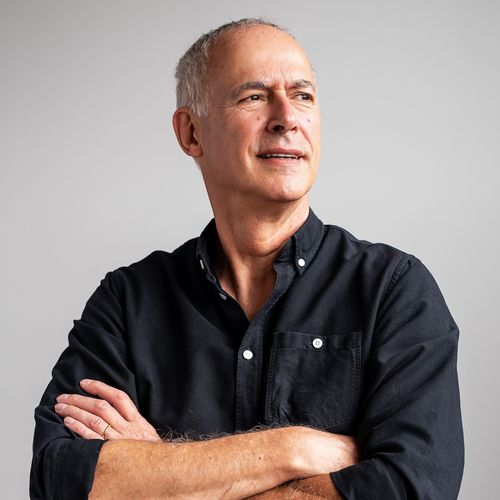
Hubert Marsolais is an exceptional restaurateur! Amid the constant churn of restaurant openings and closures, one question remains: what allows a place to stand the test of time? Why do some establishments continue to be frequented, loved, and profitable year after year, while so many others disappear without a trace? In Montréal, a handful of addresses seem to have found the answer. Le Club Chasse et Pêche (2004), Le Filet (2011), and Le Serpent (2013)—three restaurants that do neither major advertising, nor public relations, nor any real social media—have nonetheless earned three recommendations from the Michelin Guide. And yet, their dining rooms are full night after night. We meet Hubert Marsolais, co-founder and co-owner of these discreet, enduring institutions, who will open a long-awaited project in 2026 on Laurier West Avenue: Hôtel Mile End.
Hubert Marsolais, a true restaurateur
Hubert Marsolais entered the restaurant world in the early 1990s at the now-defunct Luna restaurant. He learned from talented industry professionals and worked his way up—busser, barback, server. He observed, learned, endured. Then, after returning from a first work experience in Europe, at just 24 years old, he became maître d’hôtel at La Luna, a pioneering restaurant on Saint-Laurent Boulevard in the early ’90s, alongside Tuscan chef Louisa Valenti. His mentor was maître d’hôtel Mario Borges, and he worked at the time for Robert Di Salvio. Restaurant life as a demanding school—sometimes harsh, but deeply formative.
He went on to serve as maître d’hôtel at the Japanese restaurant Soto from 1995 to 2000, where he met chefs Junichi Ikematsu (Jun I) and Naoki Yusa. Holding every position does not guarantee success, but it builds a fine-grained understanding—of each role, the rhythm of a dining room, the fragile balance between kitchen and service. Hubert learned by doing. And by working a lot.
Falling—and getting back up
In June 2001, Hubert Marsolais opened Cube at Hôtel St-Paul with Claude Pelletier, then the chef of Mediterraneo on Saint-Laurent Boulevard. Success was immediate: the restaurant became a hub of celebration and buzz. But three years later, the project came to an abrupt halt following a dispute between partners. Hubert and Claude left. “We crashed. We learned. We were poorly surrounded.” The words are simple, without unnecessary romanticism. The lesson was harsh, but foundational. Make mistakes, yes. Get back up—always. Today, that episode is just one step among many in the restaurateur’s journey.
People first
Six months later, on December 31, 2004, Hubert and Claude opened Le Club Chasse et Pêche. Quickly. Almost instinctively. It marked the beginning of a triptych of restaurants between the two partners.
After spending five years developing a project for Centre Phi that ultimately fell through, Le Filet was born on February 11, 2011, on Avenue Mont-Royal West, with chef Yasu Okazaki and Patrick St-Vincent leading the dining room. Then, in December 2013, Le Serpent opened at Fonderie Darling, an industrial building repurposed as a contemporary art space. After 12 years, the restaurant has just experienced one of the best years in its history, largely thanks to the brilliance of their partners—chef Michele Mercuri and Philippe Boisvert, a longtime collaborator since Cube—who oversee sommellerie and general management.
For Hubert, service is the backbone. “You can be praised by critics. If your dining room isn’t solid, if your management is poor, you won’t survive.” Loyalty and rigorous management are central. Some employees have been with him for ages—for example, Helen Karagiannakis, an exceptional chef de rang for nearly 20 years before becoming head maître d’hôtel at Le Club Chasse et Pêche, where she has been “infusing her sublime touch” for over fifteen years. Some projects are even born to allow the team to grow, evolve, and stay. Because a restaurant, beyond passion, is also a business.
A cuisine that’s right—without noise
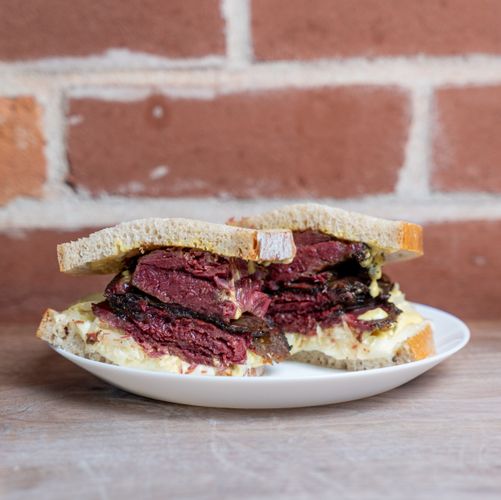
Le Club Chasse et Pêche established itself in 2004 as one of Montréal’s first luxury comfort-food restaurants, driven by the rich, generous, and precise cooking of Claude Pelletier—an offering that was rare at the time. Over the years, teams have changed, but standards have not. Executive chef Olivier Larocque keeps the course beautifully.
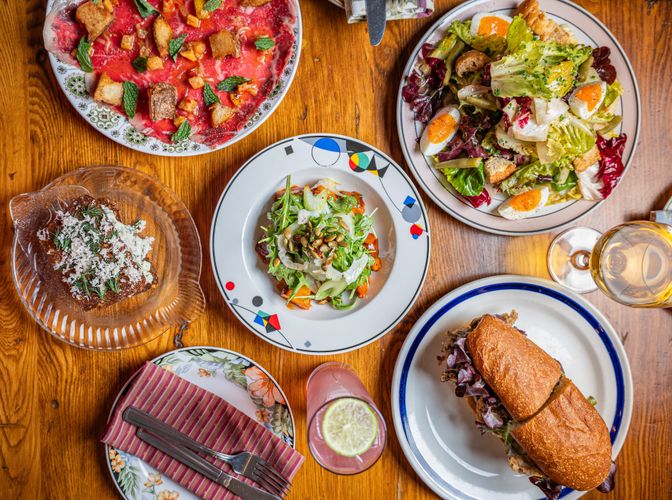
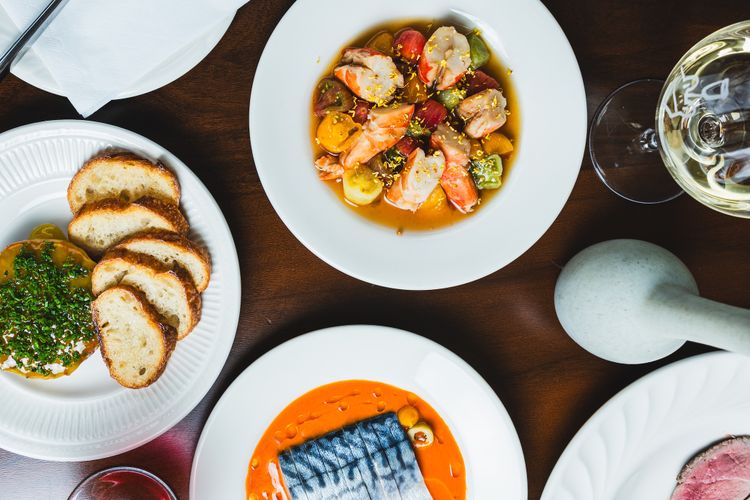
Le Filet explores fish and seafood on French foundations, with a subtle Japanese inspiration brought by Yasu Okazaki. Le Serpent adopts a contemporary, elegant Italian brasserie style, embodied by Michele Mercuri. In each venue, menus are evocative yet readable, free of showmanship, executed with sensitivity and rigor.
Resilience, always
In February 2017, Hubert Marsolais and Sarah Altmejd brought together investors and purchased land on Laurier West to build a hotel. The project was ambitious. Then the pandemic hit. Interest rates rose, hospitality was redefined, and construction costs exploded.
Meanwhile, Café Éclair opened in February 2019. Hubert was invited to join the project and found what he loves: a central island, a strong architectural statement, distinctive coffees, a human scale. He also met Jair Garduno, an extraordinary barista who is now the owner.
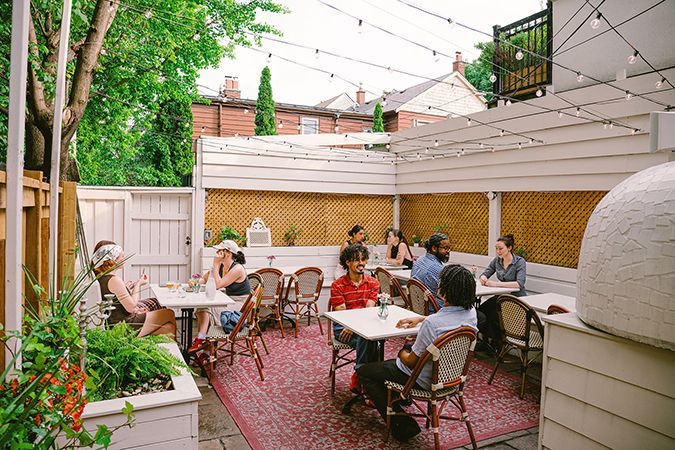
In August 2024, just as work on Laurier West was about to resume, an investor left the group and construction could not restart. Time-worn fatigue set in, and investors considered selling. Alongside physician Raphaël Vartazarmian, who had been involved from the beginning, a new group was formed and bought the project in May 2025, continuing with the same vision and the intention to present Montréal’s talent as raw material. The founding idea remains intact: a deeply Montréal-rooted hospitality, close to community and beauty. A place where art is lived daily—exhibitions, cinema, living culture. The neighborhood, shaped by waves of Jewish, Polish, Russian, Ukrainian, Portuguese, and Greek immigration, becomes narrative material. The project aims to mirror what Montréal does best, for residents and visitors alike. Thirty rooms to start. On the food side: a restaurant, a café, a bar, then a second restaurant upstairs. Forty seats inside, as many outside. An exceptional terrace. A dream terrace.
Hospitality as social bond
In parallel, Hubert Marsolais is involved with La Table Ronde. He took part in the first discussions, sits on the board of directors, and deeply believes in the cultural and social role of hospitality. “Hospitality is a welcoming land for people with a gift for human connection.” La Table Ronde brings people together, federates, and gives the industry a voice.
Beauty as a creative engine
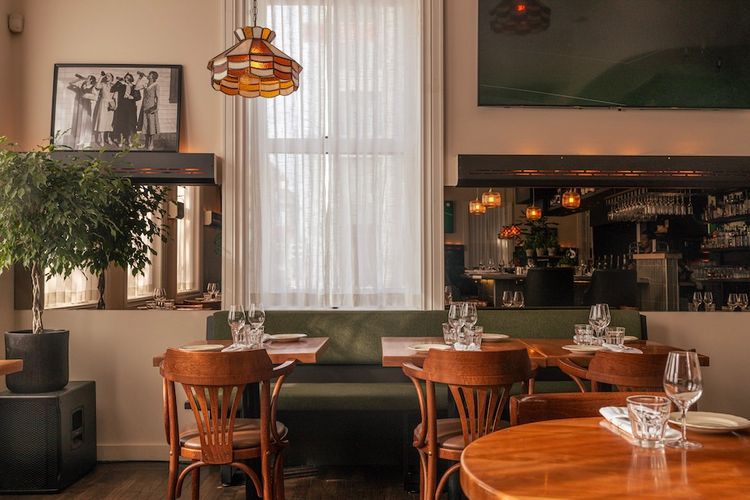
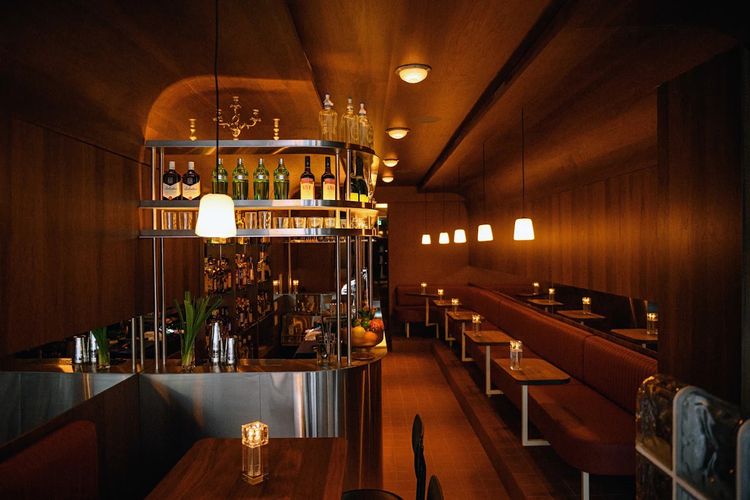
The interiors of Le Club Chasse et Pêche, Le Filet, and Le Serpent are conceived as extensions of the culinary vision. Bruno Braën designed the first. Annie Lebel (in situ atelier d’architecture) collaborated on the others. Hubert integrates artworks conceived for each space, in dialogue with light, materials, and angles. He loves singular spaces, full of personality. The same will be true for the hotel: art, architecture, and beauty are integral to his universe. Architect Henri Cleinge is his collaborator on the hotel. Prolific Montréal designers will be showcased, with architectural art installations planned.
Rejecting fashion
How do you explain this longevity? “Trends are the trap. You don’t want to be fashionable. You want to try to invent.” For Hubert, the restaurateur is a producer: someone who brings talents together around a place, then around a culinary idea, to create something good, beautiful, and alive. He speaks calmly, clear-eyed, animated by a quiet passion and a renewed energy sparked by the long-reignited hotel project. Hubert Marsolais is no longer trying to seduce—he’s elsewhere. He seeks to create, to innovate, and above all, to endure.
In Montréal, his establishments don’t shout. They resonate—through beauty, taste, and emotion. And, without much noise, they become internationally renowned institutions.
Written by Sophie Monkman