Frédéric Morin: The backbone of the Joe Beef group
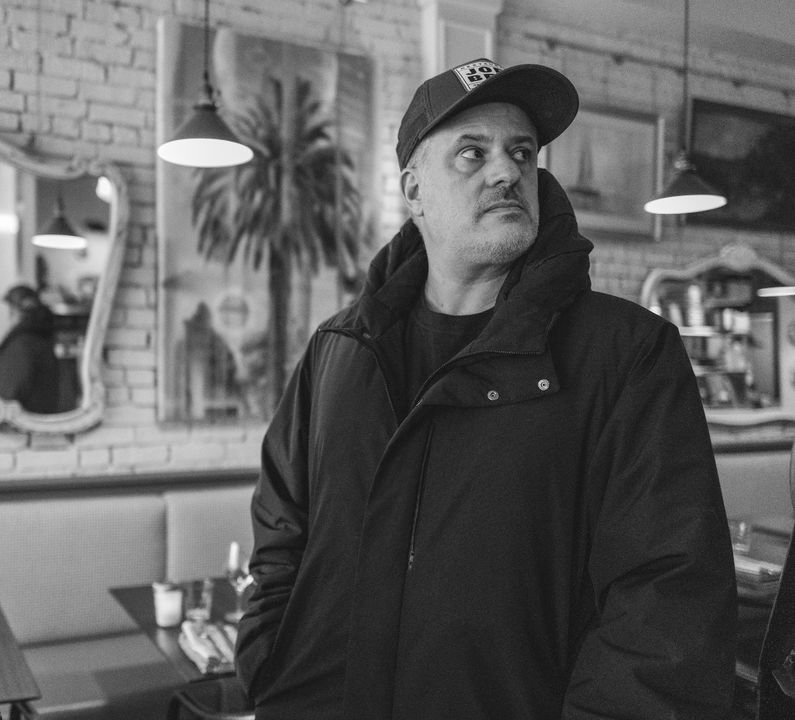
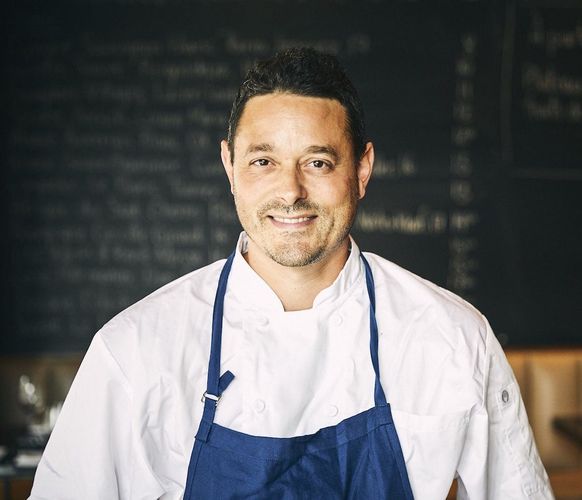
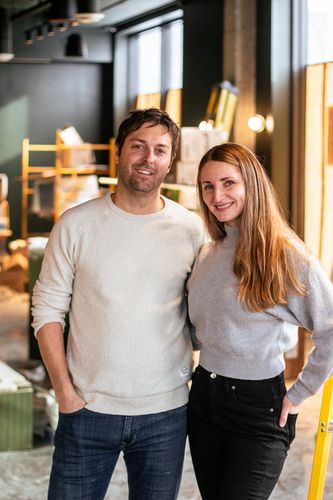
Frédéric Morin is co-owner and co-founder of the Joe Beef Group – Joe Beef, Liverpool House, Vin Papillon, McKiernan, Joe Beef products and +++. Together with his wife Allison Cunningham and former partner David McMillan, he has succeeded in putting Montreal on the map as a food capital of the world. Recently, Fred and Allison acquired the majority of the shares in the famous group. After this exceptionally difficult pandemic, we wanted to meet the chef who, after several years, is back in management and in the kitchen of his restaurant; because like all people, when you have a business, it’s a lifelong project!
Frédéric Morin grew up in Cartierville, and never thought he would work in the restaurant industry. After high school, Fred studied agriculture for three years at the Institut de Technologie Agricole and quickly developed a passion for greenhouses. It was his accounting teacher, Claude Barnabé, who, always noticing him writing recipes in the ledger, one day asked him why he didn’t enroll in a cooking school instead; a great idea. At the time, it was too late to enroll at the ITHQ, and so Frédéric enrolled at the École hôtelière des Laurentides. “It was the last cohort of former French chefs to arrive for Expo 67.” He was 19 years old, and it was hard for him to be alone in the countryside and feel good. He was still far from being ready to open a restaurant, but had a passion for horticulture and agriculture.
Fred also developed a passion for old French cookbooks and an interest in culinary know-how. “A favourite is not rational. I grew up with Louis de Funès’ films. The procession or the procedure, the unfolding of a French meal, this ritual is fascinating to me. In Quebec, we don’t really have a gastronomic culture as such, we have a survival and settlers’ cuisine from which we borrow and integrate certain things. And with a French-Belgian mother, I quickly identified with this French cuisine for which I am still passionate.”
Not having a TV and living in the country, Frédéric Morin read constantly! He spent his loans and grants on Time Life and Larousse gastronomique; he also bought useless cooking items and practiced constantly, at home or at school. To this day, Fred is a bit of a walking encyclopedia.
After the first year, he went to Tunisia to do an internship for four months. In the summer, he worked at the Jean-Talon market. During his academic career, he did an 11-month internship at Toqué!—which was located on Saint Denis Street at the time—and ended up working there for two years. He worked with Stelio Perombelo, Dyan Solomon, Éric Girard, Yann Perreau, Martin Falardeau, Patrick St-Vincent, and many other great chefs.
Then, Stelio and William Frachot took over the Caprices de Nicolas, where he worked for a year. He then went back to work at the Jean-Talon market and decided to return to Africa, this time to Senegal and Burkina Faso.
Upon his return, Fred had to choose between a small number of very good restaurants, including Mediteraneo with Claude Pelletier and Globe with David McMillan. “There weren’t many cool restaurants back then!”
Frédéric Morin arrived at Globe in 1999 and stayed until 2005. There, he met Allison; his future wife, mother of his children, and partner in the Joe Beef group. He also met David McMillan, his business partner with whom he would work for over 20 years.
One of his mentors (who doesn’t know it) is chef Riad Nasr. “When he worked at Balthazar in New York, he was making real food for 600 people a night. That really impressed me! He was a role model for me—that you could be a good cook and do those things. And at Globe, I learned that: to cook well while making large quantities, and fast.”
Frédéric Morin then opened what would become the famous Joe Beef restaurant in Little Burgundy with Allison and David. This restaurant was one of the first to be established in this neighbourhood; which is now by far one of the most popular in the city. They all lived around Atwater and the owner of the café that was in the Joe Beef space didn’t want it anymore.
Why did they choose this space? “When you’re young, you don’t make a business plan to weigh the pros and cons… things are decided a lot by feeling. You feel good somewhere and so you go for it. That’s what we did.”
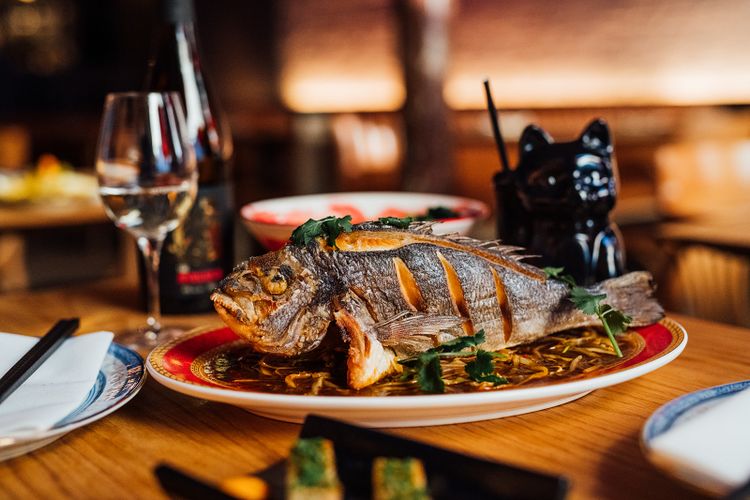
Joe Beef opened and, like Pied de Cochon–which according to Fred is a major player in Montreal’s culinary heritage—has had a major impact on the restaurant industry in Montreal. Not only for its location in the city, but also for many other reasons: the restaurant has no decanter, no crystal glass, no uniform, and you can savour oysters at the bar or aioli in the garden. These are things that are common now, but back then, they didn’t exist!
When Joe Beef opened, Frédéric Morin was in the kitchen. “I love to cook.” He prepared French cuisine with a touch of Quebec generosity. It was an instant success.
Over the years, though, Fred has quietly drifted away from his own kitchen. He calls it “circumstantial”: a run of remarkable chefs came in to take the reins — François Côté, Marc-Olivier Frappier, Gabriel Drapeau, Ariel Schor, Emma Cardarelli. But a restaurant that turns 20 ages, too, and that is exactly what fascinates Fred today.
“After 20 years, it’s not just the owners and the old staff who get older — the restaurant develops a personality that has to age well, too. There are two ways to do it. The good one and the bad one. The bad one is the guy who starts the Botox, gets divorced, younger girlfriend, Porsche Boxster… and still sleeps with his machine at night so he won’t snore. The good one is the guy who pulls on his old jean shorts, plays his old rock — now his old rap — gets involved in his kids’ lives, and helps the people around him whenever he can.” Joe Beef, for its part, chose the second.
At 51, Fred’s days look nothing like those of the chef who once spent every shift at the pass. Two or three nights a week, he works service and walks from one restaurant to the other. By day, he handles the invoices, the sourcing, keeps an eye on what’s happening online, and keeps the kitchen faithful to itself. “At some point I tell the guys: we’re dropping the gribiche. It was beautiful, we did it in 2005, but now everyone’s putting it on their asparagus. Let’s stay true to who we are. Let’s keep creating.”
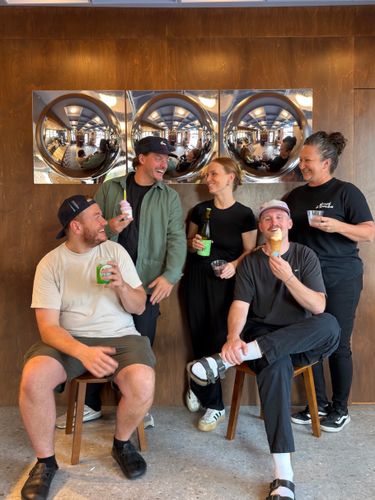
Ask Fred what he’s proud of and the answer never circles back to him. It’s the people around him he admires. He talks about his team with enormous pride and gratitude, admitting it’s that symbiotic teamwork that keeps the Joe Beef machine running. What he admires most of all are the ones who stay. “When someone decides that being a server isn’t a part-time job, it’s their craft — I find that fantastic.” They’re there by choice, by passion, like him. Several have been around for more than ten years, and every departure gives him a pang.
Does he still create dishes? Yes, but differently. “It’s not creating anymore, it’s reminding people of things.” He shows the younger cooks how to save pea pods or broccoli trimmings to draw out a cooking jus — “Oh right, I’d forgotten about that!” they tell him. That’s the kind of creativity he wants in the kitchen. Sometimes it’s a joke that takes shape: a lamb breast cooked with Moroccan aromatics, served cold with a parade of pale and dark condiments, ended up being called the “tagine de poitrine” — “just because it’s fun to say.” Creativity, now, is something he hands down.
If he’s gained anything with age, it’s a certain wisdom about what actually counts. The obsessive chase for perfection, he says, sits badly with a healthy workplace. “This guide, that inspector, the top 100, the Michelin that’s about to drop… people seem to depersonalize, to turn into someone else, to please that one inspector. You no longer know where you stand, and it creates this enormous weight. I don’t find that healthy.”
It’s also why he believes so deeply in human capital. “Everyone’s afraid of AI, of this kind of hostage-taking of the human. But a restaurant, a pastry shop — it’s one of the last places in this country where we still make things.” Hand AI the dish costing, the sourcing of farm products, the compost logistics — all the better. The rest, the service, the imperfection itself, stays human. “People choose la Lune or le McKiernan over the corner rotisserie for about the same price, precisely because of that human factor. You’re part of a living organism.”
His ambition, in the end, lives right there: in passing it on. “The conductor doesn’t show the drummer how to play, and the hockey coach doesn’t take off his jersey to go skate around on the ice.” Long live this institution that put Montreal on the map of world gastronomy — and the man who, quietly, watches it age in style.
Written by Jean-Philippe Tastet
Photography by Alexi Hobbs