Le Relais des Florent : Hugue Dufour Returns Home
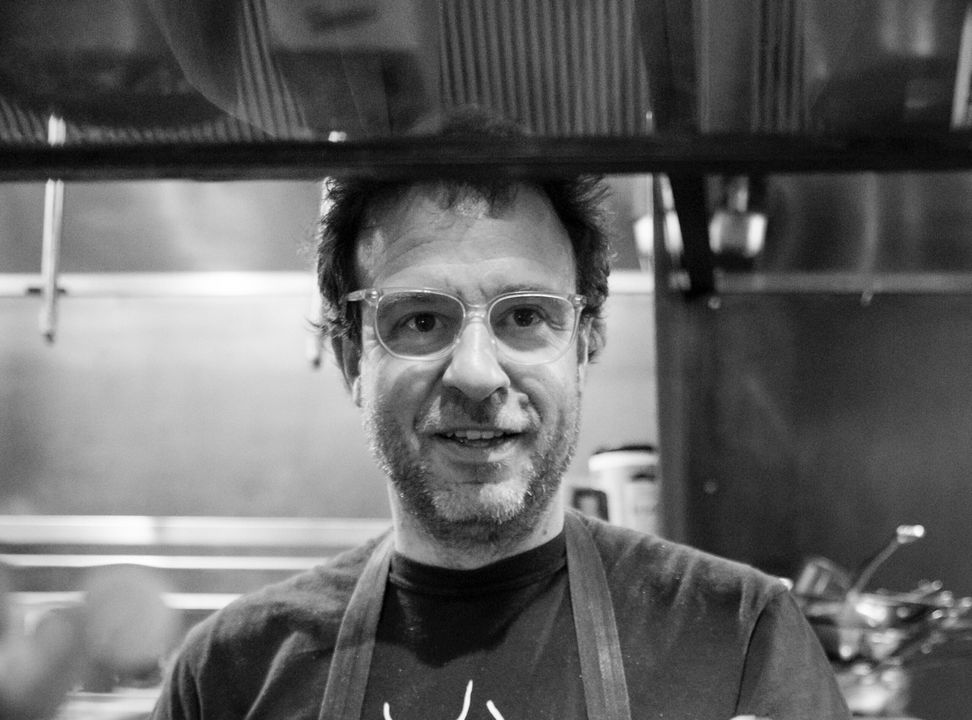
Hugue Dufour, the first Quebec chef to earn a Michelin star in New York is coming home. And all of food-loving Quebec is eager to know what he’s cooking up.
A return everyone’s talking about
Some news sends a jolt through Quebec’s culinary scene. Hugue Dufour’s return is unquestionably one of them. After more than a decade in New York—where he made history as the first Quebec chef to earn a Michelin star with his restaurant M.Wells—Dufour is coming back to settle in Baie-Saint-Paul (!!), alongside our friends at Migneron de Charlevoix.
The announcement sparked a wave of excitement and pride across the local food world. Because behind the internationally acclaimed chef is a down-to-earth guy from the Lac—hard-working, passionate, and deeply attached to his roots.
The guy from Saint-Cœur-de-Marie
When asked where he’s from, Hugue answers with the humility that defines him:
“Alma, in Lac-Saint-Jean… more precisely, Saint-Cœur-de-Marie.”
A simple reply that perfectly captures the chef’s modesty—far from the image one might have of a Michelin-starred chef.
Yet anyone who has tasted his cooking knows it well: beneath that reserve lies a bubbling mind, boundless curiosity, and a deep desire to create emotion through food.
Formative years: Laprise and Picard as mentors
Hugue Dufour cut his teeth in Montreal at Toqué!, under Normand Laprise. There, he learned discipline, respect for ingredients, and the rigor of haute cuisine—two intense years that laid the foundation for everything that followed. Then came Au Pied de Cochon. A complete change of scenery, tone, and spirit. Here, celebration and madness live side by side with craftsmanship. Dufour discovered another face of cooking: joyful, unpretentious gastronomy rooted in generosity. He learned that you can do great things while having fun, and that the most memorable dishes are often made with heart rather than ego. This experience profoundly shaped his vision of the craft—and of life.
New York, the school of the world
In 2010, Hugue Dufour left Montreal for New York with his partner, Sarah Obraitis. Together, they opened M.Wells Dinette at MoMA PS1, then M.Wells Steakhouse, a small diner set in a former auto body shop in Long Island City. There, Hugue and Sarah built a universe of their own—one where creativity leads, where meat meets forgotten vegetables, and where every dish tells a story. Hugue offered a reimagined, raw, generous Quebec cuisine that didn’t try to please—yet won everyone over.
M.Wells didn’t look like much at first, but within months, word spread: something special was happening there. Critics buzzed, food lovers flocked, and M.Wells quickly became the place everyone wanted to eat. Rave reviews followed in The New York Times, Bon Appétit, and Eater, along with four consecutive years holding a Michelin star. A first for a Quebecer. A discreet yet monumental achievement—one the chef never flaunted. “It was above all a beautiful recognition for the whole team,” he would simply say.
The call of Quebec
After more than ten years feeding New York, Hugue and Sarah felt the urge to slow down, breathe differently, reconnect with nature and simplicity. At the end of 2024, they closed their restaurant, packed up their knives and memories, and headed home. Destination: Baie-Saint-Paul, in Charlevoix—a region already renowned for its culinary vitality.
“I wanted to return to an environment that inspires me, where the seasons set the pace, where people still cook by instinct,” he says. It’s also a return to essentials: forest, sea, producers, fishers. “In Quebec, we have incredible products—harsh climates, but rich in flavor. What I love is that tension between summer abundance and winter resourcefulness.” The project is expected to come to life in time for the 2026 season.
A cuisine of heart and instinct
Asked what he plans to serve in his next restaurant, Hugue remains deliberately vague: “The menu will take shape over time, with my partners, according to the place, the people, the seasons. As someone once said, it’s hard to think the story while it’s being written.” Still, he lets a few hints slip: trout au bleu—“a dish of such precision and finesse it disarms me”; smoked eel; fruit preserved in syrup; baloney browned in a pan; or shaggy ink caps foraged on his land and served raw, in a salad.
As for sourcing, he strikes a nuanced note: “I deeply believe in local, but I don’t want to be dogmatic. You can eat sublime Spanish prawns in Madrid or in the middle of a desert. What matters is quality, balance, and emotion.”
Home, the couple, the table
In the Dufour-Obraitis household, cooking remains a shared playground. “I’m often the one cooking, but the ideas come from Sarah. She’s my muse.” When family gathers, everyone brings ingredients and they cook together. Their signature dish? Peruvian ceviche with boiled sweet potatoes. Simple, colorful, vibrant—just like them.
A new chapter to write
Hugue Dufour’s future restaurant will open in spring 2026 in Baie-Saint-Paul. The name hasn’t been revealed yet.
“We’ll name the baby once we see its face,” he says with a laugh. What we already know is that this opening will mark an important moment for Quebec gastronomy—and shine an even brighter global spotlight on Charlevoix. A chef trained here, celebrated elsewhere, returning home with experience in hand to nourish his native land once again—literally and figuratively. We can’t wait.
The symbol of a generation
Hugue Dufour’s return goes beyond a single chef’s project. It signals a broader movement: a confident, free, ambitious Quebec cuisine that shines beyond its borders while remaining deeply rooted in its identity.
Written by Jean-Philippe Tastet
Photography by Eva Maude TC