Jalil Bokhari & Emma Tanaka: Finding Their Voice at Jamil’s Chaat House

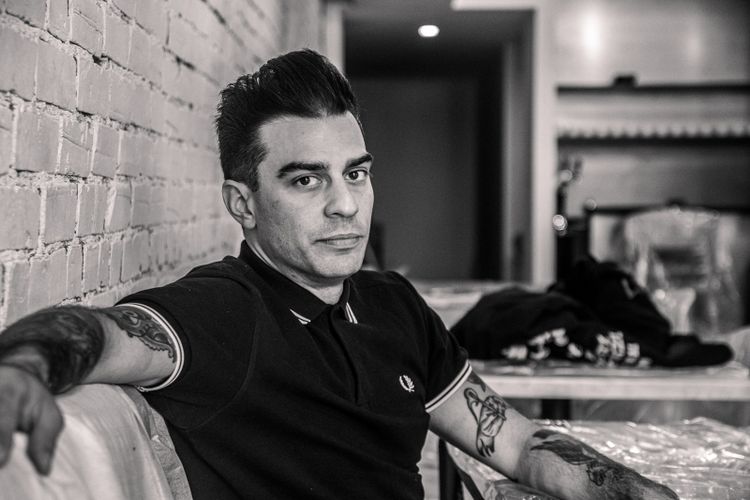
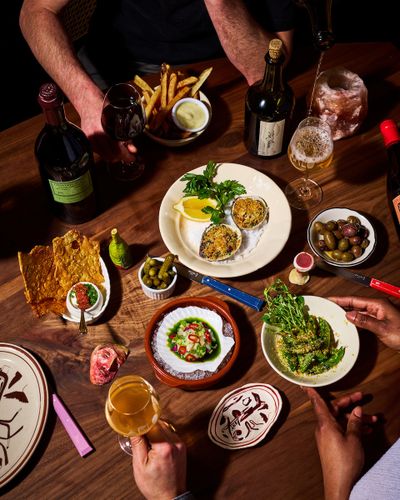
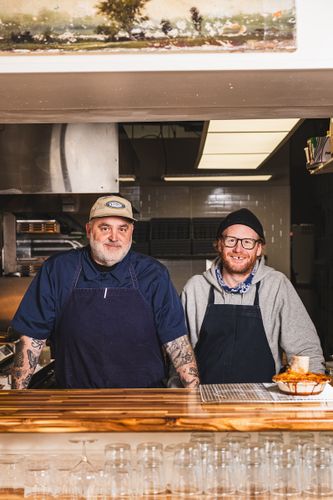
On the night Jamil’s Chaat House turned a year and a half old, the sidewalk outside filled with people who hadn’t arrived together and weren’t in any hurry to leave that way either. Tables that had never sat side by side spilled into one another. Regulars introduced strangers to other regulars. It was the specific, hard-to-manufacture feeling Jalil Bokhari and Emma Tanaka have spent years building on purpose. “It should feel like it’s alive in some way,” Bokhari says of the restaurant he built with Tanaka out of a pandemic hobby and a refusal to open before it was ready. “You walk into the space and there’s an immediate tangible feeling.”
From a Stylus Epic to Momofuku and beyond
Bokhari grew up in Lahore, where his fondest memories weren’t birthdays but dinners with his grandfather, street food eaten standing up, or a proper meal eaten slow. He moved to Canada at fifteen, finished high school in Calgary, and drifted into hospitality sideways: a café called Phil & Sebastian connected him to run Toronto coffee jobs Dark Horse and then Sam James once he settled in the city around twenty. He was also a photographer then, shooting an old Stylus Epic, drawn to the grainy candid look of the Tumblr years.
A friend working at Milagro, a taco spot on Queen, talked him into bussing tables instead, right as that stretch of the street was becoming the version of Toronto people still get nostalgic for: Grand Electric, Cocktail Bar, Swan Diner all planting seeds of inspiration. “It felt like a ticket to freedom,” he says: flexible hours, decent money, room to keep shooting on the side. That held until a run through Momofuku, then Imanishi and Rhum Corner, quietly took over. “It felt like an art form just as viable as photography” he remembers thinking.
Building the Concept, One Dinner Party at a Time
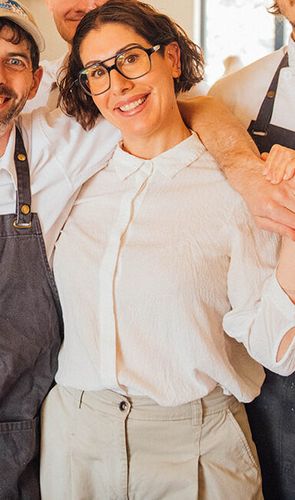
Tanaka’s route was shorter and stranger: small-town Ohio, then Victoria, then OCAD the same year as Bokhari, friendly acquaintances then, not yet a couple. “I didn’t really know what graphic design was at the time, or what drew me to it,” she says, “but I just wanted to be in Toronto.” Her own relationship with restaurants blossomed later than his. “I always saw a certain level of magic with restaurants, but I have a much shorter hands on relationship with them than Jalil does,” she says. First came advertising, then six years of customer research at Deloitte, mapping the experience design of companies like Loblaws and Walmart — about as far from a chaat counter as a résumé gets.
What closed the distance was a relationship that started in the midst of the city shut down. “We were cooking a lot at home together,” she says of the early pandemic, “recreating meals we saw in restaurants, dissecting what made things work.” They recreated Prime Seafood dishes, Imanishi dishes, restaurants Tanaka had come to love. “We both remember loving places like Pinky’s. It was inspiring to me to see cuisines outside of the typical French or Italian being represented in such a way: casual and fine at once, built around real service and a serious wine or cocktail list.” Together, they began picturing what that could look like for Pakistani food specifically. “We thought that there was space in the city for South Asian, Punjabi cooking,” she says, “but with a really fun wine list and cocktails that draw from that cuisine too.” What they hadn’t cooked much of together was the food Bokhari actually grew up eating. “It was new for a lot of our friends, and for me too,” Tanaka says. “We were discovering those dishes together.” Making it for friends who’d never tried it became the thing that stuck. “A lot of our friends operate, own, or cook at restaurants,” Bokhari says, “and making food for them really drove the force of them being like: you guys should pursue this.”
Selling Out in an Hour, and Hating It
Neither had formal kitchen training, so the early recipes came from memory and triangulation: pick a dish, watch two aunties make it on YouTube, reach out to two more family members, isolate what all five agree on, test it against their own palates, then work out how to multiply it by fifty. Their first pop-up ran out of a Dundas Street W coffee shop called Hamer’s, since closed, a menu built around a dahi puri, a maash ki daal, and a shrimp pakora. It went surprisingly smoothly. The second brought more learnings opportunities: they sold out in under ninety minutes, which sounds like a win until you’ve watched people who bothered to show up get turned away with nothing. “It’s a lose-lose situation,” Bokhari says. “People take the time to come, and you’re also leaving money on the table.” There’s no carryover in a pop-up, just a narrowing window between too little food and too much.
The steepest test was a tasting menu on Lake Inez’s patio: a real arc, a real build, guests who’d paid a set price expecting to be looked after in a way a coffee shop pop-up never demanded. More pop-ups followed in Victoria, Vancouver, and New York, where the hard part wasn’t the cooking so much as everything around it: sourcing halal meat city by city, hauling liter containers of spice blends that couldn’t be improvised on the fly.
“The Place Is Pakistani Because I’m Pakistani”
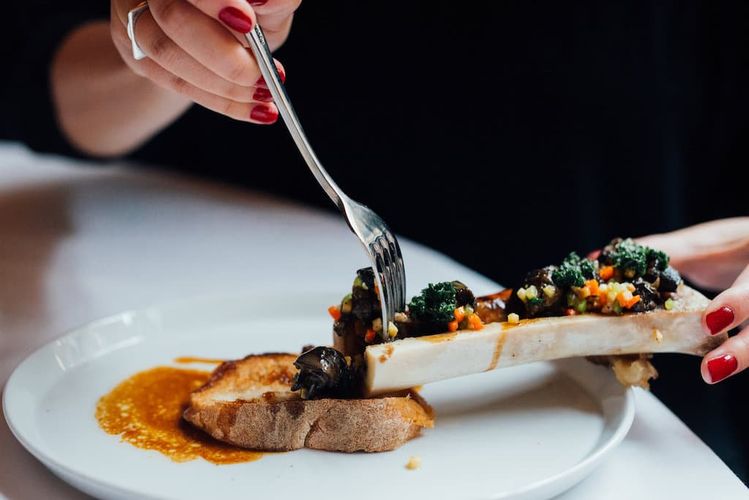
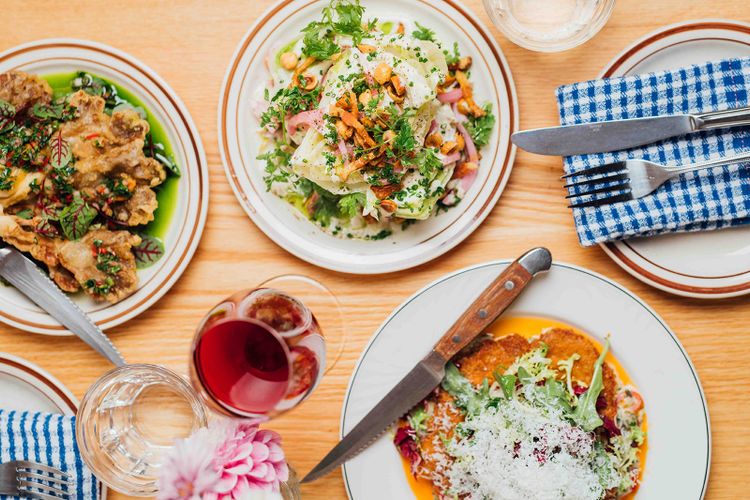
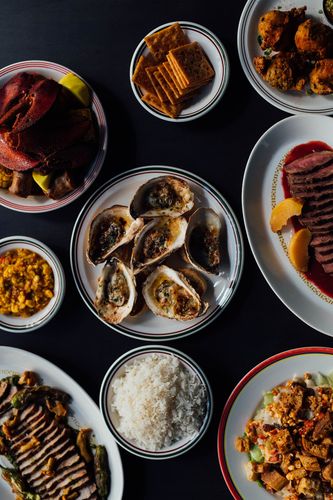
Trying to find their own approach to an already beloved cuisine in the city meant building their own compass. Bokhari was never aimed at an imagined authenticity. “The argument of authenticity is tricky,” he says. “We are inevitably cooking food through the lens of the Toronto dining scene and the restaurant community I’ve grown up through. Ultimately, the place is Pakistani because I’m Pakistani, and that will always influence the way we do things.” What matters more to him is the layering underneath: spices worked into the base of a dish, more sprinkled on top, techniques honored from a cuisine cooked one way for centuries even when the plate looks nothing like it would in Lahore. An aloo gobi built around Fioretto cauliflower, new potatoes from Aldergrove Farm — Toronto produce filtered through a Pakistani childhood, served the way their favorite dining rooms plate things.
He Works the Room, She Runs the Pass
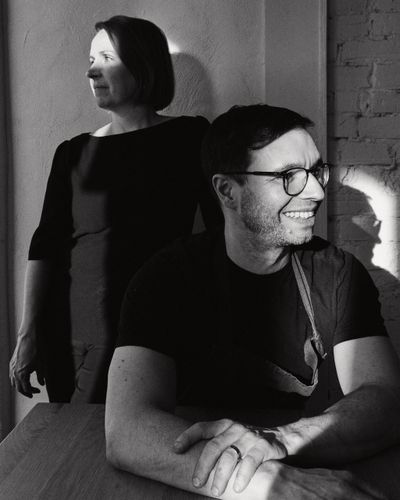
Ask either of them how the place runs day to day and the answer arrives in the same shorthand: he’s in the front, she’s in the back. It isn’t quite that clean. “We’re the creative directors of the menu,” Tanaka says. “We have a vision for it together.” Bokhari, the more natural extrovert, works the room. Tanaka found her way onto expo from the beginning and never left it. “We live and work together constantly,” Tanaka adds, “so we’re always one-braining everything, obsessing over every detail.”
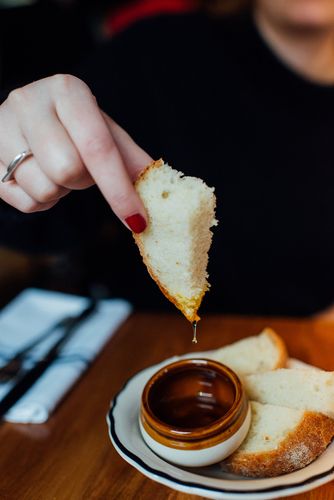
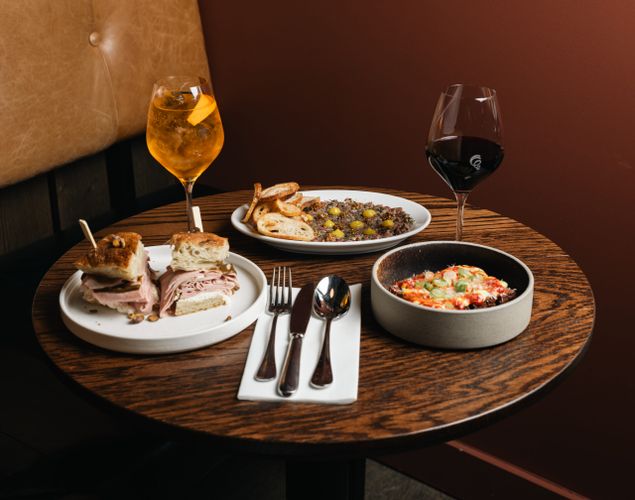
The kitchen they’re both proud of is also, by their own admission, tiny — a single induction and a few ovens are all that’s running during service. “The space itself created guardrails for the menu. We’re working with what we have to create a menu that hopefully punches above its weight.” The menu is concise, rotating seasonally based on available local produce, with a few staples they simply can’t remove without ruffling a few regulars’ feathers.
Consistency over Ambition, for now
Neither is in a hurry. The plan is to grow Jamil’s into something that lasts the way their own favorite restaurants have lasted — five years, ten, still busy, still consistent — before they consider a second address. “We don’t need to rush into opening something too soon, but not opposed to it” Bokhari says, “while it’s still young, Jamil’s has our full attention every day of the week.” There’s a wine bar somewhere in the back of their heads, maybe just a bar, not necessarily South Asian at all, a someday project deliberately left vague. For now the ambition is smaller: show up, stay consistent, get a little better every night, without losing whatever made the first pop-up worth doing. “If everything came out perfect,” he says, “I feel like there’d be nothing for us to learn from.”
Back on Queen Street, the anniversary crowd has mostly thinned out, but the two of them are still there, the way they are four nights a week. The first year was uncertain diving into a world of unknowns. “We’re finding our voice a little bit more now,” they say, “and it feels exciting.” Whatever Jamil’s becomes next, it will trace back, as it always has, to one dinner with a grandfather in Lahore, the kind where a meal was never just a meal.
Written by Daniel Neuhaus
Photography by Daniel Neuhaus