Prime Seafood Palace: Coulson Armstrong’s Queen West Temple to Seafood and Fire
Prime Seafood Palace
- $$$$
- Booking
-
944 Queen Street West Toronto M6J 1G8
+1 416-551-8038 -
Monday: 5:30 PM – 10:00 PM
Tuesday: 5:30 PM – 10:00 PM
Wednesday: Closed
Thursday: 5:30 PM – 10:00 PM
Friday: 5:30 PM – 10:30 PM
Saturday: 5:00 PM – 10:30 PM
Sunday: 5:00 PM – 10:00 PM
-



Four years in, Prime Seafood Palace has quickly become one of the most singular dining rooms in Toronto. The Queen West restaurant, born of a collaboration between Matty Matheson and Coulson Armstrong and designed by architect Omar Gandhi, is about to mark its fourth anniversary.
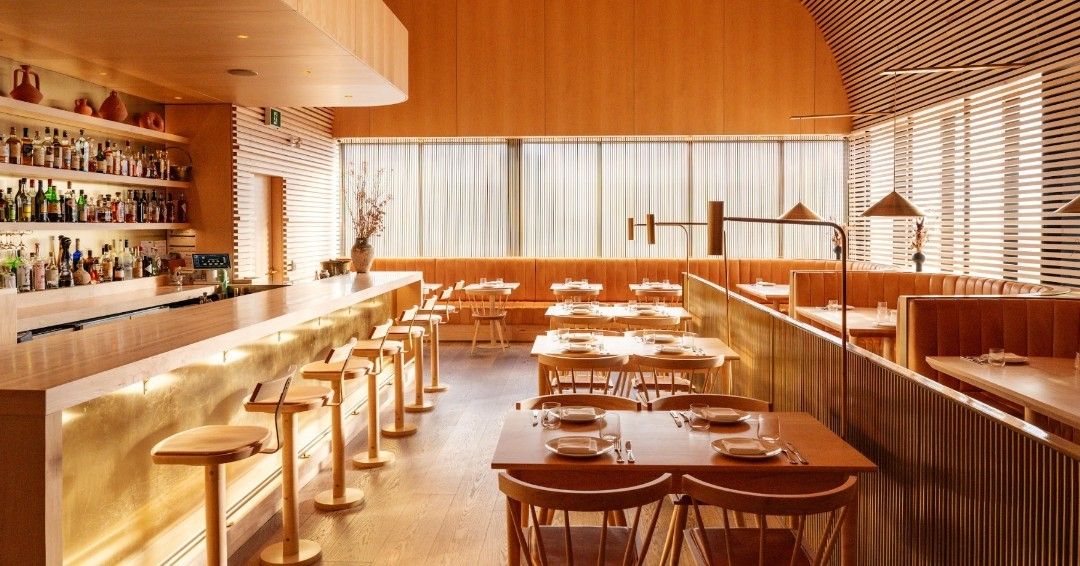
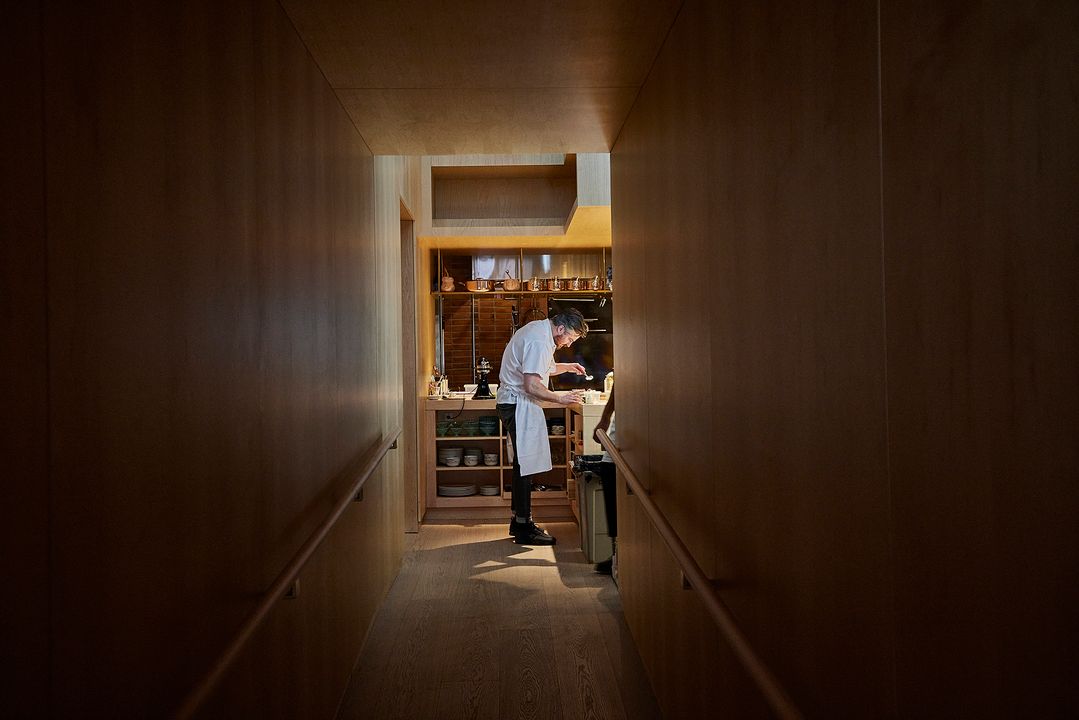
The project started, improbably, with a building. Matheson’s team had an office space and a willing landlord, and an idea took shape around Gandhi’s design. The plan was to preserve the heritage façade, but during construction it cracked and fell, forcing a full rebuild — which turned out to be the making of the place. The new structure gave the room its now-iconic 35-foot ceilings, a kitchen tucked at the back, and space for an intimate cottage that seats up to 18. Armstrong wasn’t even in the country yet. Traveling, and hearing Matheson needed a head chef, he sent a message on a hunch: “I had messaged him being like, hey, I just landed in Australia, I’m looking for work.” Days later, Matheson — heading to Australia himself — suggested coffee, and over it pitched Prime Seafood Palace. “We were partnered ever since,” Armstrong says, more than six years now.
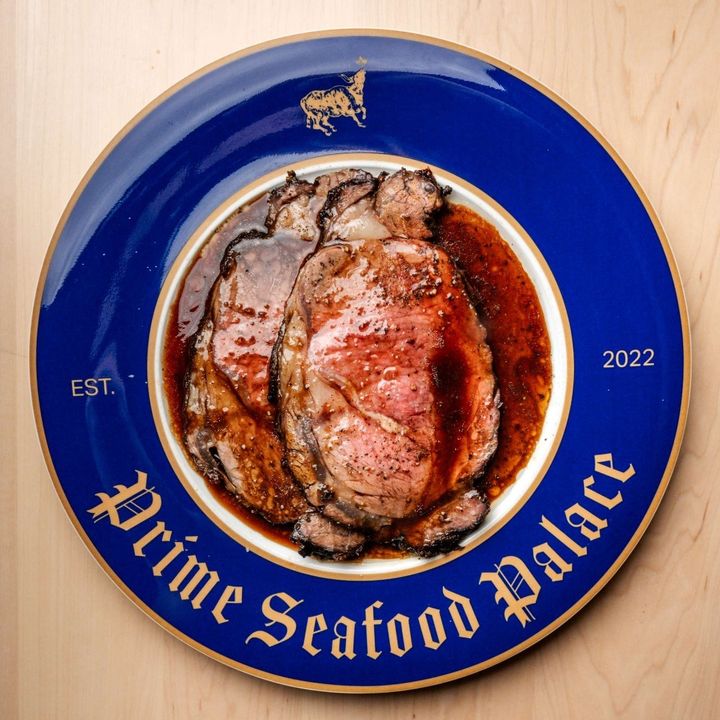
Even the name is a wink. “We joke around that the name came from Prime Rib,” Armstrong says. The “Palace” comes from an unlikely place: the main-floor bathroom, clad entirely in Italian marble that runs up to a skylight beneath those soaring ceilings.
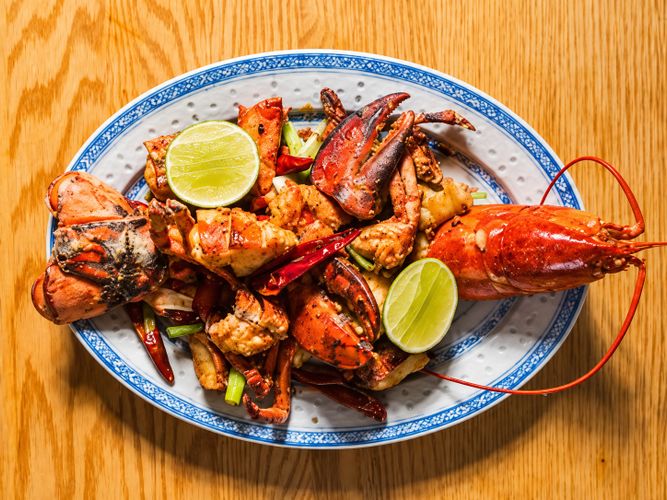
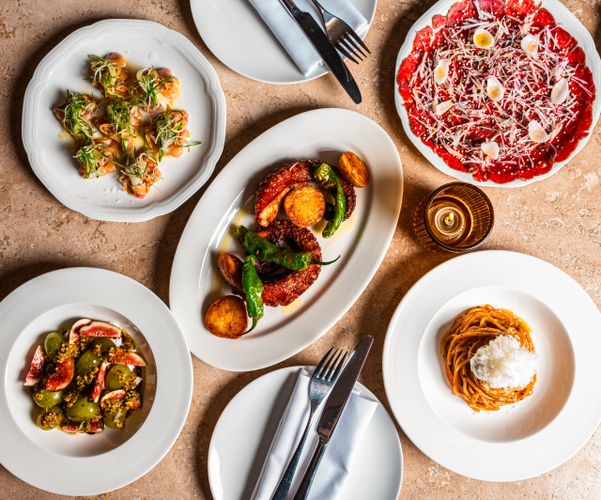
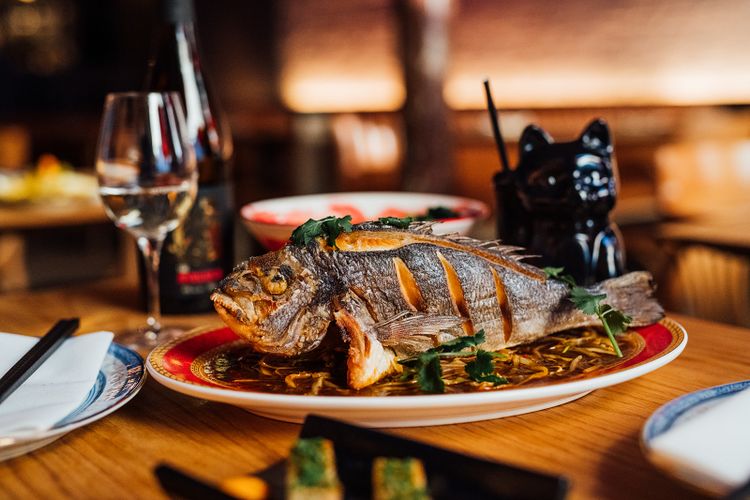
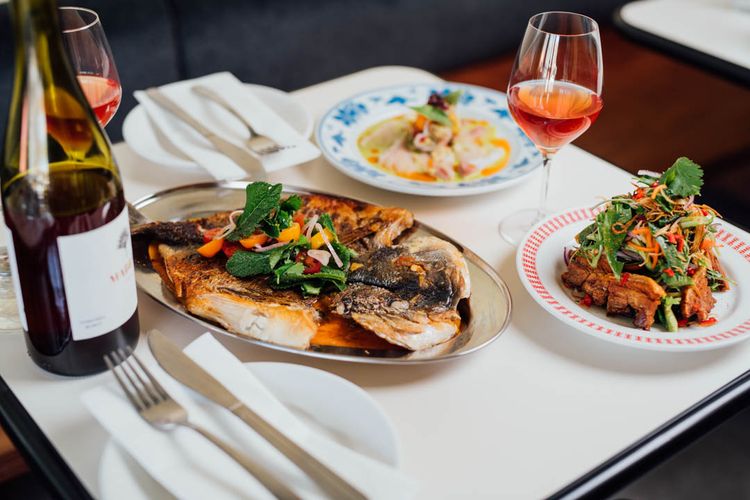
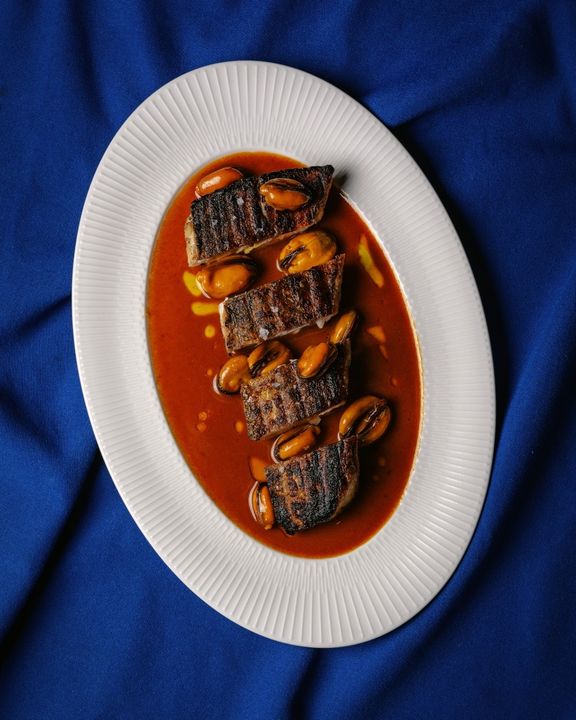
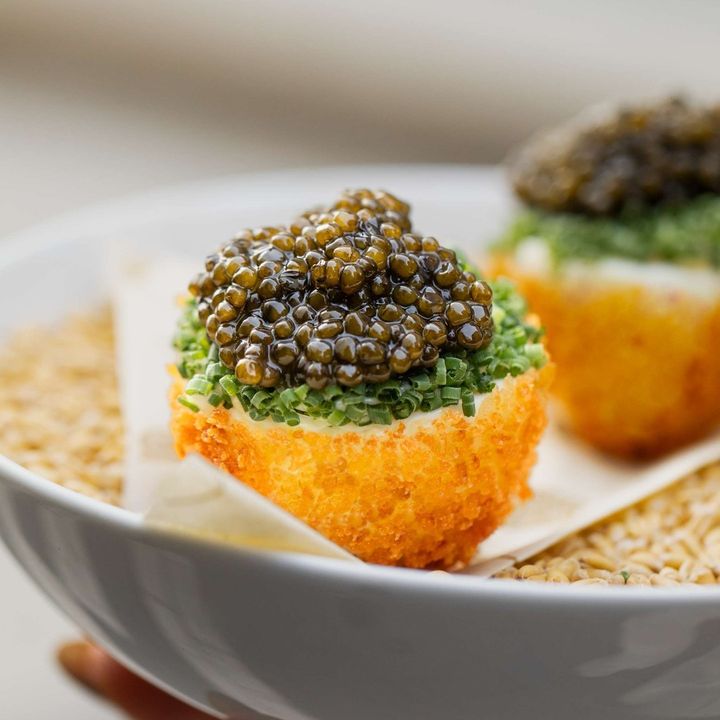
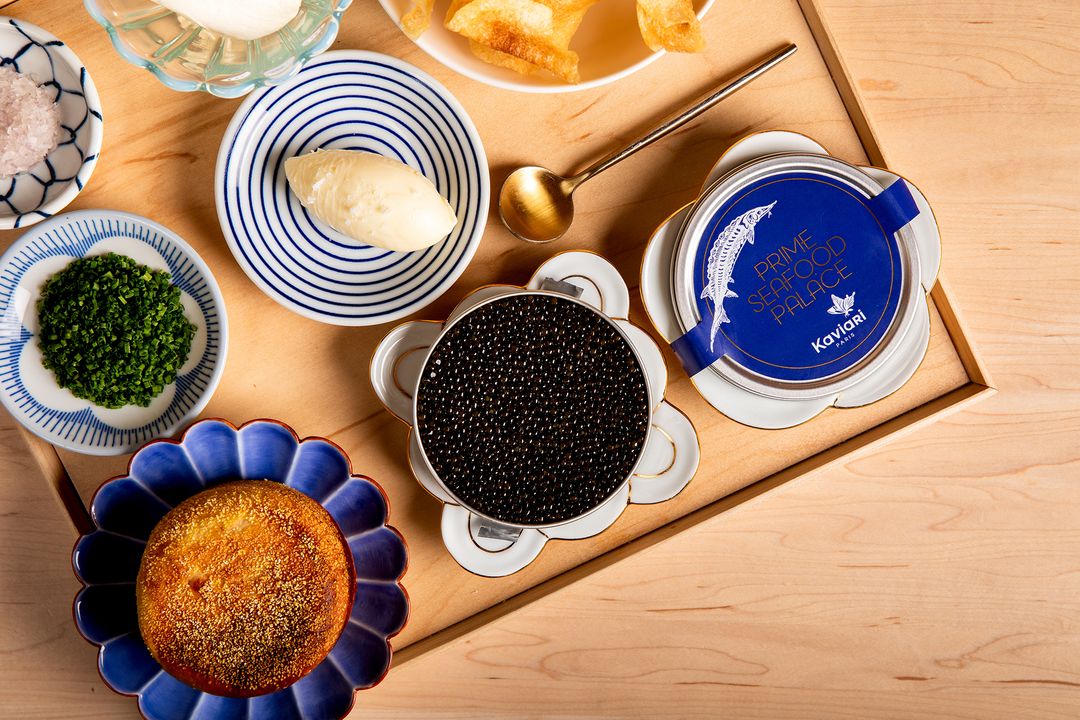
The menu is a generous à la carte of 25 to 35 items, divided cleanly. Roughly 70% are the untouchable classics: the Sicilian crudo; three aged sushi-grade fish that might range from bluefin tuna to king salmon to kanpachi; and the palace bacon, a marvel of pork belly that’s cured, smoked, marinated, rendered, then glazed in a char siu marinade. Then there’s the lobster spaghetti — East Coast lobster and fresh pasta in a sauce built from lobster bones, brandy and 35% cream — which pairs perfectly with that bacon. “Those are some dishes that can’t be touched,” he says.
The other 30% is where the kitchen breathes, rotating with the seasons and dictated less by the chef than by the soil. Blue Goose Farms grows the restaurant’s produce, and Armstrong works directly Keenan and Ashley McVey to determine what gets planted to determine the rotating menu. The team swaps one or two dishes every Friday. In spring, that means breakfast radishes, turnips and the first tender greens, a welcome jolt after a long winter of celery root, rutabaga and beetroot. The window is unforgiving. “Spring is so short,” he says, “so we have to maximize these days.” When the farm sends a surplus, the kitchen preserves it so nothing is wasted.
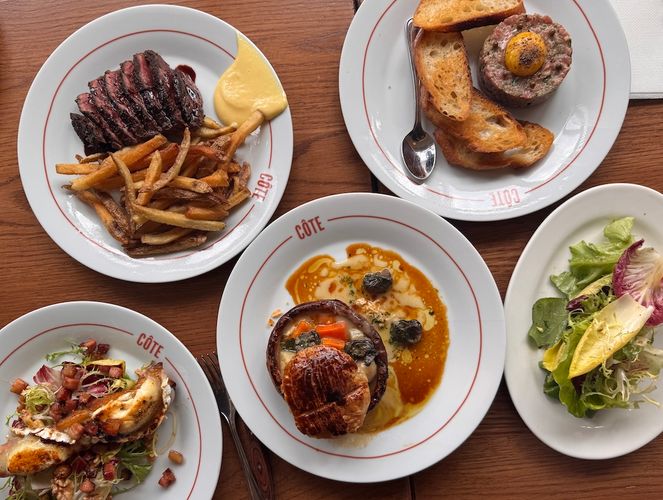
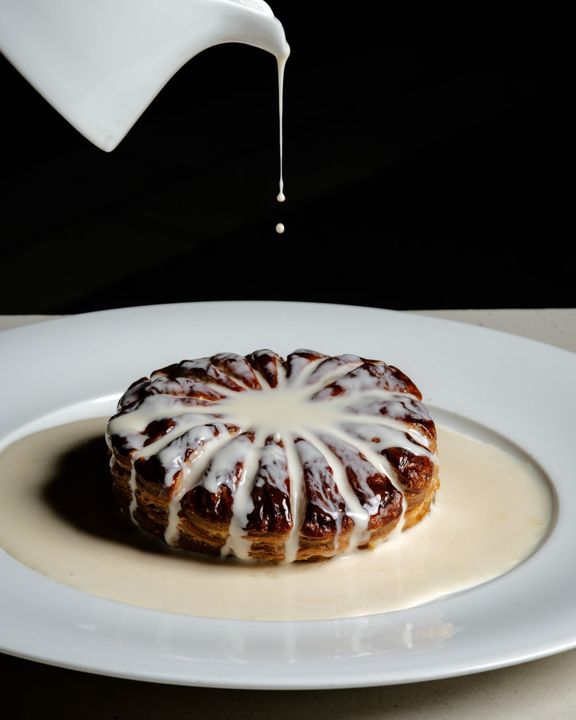
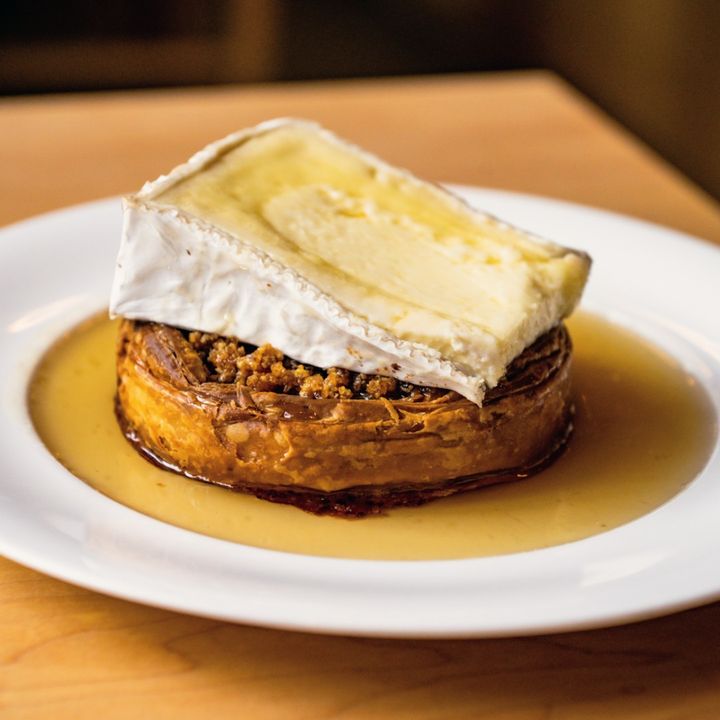
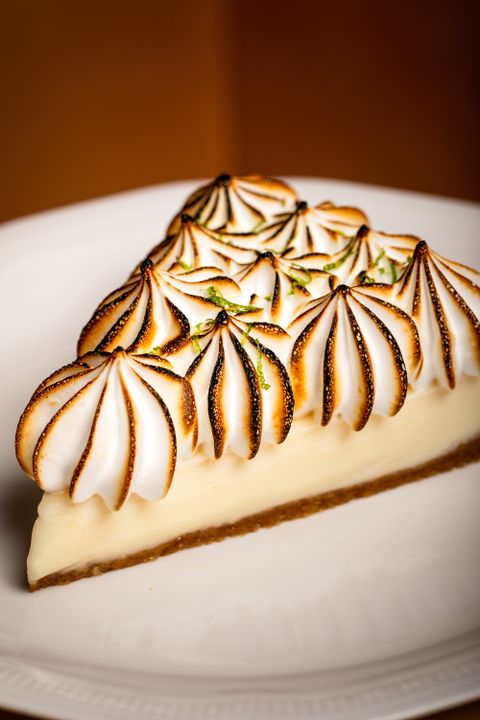
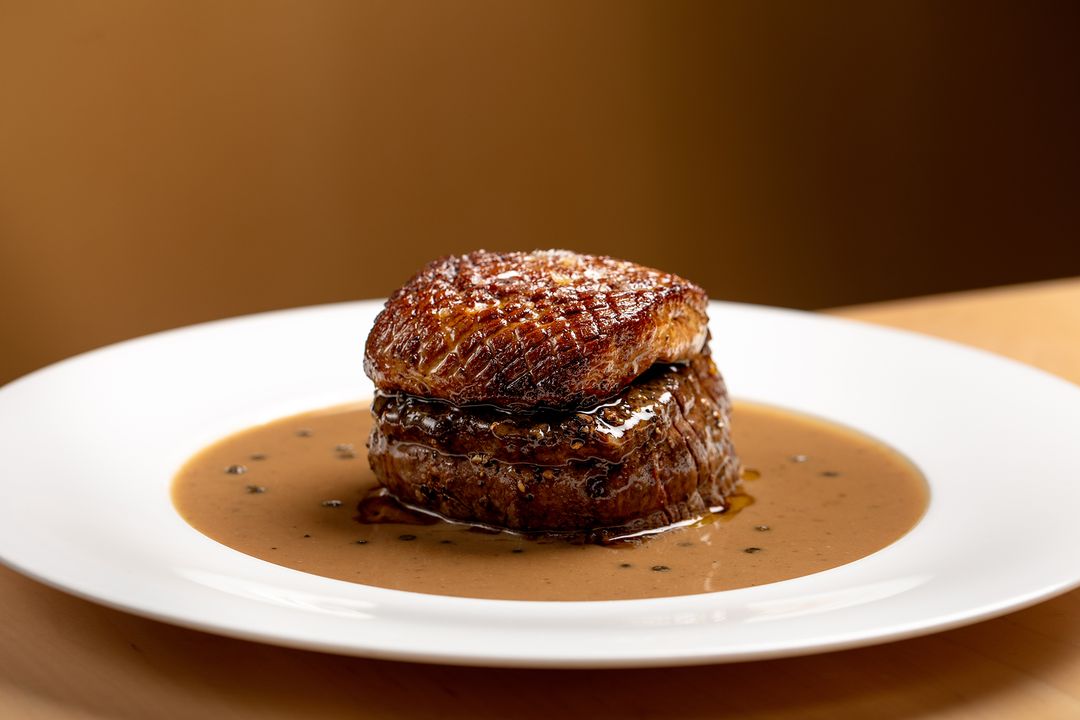
A meal here is built to escalate. Armstrong wants guests to start with chilled seafood, move into a warm mid-course — right now, Newfoundland scallops done Rockefeller and a clam and white asparagus chowder — and then go all in on steak, shared family-style. Portions run from 16 ounces to a colossal 40, across seven cuts, some dry-aged 40 to 45 days, others wet-aged. Steaks are cut daily and paraded to the table on a revolving tray so guests can choose: a quiet showstopper. Dessert closes things out with classics like chocolate cake, key lime pie, and a maple tart made with syrup from Tamarack Farms, plus a seasonal option (right now, strawberry and rhubarb).
The drinks follow the same logic: approachable, with a high ceiling. The cocktail list centres on five well-made classics, each offered at a friendly price and again at a top-shelf tier — a Negroni and a high-end Negroni, a martini and an elevated one — plus two seasonal cocktails (and a non-alcoholic version) built around Blue Goose ingredients. “We’re not a cocktail bar,” Armstrong clarifies; the bright room nudges most guests from one opening drink straight into wine, where the ambition has lately concentrated. Sommelier Matt Landry, among a select few in Canada pursuing his Master Sommelier title, has been steadily deepening a cellar the restaurant clearly intends to be known for.
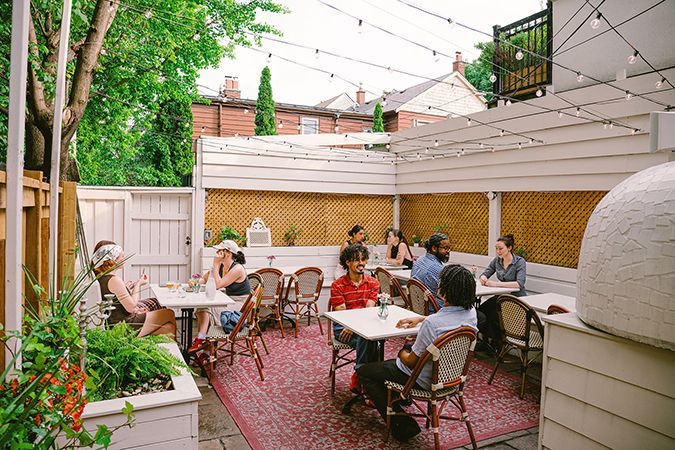
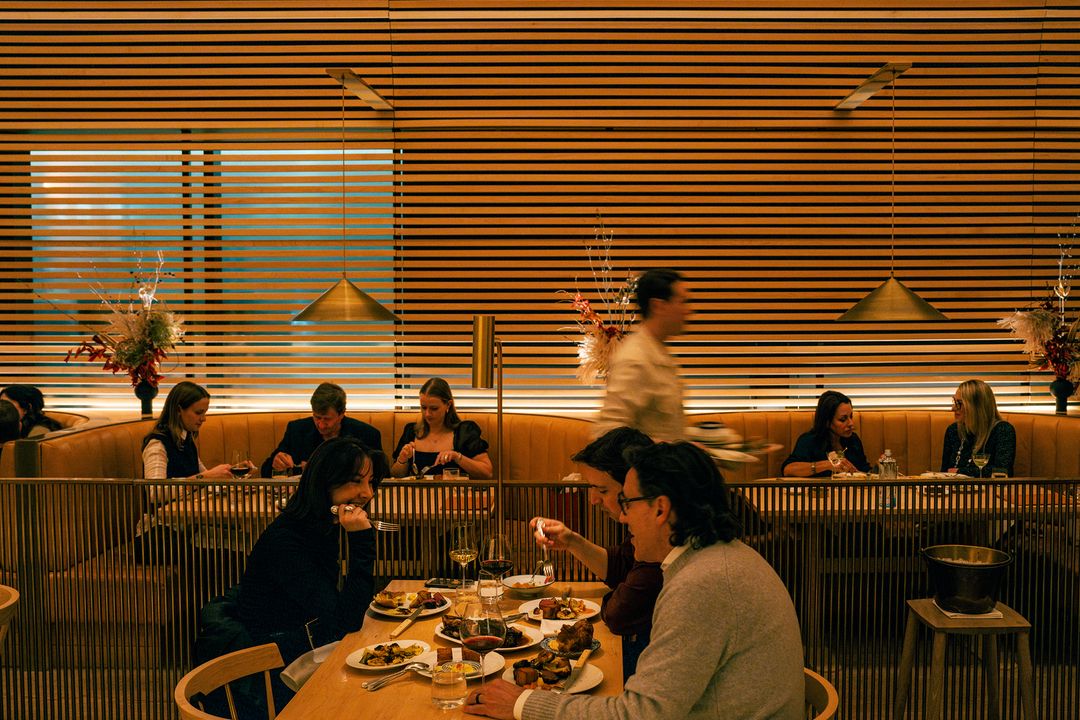
The space reads as warm rather than imposing: light wood and clean lines, an East Coast sensibility with an almost church-like calm, divided into zones from the banquettes to the semi-private corner to the cottage. Fresh flowers from the farm and seasonal dried arrangements — the work of florist Raiko, a four-year collaborator — soften the room. Service, Armstrong says, should be “eye level, attention to detail, friendly,” generous with information but never “over-the-top cheesy.”
Ask him what he’s proudest of, though, and he doesn’t reach for a dish or an accolade. It’s the people. “After four years, that really is tried and true that we take care of our people, we train them, we educate them, we give them room to shine,” he says, noting that much of the back-of-house crew has been there since opening day. Underneath it is a larger purpose — telling the story of the farmers, ranchers and purveyors behind every plate, and keeping “generational and traditional cooking alive so that the next generation can keep learning.” “We did something in Toronto that hadn’t been done before,” he says. “We always want to be trend-setting and not following any trends.” Four years on, the proof is in the room.
Written by Daniel Neuhaus
Photography by Courtesy of Prime Seafood Palace