Joël Watanabe: welcome to my house

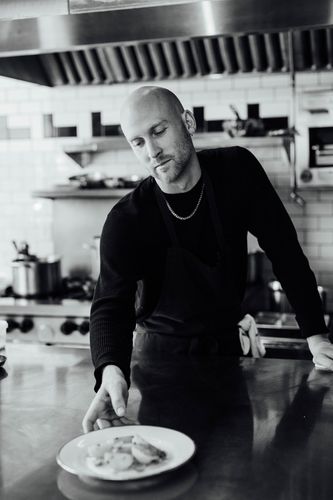
In the Watanabe home in Ottawa, the rule was simple: whoever didn’t cook did the dishes. At nine or ten, Joël Watanabe decided he hated washing up more than he feared the stove, so he started making dinner for the family once a week. “I did not like doing the dishes,” he says, laughing. Three decades, two coasts and a handful of continents later, he is behind three of Vancouver Chinatown’s most distinctive restaurants, and he still cooks like someone who would rather be at the stove than anywhere else.
A tofu maker’s son
Joël Watanabe was born and raised in Ottawa, in a family where food was never far away. His mother is French-Canadian from Northern Ontario, with a Corsican father and Sardinian roots further back; his father is Japanese. The two met in their early twenties while hitchhiking in Guatemala.
When Joël was five, his father began making tofu out of the family home, becoming one of Canada’s earliest tofu producers. That modest operation grew into La Soyarie, and then one of the country’s largest tofu manufacturers, producing a range of soy-based foods and supplying grocery stores and other food businesses across Quebec and Ontario.
At home, food was made from scratch. No junk food, no processed anything. His maternal grandfather, who settled in Kapuskasing after leaving Corsica, was an avid hunter and fisher, while his grandmother on his father’s side kept a large garden. Food was both everyday life and a way of understanding where the family came from.
“Food was always very central and always kind of natural,” he says. “It’s always a thing that connects us to ourselves and to our history.”
105 campers, three meals a day
His first real kitchen was at Au Grand Bois, a vegetarian summer camp he had attended as a child before becoming a counsellor. At some point, Joël Watanabe convinced the owners that he could do a better job in the kitchen. They let him try.
Suddenly, he was responsible for feeding 105 people three times a day, working mostly with produce grown in the camp gardens and one or two helpers beside him.
By 17, Joël needed a job, and restaurants became the obvious place to look. He started in Ottawa, where he also trained in sushi, then spent years moving in and out of Montreal kitchens: Café Méliès, bistros, the private club 357c in Old Montreal, sushi counters, French kitchens and Italian ones, sometimes all within the same chapter of his life. In his mid-twenties, he returned to Ottawa as the opening chef of Kinki.
West, and then further
A former chef eventually called him to Whistler to help open a restaurant. The project itself did not last, but Joël stayed out West. By 30, after roughly 14 years of cooking almost nonstop, he was tired. He left for Thailand to rock climb and take a break, then picked grapes in Australia before finding his way back into a kitchen in Melbourne, at The Point on Albert Park Lake with chef Scott Pickett.
Vancouver followed again, with time at Bin 942, consulting work and, eventually, a resort kitchen in Saint Lucia.
It was a message from Derek, another Araxi alumnus, that finally brought him back to Vancouver for good. Derek was working at Chambar with a spectacular bartender named Tannis Ling, who was preparing to open a restaurant and looking for a chef. Watanabe warned Tannis Ling that he was not really a Chinese chef. She told him she was not looking for something conventional. She wanted something different, something interesting.
That restaurant became Bao Bei. Opened in Chinatown in 2010, Bao Bei began with a menu rooted in Shanghainese and Taiwanese cooking and filtered through Joël’s French technique. Over time, it has grown into a broader Pan-Asian kitchen while keeping its Chinese roots at the centre.
“We’ve never tried to win awards”
The awards came anyway. Bao Bei landed at No. 2 on enRoute‘s list of Canada’s best new restaurants. Six years later, Joël and Tannis found themselves at another turning point. Rather than pull back, they decided to build something new together, this time with Joël’s longtime sous-chef Alain Chow as a third partner.
Kissa Tanto opened in 2016 on the second floor of a building on East Pender Street, bringing Japanese and Italian ingredients together in a room unlike much else in the city. That same year, enRoute named it Canada’s best new restaurant. Canada’s 100 Best followed, and in 2022, Kissa Tanto received one of Vancouver’s first Michelin stars, along with the Guide’s Service Award for its team. The star has remained ever since.
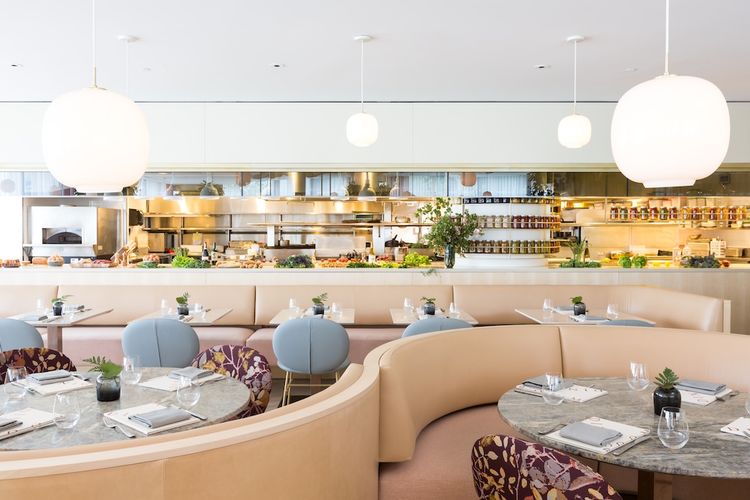
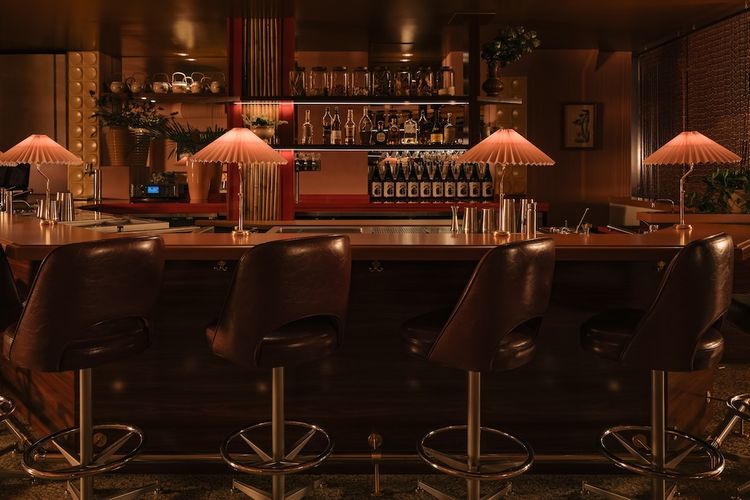
“We’ve always stayed true to ourselves,” he says. “Our focus is to do a good product and be a welcoming place.” That idea of hospitality runs through the room. Kissa Tanto is small, warm and full of detail, a space guests have compared to an early 1900s ocean liner or Los Angeles in its heyday. The service is informed without being intimidating, something Joël Watanabe is particularly sensitive to. “I’ve always hated that about some fine dining restaurants, where you feel like they’re trying to educate you, especially when they just assume you don’t know.”
The downstairs destination
In March 2024, the trio opened Meo at street level, directly below Kissa Tanto. The room takes its cues from the 1970s, with cocktails, a jukebox and a kitchen Joël still feels Vancouver has yet to fully discover.
Together, Bao Bei, Kissa Tanto and Meo have become three very different expressions of the same partnership, stacked into the fabric of Chinatown and connected by the same ideas of food, hospitality and personality.
But when Joël talks about what he is proudest of, the restaurants themselves are almost secondary. He talks about Tannis and Alain, about staying together through the inevitable ups and downs of running restaurants, and about the cooks who have passed through their kitchens over the years. During a recent stretch when the restaurants were short-staffed, seven former cooks came back to help on busy nights.
“That speaks to the culture and the care,” he says. “Business is about people.” For Joël, that part is not complicated.
“Showing care and compassion for the people that work for you is the number one thing,” he adds. “You have to actually care about people and show that you care about people. And then those people will care for you.”
And maybe that is the thread running through the whole story. From a family kitchen in Ottawa to three restaurants in Vancouver’s Chinatown, Joël Watanabe has spent most of his life cooking for people. The rooms have changed, the cuisines have shifted and the city is now on the other side of the country, but the instinct feels much the same: come in, sit down, let me cook for you.
Written by Valérie Boutet
Photography by Scott Usheroff